
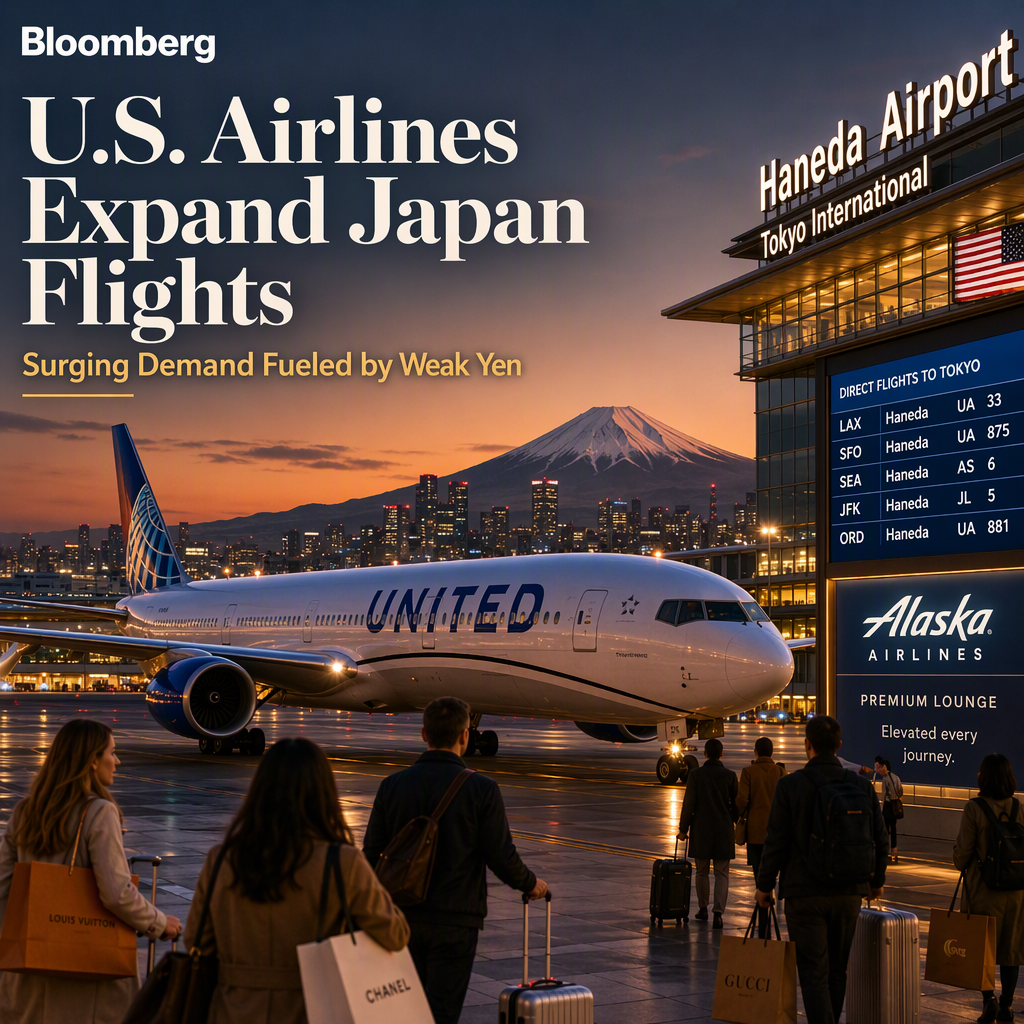
U.S. airlines, including United Airlines, American Airlines, and Alaska Airlines, are increasing their flight capacity to Japan in response to a surge in demand fueled by the weak yen, which has made travel to Japan more attractive for American tourists by boosting their purchasing power [1]. This trend has led to the introduction of more direct flights and cabin upgrades, particularly targeting premium travelers. Alaska Airlines is specifically upgrading its cabins to attract higher-spending passengers, leveraging both the favorable exchange rate and increased customer buying power resulting from stock market gains [1].
The airline industry views the current environment as an opportunity to tap into a lucrative market segment, with the weak yen encouraging more Americans to visit Japan and spend more during their stays [1]. Industry analysts suggest that the combination of currency trends and increased consumer wealth could sustain strong trans-Pacific travel demand into the next year [1]. Airlines are expected to closely monitor load factors, fare levels, and competitive dynamics, with the possibility of further capacity adjustments depending on how market conditions evolve [1].
CONCLUSION
U.S. airlines are strategically expanding their Japan routes to capitalize on robust demand driven by the weak yen and increased consumer wealth. The industry anticipates continued strong travel demand, with airlines poised to adjust capacity as market conditions develop.