
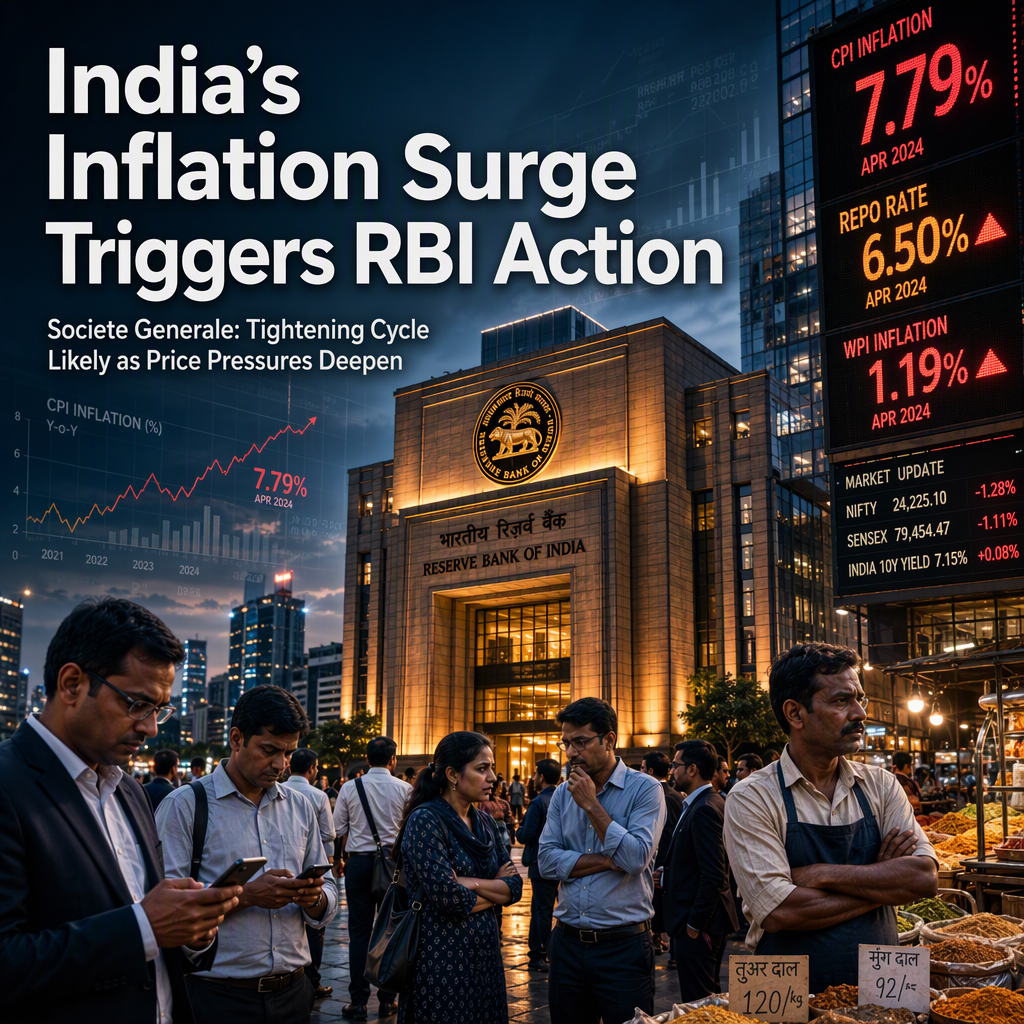
According to Societe Generale’s Kunal Kundu, India’s Consumer Price Index (CPI) for September rose to 5.54% year-on-year, with food inflation reaching 7.74% and core inflation at 4.2% [1]. This marks the fourth consecutive month that inflation has remained above the Reserve Bank of India’s (RBI) 4% target, and inflation has increased every month since January [1]. Kundu notes that the inflationary pressures are broadening, with strengthening corporate pricing power, sticky services inflation, and a negative ex-post real policy rate contributing to the persistence of elevated prices [1].
The report highlights that as corporate pricing behavior shifts, a larger share of accumulated costs is being passed on to consumers, making inflation more widespread and persistent [1]. The risk is that these pressures could become embedded in household expectations and corporate price-setting, further entrenching inflation [1]. Societe Generale points out that the RBI projects inflation at 6.0% in the third quarter of FY27 and 5.7% in the fourth quarter of FY27, suggesting that high inflation may persist over the medium term [1].
In response to these developments, the RBI recently implemented a 25 basis point rate hike, which Societe Generale argues is likely the start of a broader tightening cycle rather than a one-off move [1]. The September inflation data strengthens the case for continued monetary tightening to address the increasingly entrenched price pressures [1].
CONCLUSION
India's persistent and broadening inflation has prompted the RBI to begin a tightening cycle, with further rate hikes likely. Societe Generale's analysis suggests that inflationary pressures are becoming more deeply rooted, increasing the risk of sustained high inflation and necessitating continued policy action.