
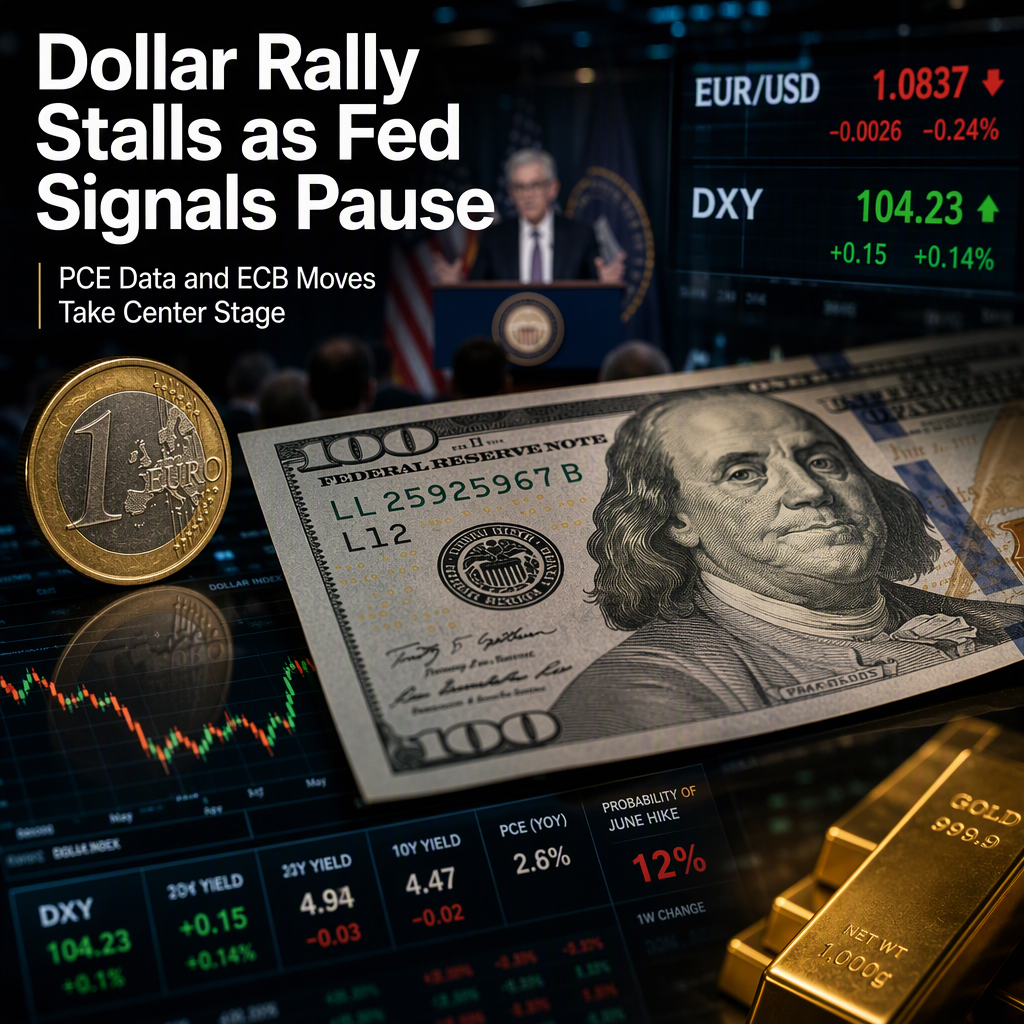
The US Dollar (USD) has recently reached multi-month highs against the Euro (EUR), with EUR/USD dropping to its lowest level since mid-2025, driven by elevated long-dated US Treasury yields and shifting expectations for Federal Reserve (Fed) monetary policy [1]. However, during Wednesday's European trading session, EUR/USD rebounded by 0.13% to around 1.1356 as the Dollar came under pressure following less hawkish remarks from New York Fed President John Williams, who refuted the urgency for another rate hike after the September increase [2][3]. Williams stated, 'With the policy action we took at our September meeting, there is no need for urgency,' but did not rule out further tightening, saying, 'if the economy evolves in a manner broadly consistent with my forecast, one further upward adjustment of the federal funds target range may be appropriate late this year' [2][3].
Market expectations for an October Fed rate hike have shifted significantly. According to the CME FedWatch Tool, the probability of a hike has dropped to 43-44.8%, down from around 70.9% earlier in the week [2][3]. Analysts at MUFG and institutional strategists from Commerzbank and ING offer differing views: Commerzbank sees the Dollar's strength as fragile and vulnerable to a dovish Fed recalibration, while ING argues that elevated long-end yields and persistent risk aversion continue to support the Greenback, with upcoming PCE inflation and employment data potentially driving October hike odds higher [1][2].
The US Dollar Index (DXY) trades around 101.20 after reaching 101.61, its highest level in two months, while the benchmark 10-year Treasury yield stands near 5.22%, below the previous day's high of 5.29%, the highest since 2007 [3]. Gold (XAU/USD) trades little changed at around $4,185, consolidating after recovering from a seven-week low, as the pullback in the Dollar and yields lends support to the metal [3]. Economists expect the core PCE Price Index to rise 0.3% MoM in August, up from 0.2% in July, and headline PCE inflation to rise 0.4% MoM, up from 0.2%. Annual core and headline inflation are expected to remain unchanged at 3.3% and 3.7%, respectively [3].
On the Euro front, investors await the German preliminary Harmonized Index of Consumer Prices (HICP) data for September, expected to show price pressures accelerating to 3.1% YoY from 2.9% in August, and monthly growth of 0.5% versus 0.2% previously. This data is anticipated to significantly influence European Central Bank (ECB) interest rate projections [2]. Meanwhile, energy-driven inflation risks have been partially alleviated by the recovery of Middle East crude supplies and US strategic reserve releases, which pushed oil prices lower on Tuesday, though supply risks remain in focus [3].
CONCLUSION
The US Dollar's recent rally has paused as Fed rate hike odds for October decline following dovish signals from Fed officials, with EUR/USD rebounding and Gold stabilizing. Upcoming PCE inflation and German HICP data are expected to be key determinants for future Fed and ECB policy moves. Market sentiment remains cautious, with analysts divided on the sustainability of Dollar strength amid shifting rate expectations and bond market dynamics.