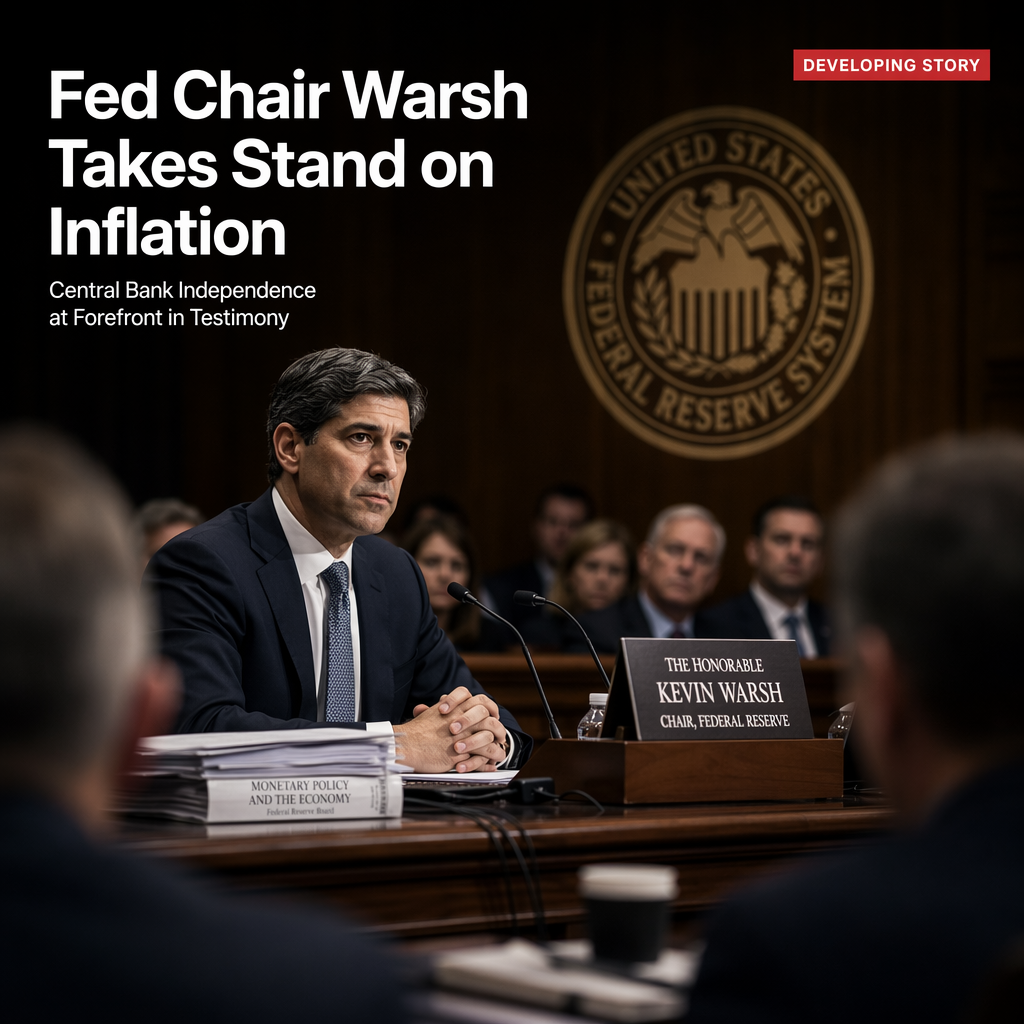
Federal Reserve Chair Kevin Warsh, in his first testimony before the House Financial Services Committee, stated that the central bank's policymakers have 'no tolerance for persistently elevated inflation' and emphasized their commitment to restoring price stability [1]. Warsh explained that concerns about inflation were a key factor in the Fed's decision to keep the benchmark federal funds rate steady at a range of 3.5% to 3.75% during the June meeting [1]. He highlighted that the Fed's primary objective is to get monetary policy right, expressing confidence that if successful, the inflation surge of the past five years will be resolved [1].
Warsh acknowledged the burden that high inflation has placed on American households and businesses, noting that while monthly price fluctuations are expected, underlying inflation over longer periods is largely determined by monetary policy [1]. He reiterated the Committee's unified stance against elevated inflation and their resolute commitment to restoring price stability [1].
Addressing questions about potential political interference, Warsh stressed the Federal Reserve's independence, referencing a recent Supreme Court decision affirming the central bank's autonomy in conducting monetary policy [1]. He stated that he would continue to perform his duties even if President Donald Trump attempted to influence or remove him, and underscored his goal to eliminate politics from the Fed's operations [1].
The article notes that this is a developing story and advises readers to check back for further updates on Warsh's testimony [1].
CONCLUSION
Fed Chair Kevin Warsh's testimony reinforced the central bank's strong stance against persistent inflation and highlighted the importance of monetary policy independence. The decision to hold interest rates steady reflects ongoing concerns about inflation, and Warsh's remarks suggest continued vigilance in pursuit of price stability.