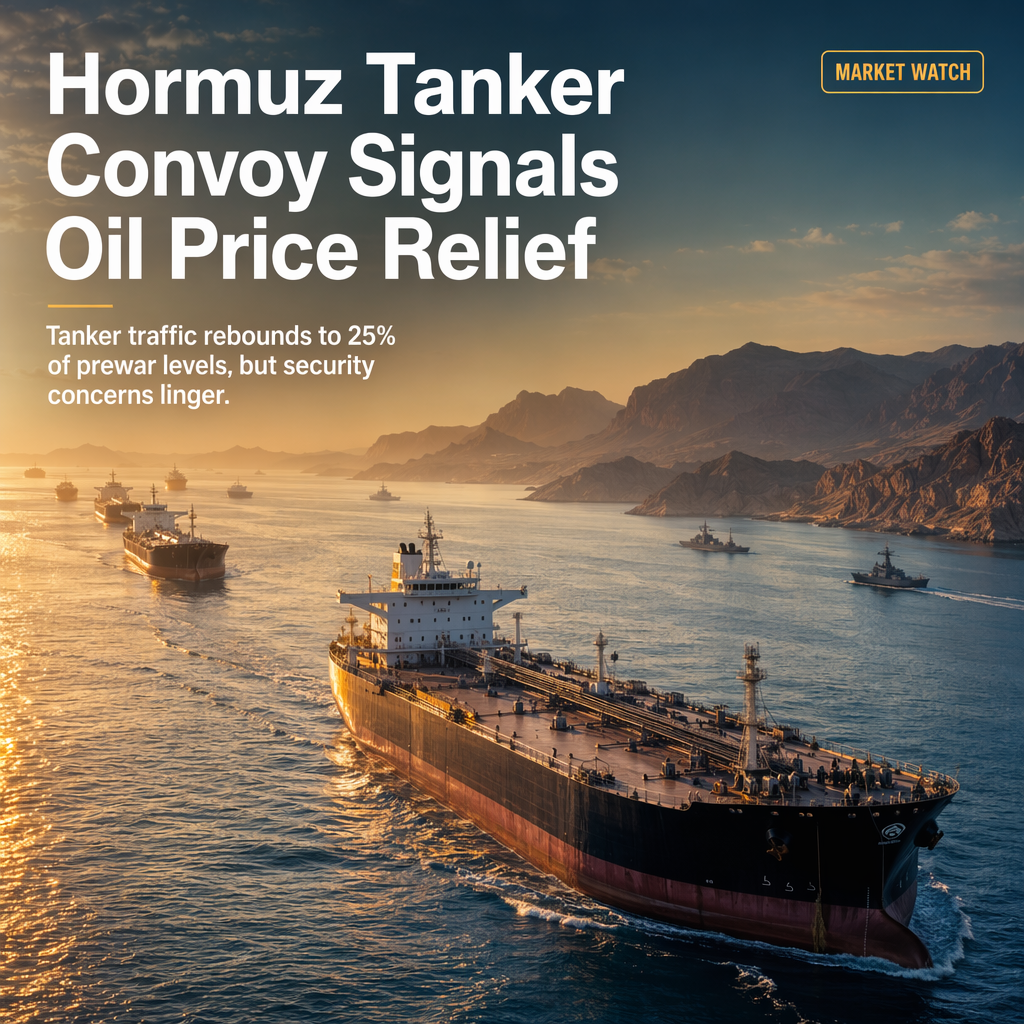
The number of tankers passing through the Strait of Hormuz has climbed to 98 in the week following the signing of a memorandum of understanding between the U.S. and Iran, marking the highest level since the onset of the conflict and reaching 25% of prewar traffic levels [1]. This increase in tanker movements has coincided with crude oil prices falling back to prewar levels, as the market anticipates a normalization of supply [1].
Despite the uptick in outbound shipments, market observers note that more ships are leaving than entering the region, indicating that supply constraints may persist due to sluggish inbound traffic, which is essential for maintaining a steady flow of crude and other commodities [1]. Traders have responded to these developments by factoring in improved supply prospects, but analysts warn that the recovery remains uneven and subject to considerable uncertainty regarding the security of the route and the reliability of the new arrangements [1].
Technical analysis identifies key support for Brent crude at $72 per barrel and resistance at $77, with the potential for prices to fall to $68 if traffic continues to improve. Conversely, any renewed tensions or disruptions could push prices above $80 [1]. Market sentiment is described as cautious, with optimism stemming from the recent agreement tempered by ongoing concerns about security and the sustainability of increased tanker movements [1].
CONCLUSION
Tanker traffic through the Strait of Hormuz has shown signs of recovery, leading to a retreat in crude oil prices to prewar levels. However, persistent supply constraints and security uncertainties mean that market sentiment remains cautious, with the potential for volatility if the situation changes.