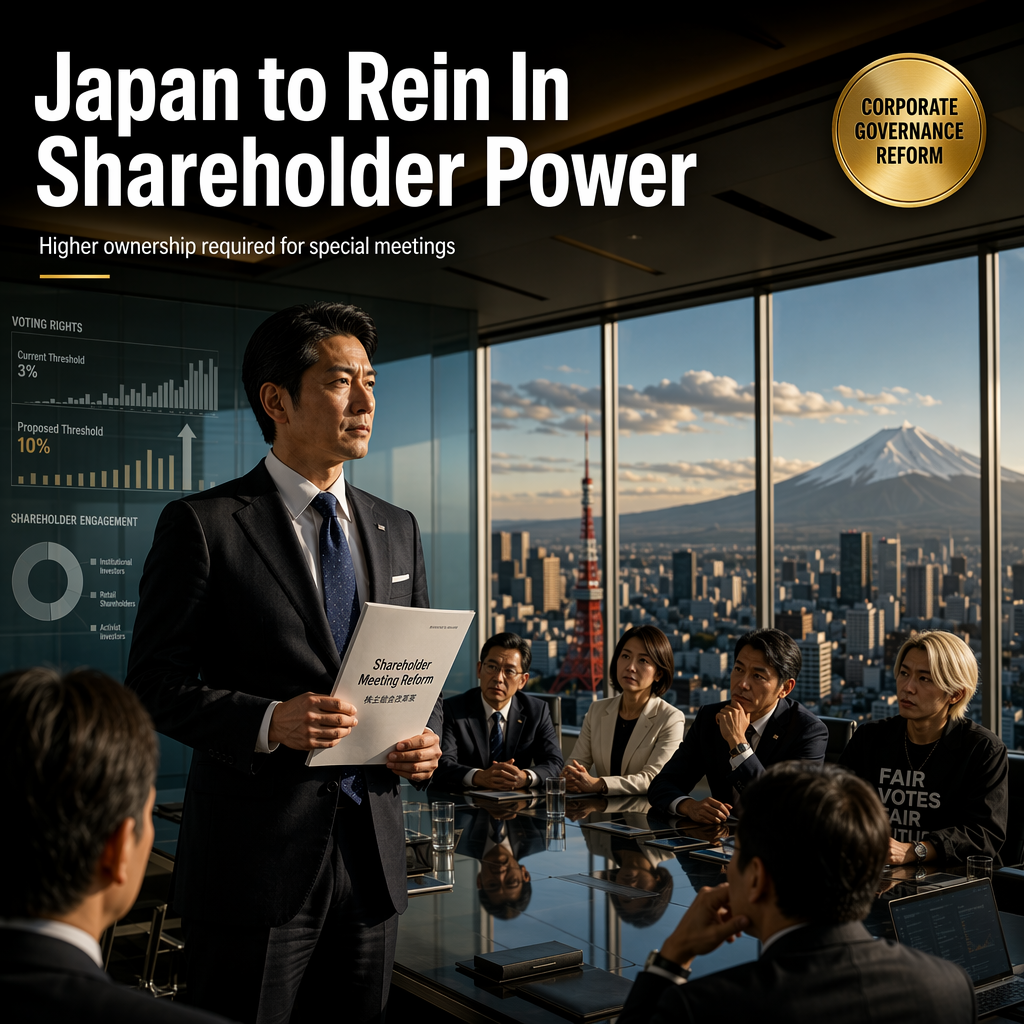
Japan's government and the ruling Liberal Democratic Party are considering a proposal to raise the minimum ownership stake required for shareholders to request extraordinary meetings at Japanese listed companies. The proposed measure would set the threshold at 5% of voting rights, a significant increase from the current, lower requirement. This initiative aims to curb the influence of activist investors, who have increasingly used special meetings to push for changes in corporate governance and management [1].
The government intends for the higher threshold to ensure that only shareholders with a substantial stake can call special meetings, thereby streamlining corporate governance and reducing disruptions caused by frequent demands from smaller activist groups. This move is part of a broader strategy to balance shareholder rights with the need for stable corporate management in Japan's equity markets [1].
The proposed change is expected to impact the operations of activist investors in Japan, potentially reducing the number of extraordinary shareholder meetings and shifting focus toward larger, more influential investors. However, no specific date for the implementation of the new threshold has been set, and discussions between government officials and the ruling party are ongoing [1].
CONCLUSION
Japan's plan to raise the threshold for calling special shareholder meetings is poised to reshape the landscape for activist investors, making it more challenging for smaller stakeholders to initiate changes. While the proposal is still under discussion, its adoption could streamline corporate governance and reduce disruptions in Japan's equity markets.