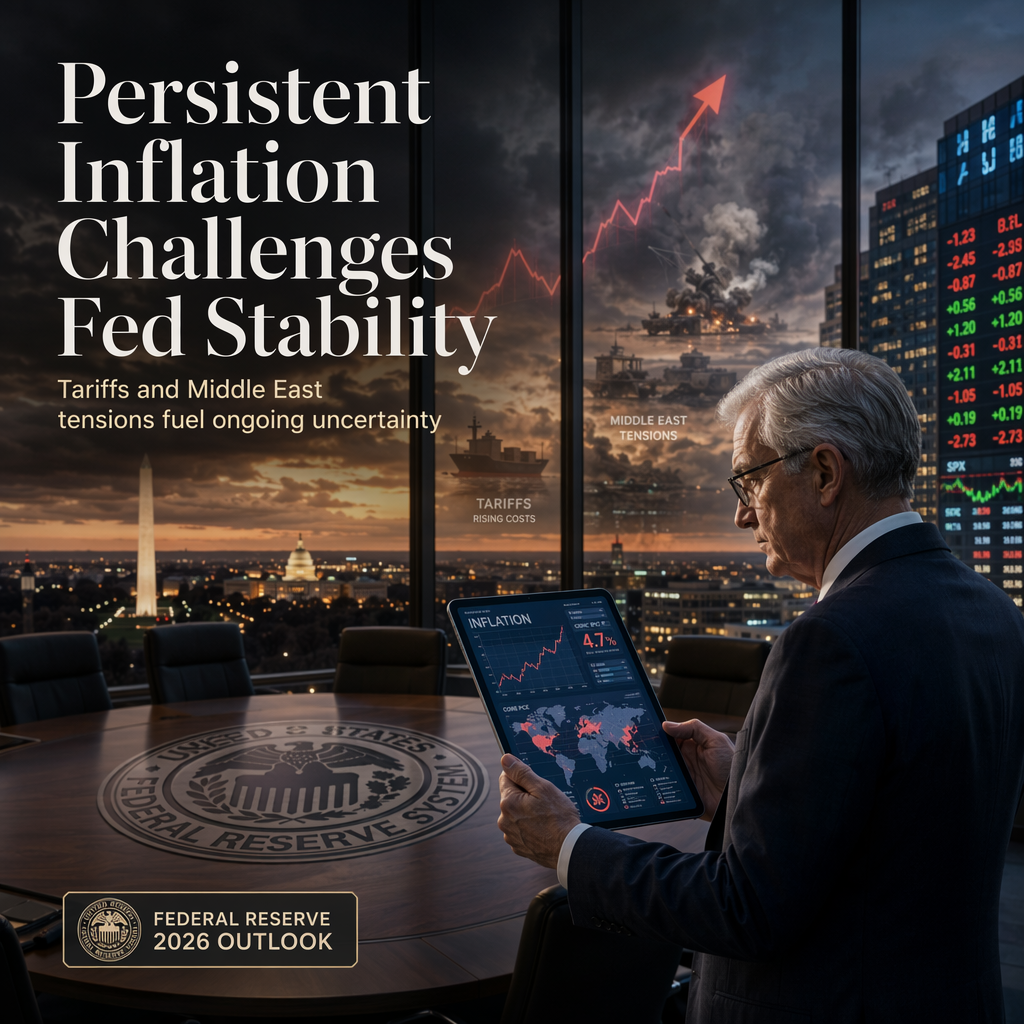
The Federal Reserve released its monetary policy report on Friday, highlighting that inflation remains elevated, primarily driven by tariffs and factors related to the ongoing war in Iran [1]. The report noted that inflation increased further in the spring, signaling that the Fed's price stability goal has not yet been achieved [1]. Despite these inflationary pressures, the labor market was described as broadly stable, with solid nominal wage growth and strong productivity gains [1].
Economic activity in the United States is expanding at a solid pace, even as uncertainty persists due to the conflict in Iran [1]. The Fed reported that M2 money supply growth rates were moderate and similar to those observed during the 2010s [1]. Credit conditions for small businesses and households remained tight, and first quarter 2026 growth was supported by high-tech investment and government spending [1]. The housing market was characterized as stagnant, while asset valuations in stocks, corporate debt, and residential real estate were noted to be above historic norms [1].
The report also mentioned that measures of long-term inflation expectations remain broadly consistent with the Fed's 2% goal [1]. However, some private credit vehicles faced notable increases in redemption requests in the first quarter, reflecting some defaults and concerns about underlying asset quality [1]. Foreign economic activity growth was subdued in the first half of 2026 due to headwinds from the Middle East conflict and US tariffs, though this was partially offset by AI-related investment [1].
The financial system was described as sound and resilient, with vulnerabilities unchanged and bank reserves remaining in an ample range [1]. Strong factory output was attributed to data center investment tied to AI, contributing to a solid rise in US productive capacity [1].
CONCLUSION
The Federal Reserve's report underscores persistent inflationary pressures linked to tariffs and geopolitical tensions, even as the US economy shows resilience and solid growth in certain sectors. While the financial system remains stable, tight credit conditions and elevated asset valuations signal ongoing risks. Market participants are likely to remain cautious as the Fed continues to monitor inflation and economic uncertainty.