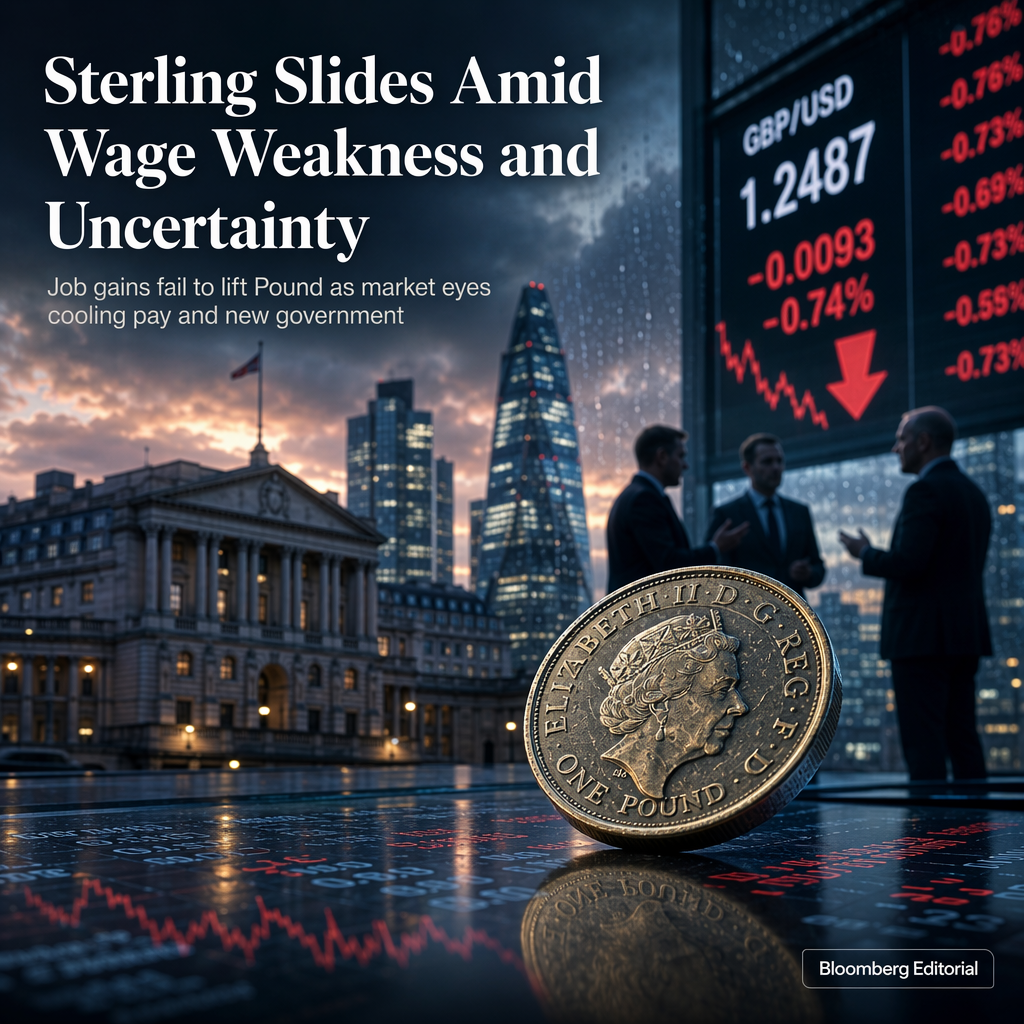
The British Pound Sterling experienced a notable sell-off on Tuesday, despite the release of a labour market report that exceeded expectations on nearly every metric except wage growth [1]. GBP/USD fell from a London morning high just above 1.3450 to a New York low just above 1.3350, breaking through both the 50-day and 200-day Exponential Moving Averages, which are converged just below 1.3400 [1]. By late session, GBP/USD was trading near 1.3380, marking its weakest performance among major currencies for the day and extending its decline to a fourth consecutive session. More than a third of the rebound from the summer base near 1.3150 has already been erased [1].
Key data points from the labour market report include an employment increase of 147,000 in the three months to May (compared to 100,000 prior), a claimant count rise of just 6,700 in June (well below the 28,300 consensus), and an unemployment rate drop to 4.9% (versus a 5% market expectation) [1]. However, average earnings including bonuses slowed to 4.3%, missing the 4.5% consensus and continuing a cooling trend that the Bank of England has been monitoring closely [1]. The market focused on the wage data, as pay growth is the primary metric influencing the Monetary Policy Committee's decisions. The Bank of England held rates at 3.75% in June, with two dissenters voting for 4.00%. Rate expectations have shifted from nearly three hikes at the peak of recent geopolitical tensions to roughly one move to 4.00% in the coming months, with each weaker wage print eroding the rate premium that has supported Sterling [1].
Political uncertainty is also weighing on the Pound. Andy Burnham has recently become Prime Minister, but markets are still awaiting details on his cabinet and fiscal plans, which has sustained a credibility discount on UK assets [1]. This uncertainty compounds the challenges for Sterling, which is already under pressure from renegotiated rate expectations and the highest long-end yields in the G7 despite the UK's relatively low gross debt load [1].
Externally, the US Dollar continues to benefit from safe-haven demand amid ongoing geopolitical tensions, including a strike campaign against Iran and discussions of a potential ceasefire, as well as expectations of a Federal Reserve rate hike by December [1]. These factors have further disadvantaged the Pound in the currency markets.
CONCLUSION
Despite a strong UK jobs report, the British Pound fell sharply due to weaker-than-expected wage growth and ongoing political uncertainty. Market participants are focused on the cooling pay figures and the lack of clarity from the new government, while the US Dollar remains supported by geopolitical tensions and rate hike expectations. The outlook for Sterling remains pressured as these factors persist.