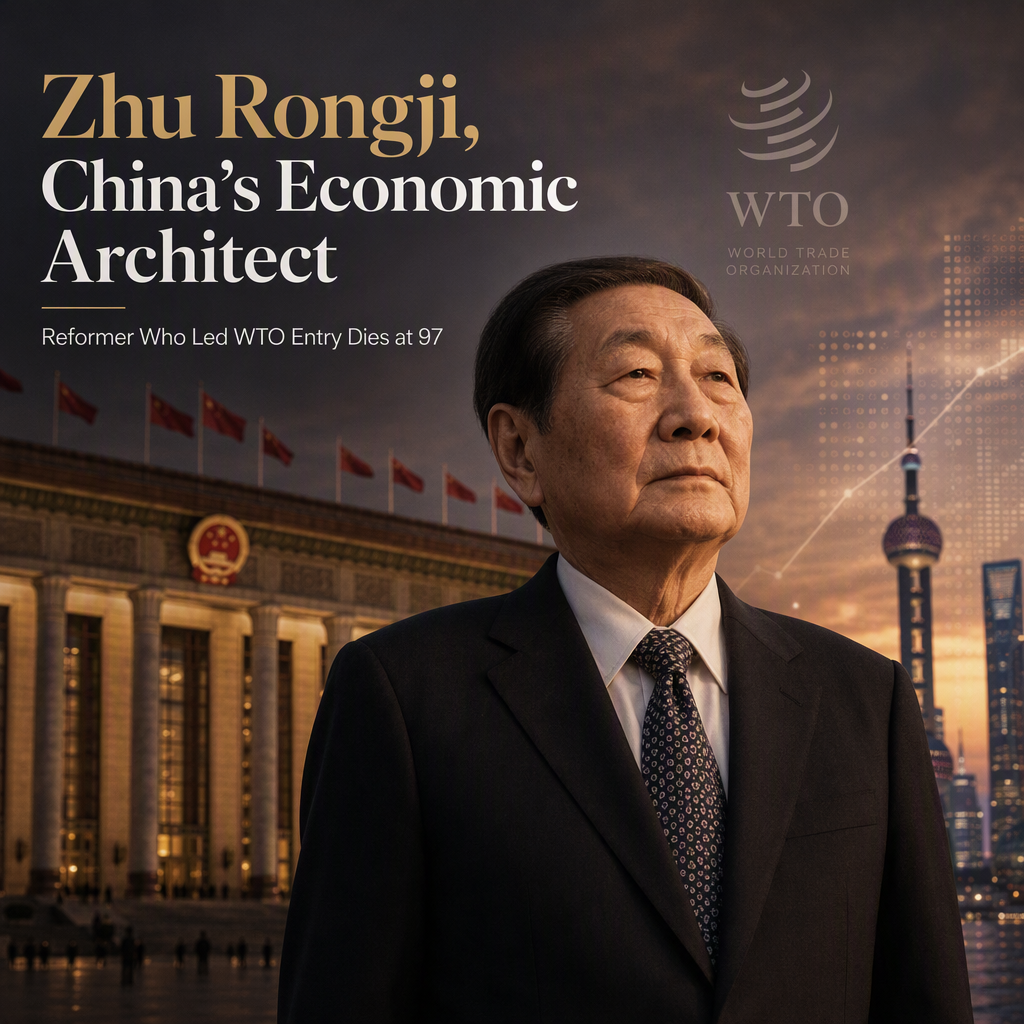
Former Chinese Premier Zhu Rongji, who played a pivotal role in China's economic transformation and global integration, died at the age of 97 after a prolonged illness in Beijing, according to state news agency Xinhua [1]. Zhu is widely credited with overseeing China's accession to the World Trade Organization (WTO) in 2001, a landmark event that accelerated the country's economic growth and opened its markets to foreign investment and trade [1].
During his tenure, Zhu implemented significant economic reforms, including the restructuring of state-owned enterprises, improvements in fiscal policy, and the modernization of China's financial system [1]. These measures helped stabilize the Chinese economy and laid the foundation for its rapid expansion in the 21st century [1]. Zhu was known for his pragmatic approach, willingness to embrace market mechanisms within China's socialist framework, and his tough stance on corruption and inefficiency [1].
Zhu's leadership is often seen as transformative, steering China towards becoming a major player in the global trading system and fostering a period of greater openness both economically and diplomatically [1]. The article does not mention specific market reactions or analyst opinions regarding Zhu's passing [1].
CONCLUSION
Zhu Rongji's death marks the passing of a key figure in China's economic modernization and global integration. His legacy of reform and openness continues to shape China's role in the world economy. No immediate market reactions or forward-looking analyst statements were reported.