
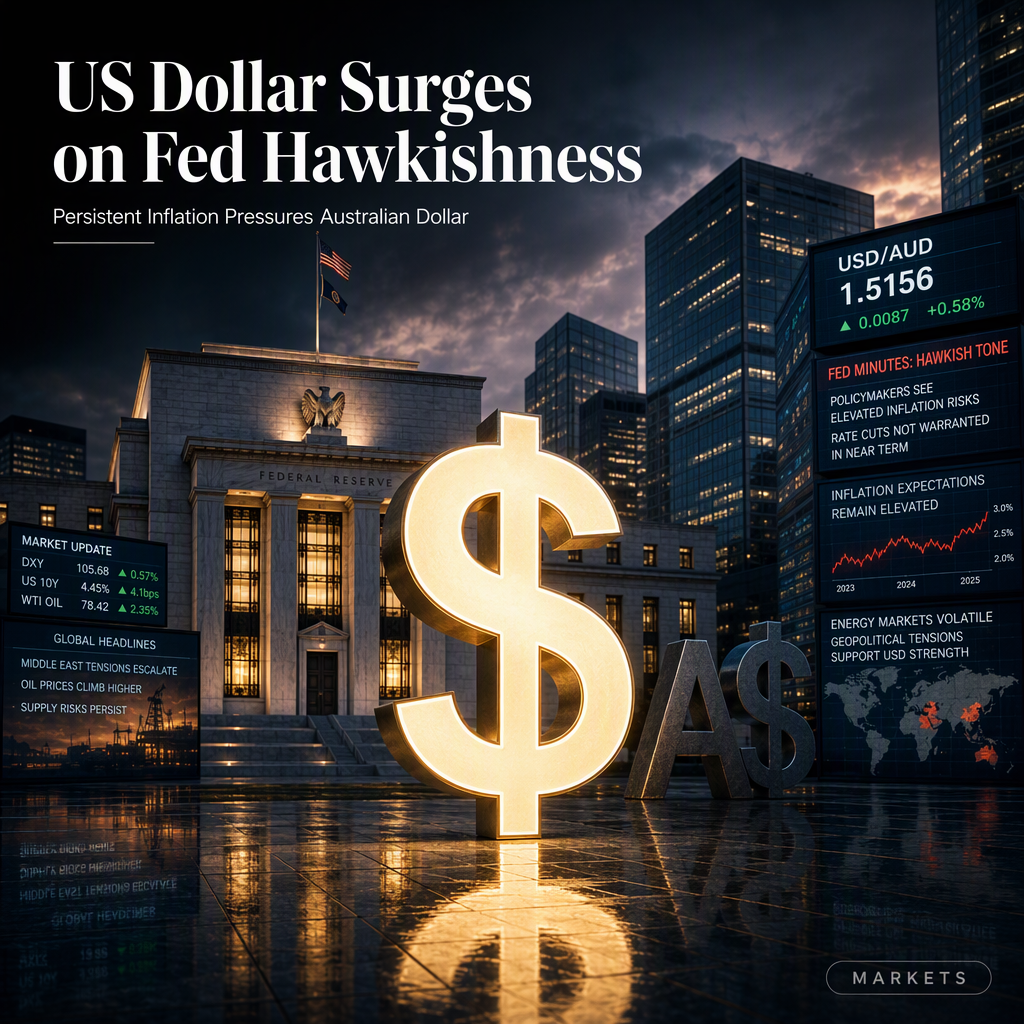
The release of the Federal Open Market Committee (FOMC) minutes on Wednesday signaled a continued hawkish stance from the Federal Reserve, with most officials anticipating another interest rate hike before the end of the year to address inflation that has exceeded target levels for over five years [1][2]. The minutes revealed a unanimous vote to raise the federal funds rate target range at the September 15-16 meeting, with the previous hike being a 25 basis point increase to 3.75%–4%—the first since July 2023 [1][2]. According to the CME Group's FedWatch Tool, traders are pricing in an 80% chance of a rate hike in December, although Source 1 reports a lower probability of 22% for a quarter-point hike at the October meeting, down from 70% after the September decision [1][2].
The hawkish tone from the Fed, reinforced by comments from officials such as Schmid, who highlighted the persistent and 'frustrating' nature of inflation and the role of AI as a significant inflation driver, has strengthened the US Dollar (USD) against major currencies, including the Australian Dollar (AUD) [1]. As a result, the AUD/USD pair declined to around 0.6965 during Asian trading hours on Thursday, with the AUD recovery stalling and UOB Group strategists shifting to a neutral stance, expecting the pair to consolidate between 0.6935 and 0.7020 over the next 1–3 weeks [1].
Meanwhile, the US Dollar Index (DXY) has retreated modestly from its year-to-date highs but remains above the 102.00 mark, supported by strong US economic fundamentals, elevated bond yields, and persistent inflation concerns driven by volatile energy prices [2]. Brown Brothers Harriman strategists noted that high energy prices and US growth outperformance continue to favor the USD, especially against energy-importing currencies like the AUD [2]. Additionally, ongoing geopolitical tensions in the Middle East are contributing to a safe-haven bid for the USD, with the Pentagon reportedly preparing for potential military action in Iran, which could further support the DXY [2].
Looking ahead, market participants are awaiting the US Weekly Initial Jobless Claims report and further commentary from FOMC members for additional direction [1][2]. Both sources indicate that the bias remains tilted in favor of USD bulls, with any significant corrective decline in the DXY requiring strong follow-through selling [2].
CONCLUSION
The hawkish Fed minutes and persistent inflation expectations have reinforced US Dollar strength, pressuring the Australian Dollar and supporting the DXY above key levels. Market sentiment remains bullish on the USD, with traders closely monitoring upcoming US economic data and FOMC commentary for further cues. Geopolitical risks and energy price volatility are likely to sustain near-term demand for the Greenback.