
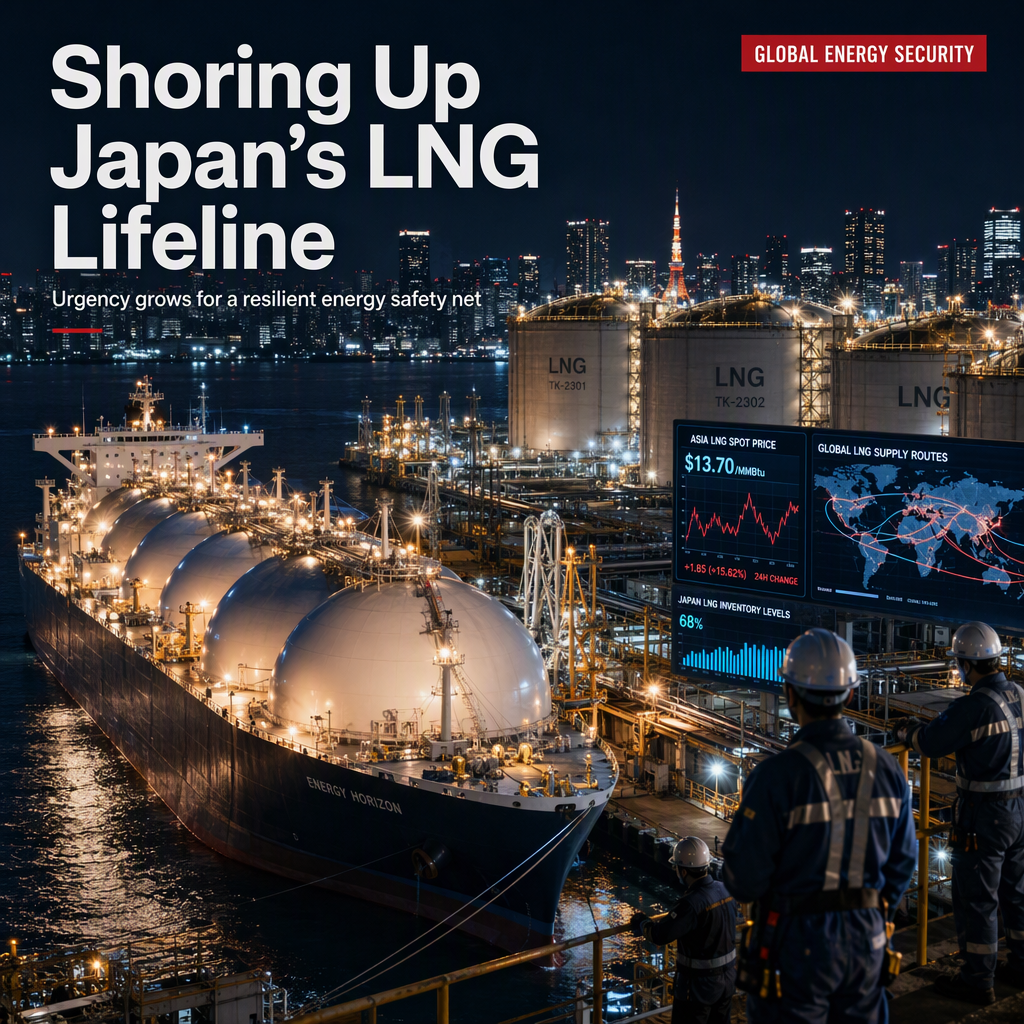
Japan's energy security is under renewed scrutiny as the global liquefied natural gas (LNG) market remains volatile, prompting calls for Tokyo to urgently strengthen its LNG supply chain and establish a robust safety net against future disruptions [1]. The urgency is underscored by the lingering impact of the 2022 energy crisis, when Russia's invasion of Ukraine led to surging spot prices and forced Japanese utilities to scramble for cargoes, resulting in higher consumer costs and threats to economic stability [1].
Recent collaborative efforts, such as the meeting between JERA Chairman Yukio Kani and Petronas CEO Tengku Muhammad Taufik in Bangkok, highlight ongoing attempts to secure supply, but experts warn that complacency is not an option [1]. Analysts recommend Japan diversify its long-term contracts beyond traditional suppliers like Australia, Qatar, and Malaysia, and engage more with emerging exporters such as the United States and African nations to distribute risk [1].
Further, the article advocates for investment in LNG storage infrastructure and the creation of strategic reserves, similar to Japan's crude oil stockpiles, to buffer against short-term supply shocks and strengthen Tokyo's negotiating position during market tightness [1]. Market analysis suggests that global LNG supply will remain tight through the late 2020s, with demand growth outpacing new project startups and price volatility likely to persist, especially during winter or geopolitical crises [1]. During the 2022 crisis, Asian spot LNG prices exceeded $70 per MMBtu, and current technical indicators show that while Japan's LNG inventories are above the five-year average, projected demand growth and potential disruptions could quickly deplete these reserves [1]. Price support for Asian LNG contracts is expected to stay elevated, with resistance near $20 per MMBtu unless there is a significant demand downturn or new supply comes online [1].
Industry insiders emphasize the necessity of a multi-layered approach to supply security, including more suppliers, increased storage, and flexible contracts, to prevent Japan from being caught off guard in future crises [1].
CONCLUSION
Japan's continued reliance on LNG makes diversification, expanded storage, and strategic planning essential to safeguard its energy and economic security. Without these measures, the nation risks repeating the disruptions and price spikes experienced during the 2022 energy crisis.