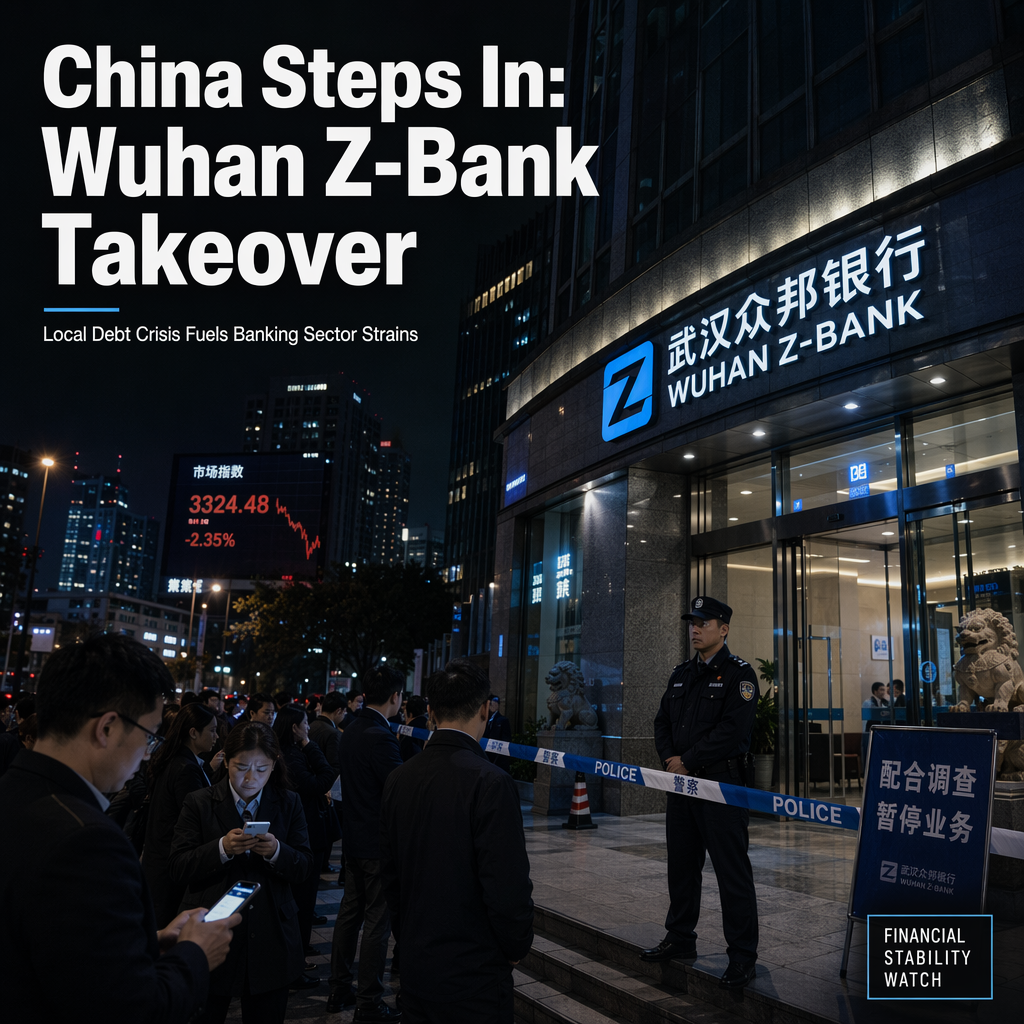
Chinese authorities have orchestrated a state-directed takeover of Wuhan Z-Bank, a small private lender in Hubei province, due to what regulators have described as 'severe credit risks' [1]. This intervention highlights persistent pressures within China's banking system as the country continues to face significant debt challenges, particularly among local lenders [1]. Ding Xiangqun, the newly appointed head of the National Financial Regulatory Administration, addressed the issue at the Lujiazui Forum 2026 in Shanghai on June 17, stressing the importance of ongoing vigilance and regulatory oversight to safeguard financial stability [1].
The absorption of Wuhan Z-Bank is part of a broader strategy by Chinese authorities to contain systemic risks in the banking sector. Market analysts have observed that such interventions are becoming more frequent as economic growth slows and loan defaults increase, especially among smaller, regional banks that are more vulnerable to local debt and property market downturns [1].
The intervention comes at a time of heightened concern over the health of China's financial system. Nearly 90% of listed Chinese banks have reportedly fallen below profit thresholds, underscoring the widespread impact of the country's debt crunch and the ongoing slump in the property sector [1].
Investors and regulators are closely monitoring the situation at Wuhan Z-Bank, viewing it as a potential indicator for other troubled local lenders. While the takeover demonstrates Beijing's readiness to intervene to prevent broader contagion, it also raises questions about the extent of hidden risks within the system and the long-term viability of state-led rescues [1].
CONCLUSION
The state-directed takeover of Wuhan Z-Bank underscores the growing strains in China's banking sector, particularly among smaller lenders exposed to local debt and property market challenges. While the intervention may help contain immediate risks, it highlights deeper systemic issues and uncertainty about the sustainability of ongoing state support.