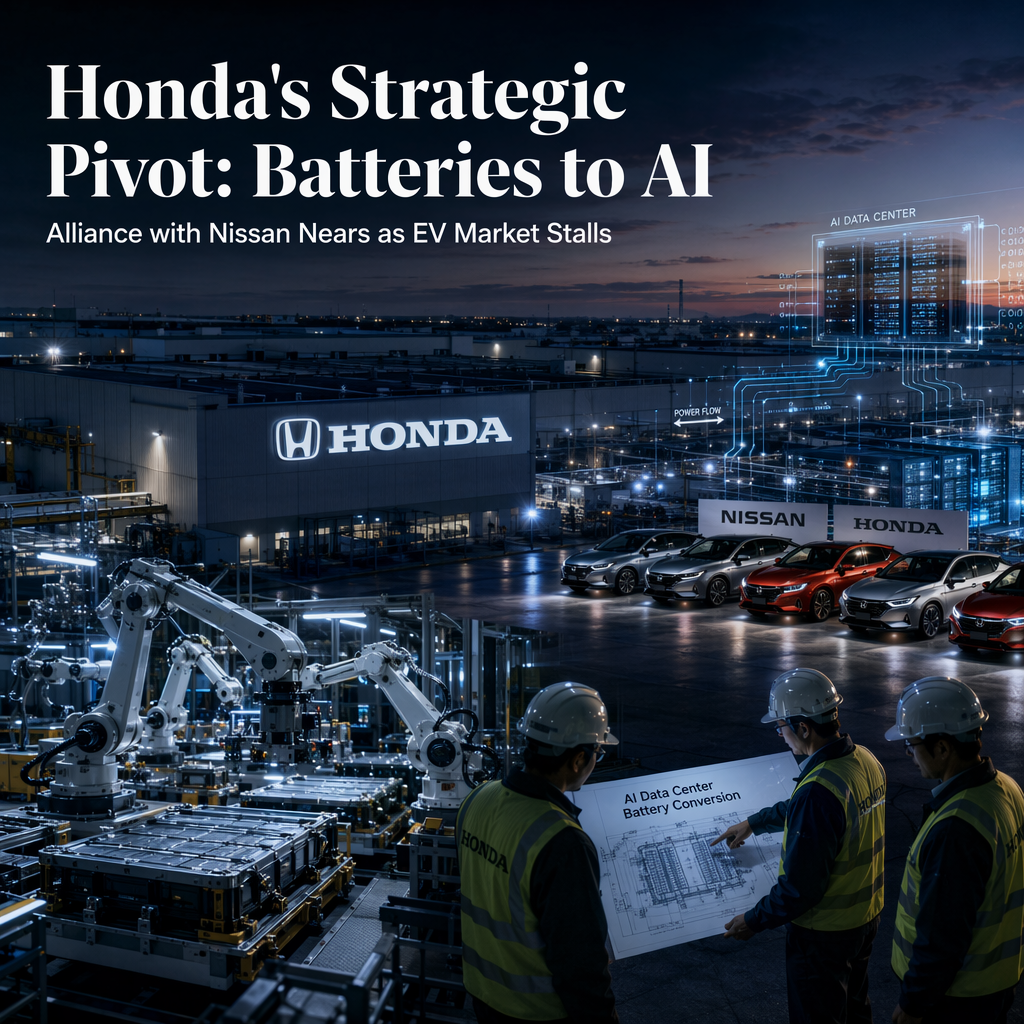
Honda Motor is on the verge of announcing a strategic collaboration with Nissan Motor, according to Honda President Toshihiro Mibe, who stated that the partnership discussions are 'quite far along, with some aspects close to an announcement' [1]. The alliance is positioned as a 'win-win' opportunity, aiming to leverage synergies between the two automakers, particularly in next-generation vehicle platforms and cost-sharing initiatives. The companies plan to standardize components and technologies to reduce development costs and improve efficiency [1]. However, the potential tie-up faces complications, as Nissan shareholder Renault may object due to its significant stake and historical influence over Nissan's strategic direction [1].
This development comes at a critical juncture for Honda, which recently reported a net loss and is under pressure to adapt to evolving market conditions, including supply chain disruptions and intensifying global competition [1]. In response to stagnating electric vehicle (EV) sales in the United States, Honda has also shifted its production strategy. The company has begun manufacturing batteries for artificial intelligence (AI) data centers at a U.S. plant originally intended for EV battery production, following a drastic rethink of its electrification plans [2]. This pivot allows Honda to maintain factory operations and workforce stability while waiting for a potential rebound in EV demand [2].
Honda's decision to produce batteries for the rapidly growing AI data center market is expected to help offset losses from the EV segment and make use of existing investments in battery manufacturing infrastructure [2]. The move reflects broader industry challenges, with several automakers reevaluating their electrification timelines and product offerings in light of changing market dynamics and technological advancements [2].
Industry analysts are closely monitoring the Honda-Nissan negotiations, as a successful alliance could reshape the competitive landscape for Japanese automakers and have significant implications for the global automotive market [1]. While specific financial terms of the Honda-Nissan partnership have not been disclosed, Mibe assured investors that discussions are progressing positively and that an official announcement could be made soon [1].
CONCLUSION
Honda is taking decisive steps to address challenges in the EV market by both pursuing a strategic alliance with Nissan and repurposing its U.S. battery plant for AI data center applications. These moves are intended to stabilize operations and position the company for future growth amid industry-wide uncertainty. The outcome of the Honda-Nissan alliance and the success of Honda's battery pivot will be closely watched by investors and industry observers.