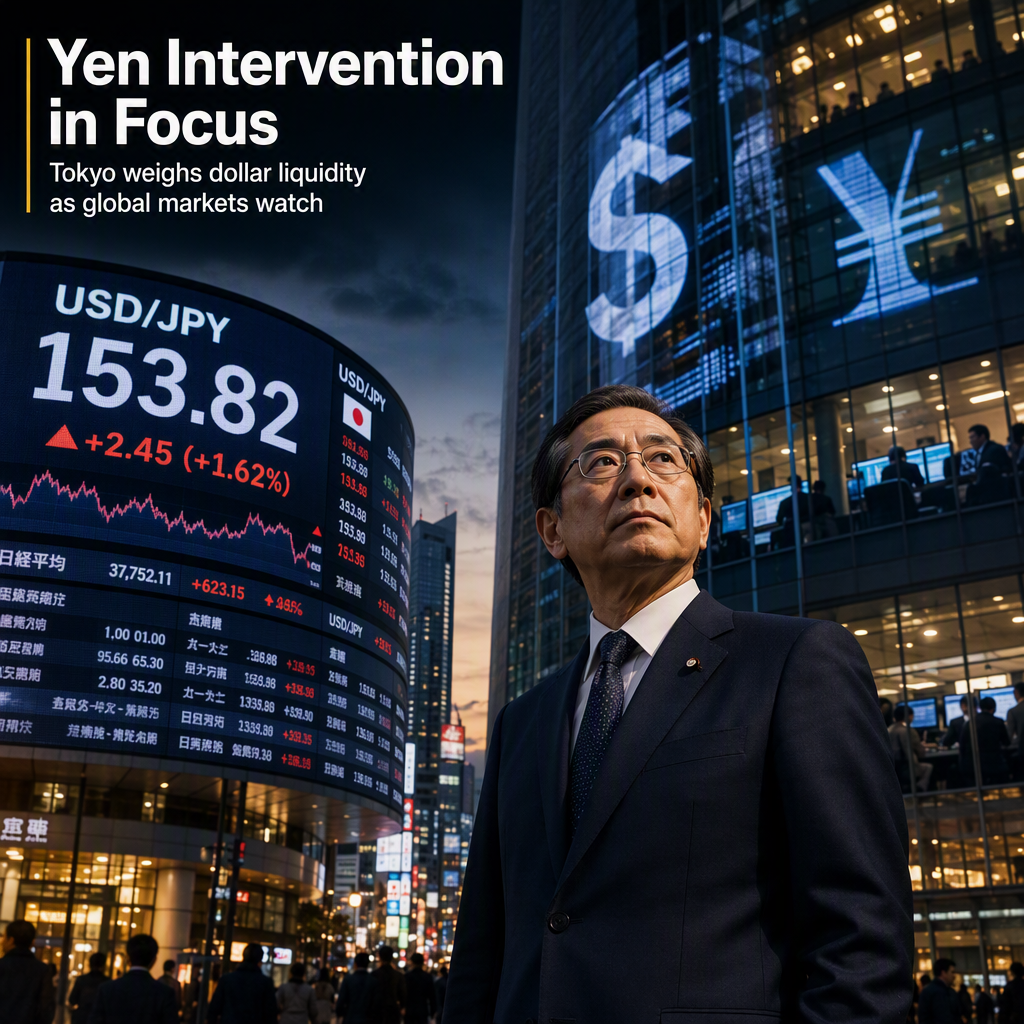
The Japanese Yen remains at the center of market attention as investors focus on the prospects of intervention by Japanese authorities. According to BNY’s Geoff Yu, both U.S. and Japanese authorities refrained from market action overnight, with Tokyo aiming to maintain its International Monetary Fund (IMF) classification as a 'free-floating exchange rate regime.' This status limits Japan's ability to intervene in the currency market for a fourth consecutive trading session [1].
BNY data indicates that intervention days have produced some of the highest trading volumes year-to-date, with the initial 'surprise' intervention generating the most significant price action in USD/JPY and other yen crosses. While increased trading volumes can reinforce current price trends, event risk typically benefits the yen and can counteract the effects of intervention [1].
Scott Bessent has advocated for the Federal Reserve to expand the FIMA Repo Facility, which would allow Japan to access more U.S. dollar liquidity for foreign exchange operations without selling its U.S. Treasury holdings. This approach is intended to enhance Japan's intervention capabilities while minimizing market disruption. The FIMA Repo Facility enables accountholders to use their Treasury holdings as collateral to obtain dollars, which Japan could then sell to support the yen without liquidating its U.S. bond portfolio [1].
Despite these potential tools, BNY notes that lasting success in supporting the yen will depend on the alignment of monetary and fiscal fundamentals, not just liquidity measures or intervention tactics [1].
CONCLUSION
Market participants are closely monitoring Japanese authorities' next moves regarding yen intervention, with attention on potential U.S. support through expanded dollar liquidity facilities. While intervention and liquidity tools may provide short-term relief, sustainable yen strength will require broader monetary and fiscal alignment.