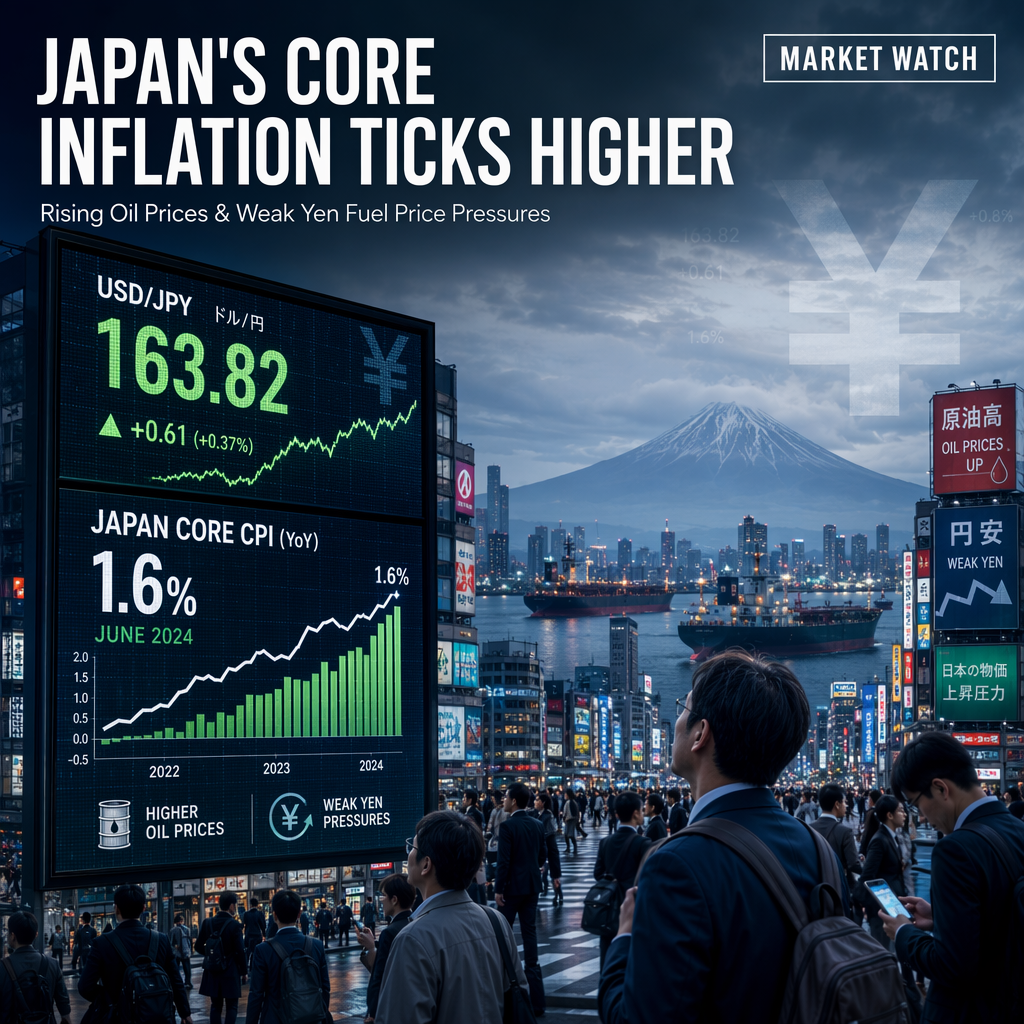
Japan's National Consumer Price Index (CPI) increased by 1.7% year-on-year (YoY) in June, up from the previous reading of 1.5%, according to data released by the Japan Statistics Bureau [1][2]. The core CPI, which excludes fresh food, rose by 1.6% YoY, matching market expectations and marking the first rise in core inflation since March [1][2]. The so-called 'core-core' inflation rate, which excludes both fresh food and energy, dipped to 1.7% YoY in June, the lowest level since August 2022 [1][2].
Energy prices, cushioned by government subsidies, fell just 0.1% YoY in June compared to a 2.5% decline in May [2]. Despite these subsidies, businesses faced significant cost pressures, with the producer price index for June reaching 7.1%, the highest since March 2023 [2]. Japan's reliance on energy imports has been highlighted by trade data showing petroleum import values surged by more than 59% YoY, as the country meets over 87% of its energy needs through imports [2]. The weak yen, which touched a multi-decade low of 163.23 against the US dollar on Tuesday and hovered around 163 on Wednesday, has further exacerbated imported inflation pressures [2].
Following the release of the CPI data, the USD/JPY currency pair rose 0.41% on the day to 163.82 [1]. The Bank of Japan remains vigilant regarding upside inflation risks, with some policymakers considering the possibility of faster interest rate hikes if inflation accelerates due to the weak yen and rising fuel costs linked to the Middle East crisis [2].
Overall, the data suggest that while headline and core inflation are rising, underlying price pressures remain moderate, and the central bank is closely monitoring the situation for potential policy adjustments [1][2].
CONCLUSION
Japan's June inflation data showed a modest uptick in both headline and core measures, driven by higher oil prices and a weaker yen. The market responded with a stronger USD/JPY, and the Bank of Japan is signaling readiness to act if inflation accelerates further. Investors should watch for potential policy shifts if price pressures persist.