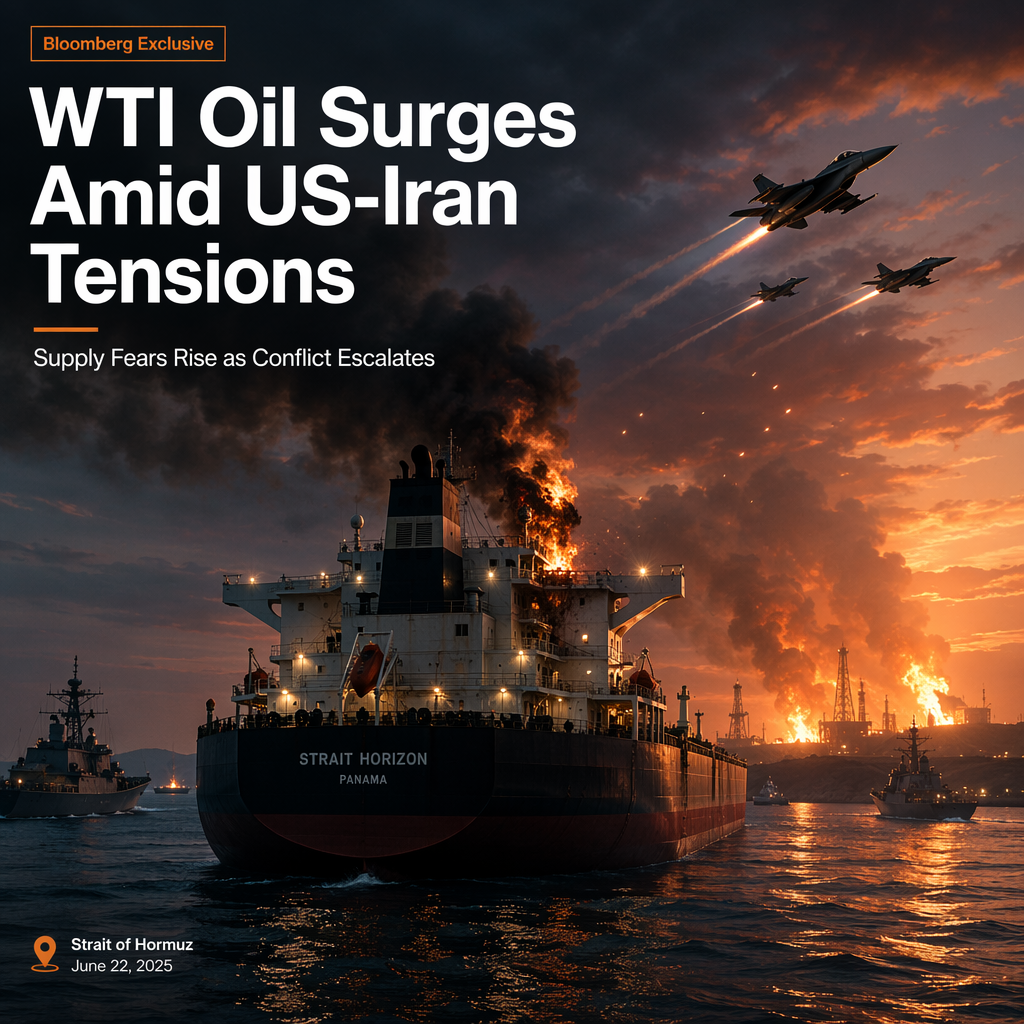
West Texas Intermediate (WTI), the US crude oil benchmark, climbed to around $79.50 during early Asian trading hours on Thursday, approaching a one-month high following a series of US military strikes on Iranian coastal military assets and the reinstatement of a naval blockade of Iran [1]. According to the Guardian, the US Central Command (CENTCOM) confirmed that US aircraft launched another wave of strikes against Iran in an effort to keep the Strait of Hormuz open, including firing missiles into an oil tanker’s smokestack in the critical waterway, which disabled the vessel [1].
The escalation in the conflict has revived concerns over potential disruptions to oil supply, which has contributed to the upward movement in WTI prices [1]. US President Donald Trump stated that he does not like giving deadlines when questioned about whether Iran faces a deadline before the US targets Iranian bridges, indicating ongoing uncertainty in the situation [1].
In addition to geopolitical tensions, US crude oil inventories also influenced market sentiment. The US Energy Information Administration (EIA) reported that crude oil stockpiles in the US fell by 1.693 million barrels for the week ending July 10, compared to a decline of 2.998 million barrels in the previous week. The market consensus had anticipated a decrease of 2.6 million barrels [1]. The drop in inventories was attributed to increased exports and higher refinery capacity utilization [1].
The combination of heightened geopolitical risk in the Middle East and tighter US crude inventories has contributed to the recent strength in WTI prices, with market participants closely monitoring further developments in the US-Iran conflict and oil supply data [1].
CONCLUSION
WTI oil prices surged to near a one-month high as US military actions against Iran and falling US crude inventories fueled concerns over supply disruptions. The market remains sensitive to further geopolitical developments and inventory trends, which could continue to drive volatility in oil prices.