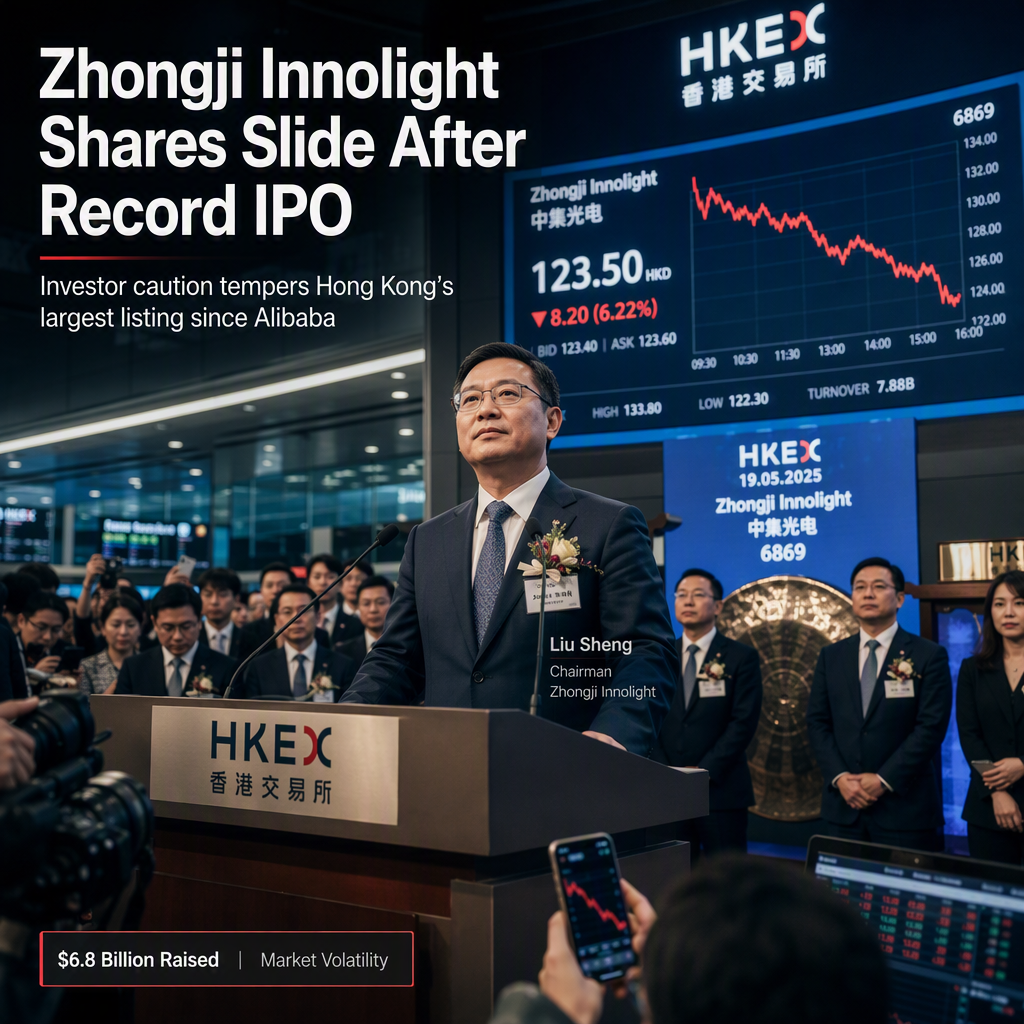
Zhongji Innolight, a leading Chinese supplier of AI-related equipment, experienced a decline in its share price during its Hong Kong debut on July 30, 2026, following the completion of Asia's second-biggest listing of the year. The company raised HK$53.4 billion ($6.8 billion), marking the largest Hong Kong IPO since Alibaba, with Chairman and President Liu Sheng attending the listing ceremony alongside other executives [1].
Despite the significant fundraising, investor sentiment was subdued due to concerns about the sustainability of demand for AI-related products and the risk of oversupply in optical parts. The market also reacted to increased competition from other regional technology firms, particularly in the chip and AI equipment sectors [1]. Technical analysis indicated that the stock faced resistance at its opening price, with a lack of follow-through buying resulting in a downward trend throughout the trading session. No significant support levels were established, suggesting the potential for continued volatility in the near term [1].
Market analysts highlighted that the HK$53.4 billion raised positions Zhongji Innolight as a major player in the Asian technology market. However, ongoing concerns about the pace of technology infrastructure buildout and global economic headwinds may continue to weigh on the company's performance [1]. Industry observers noted the uncertainty, with one local analyst stating, "While this is a landmark IPO for Hong Kong, the market is wary of oversaturation in AI-related supply chains." Investors are reportedly waiting for signs of stabilization before committing additional capital [1].
Trading advice from market participants remains cautious, with recommendations to monitor the stock for signs of consolidation or reversal before taking new positions. Overall, market sentiment is mixed, reflecting both optimism about the growth potential of the AI sector and anxiety about possible near-term market corrections [1].
CONCLUSION
Zhongji Innolight's high-profile IPO raised $6.8 billion but was met with a share price decline amid investor caution and sector-specific concerns. While the listing cements the company's status as a major Asian tech player, ongoing market volatility and competitive pressures suggest a cautious outlook in the near term.