
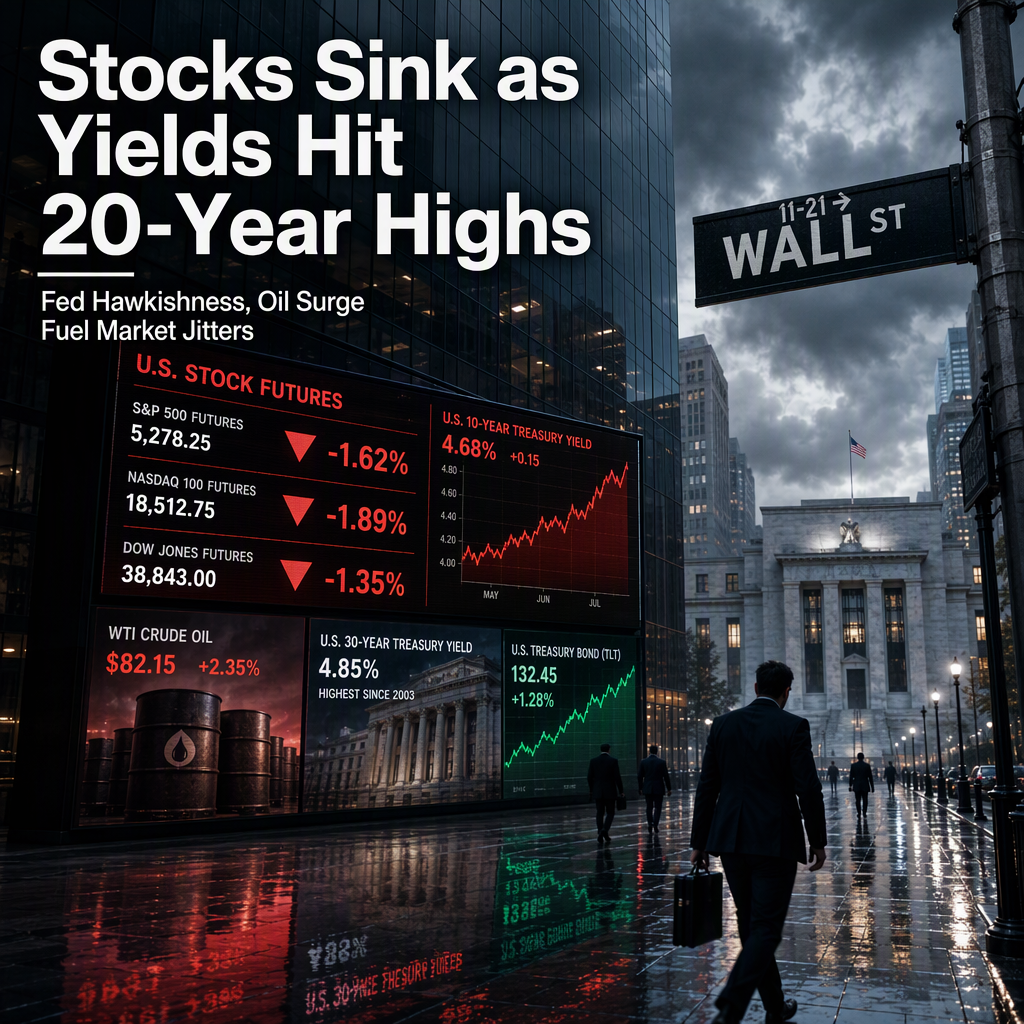
US stock futures declined sharply during European trading hours on Thursday, with Dow Jones futures falling by 0.56% to near 51,160, S&P 500 futures down 0.28% to around 7,830, and Nasdaq 100 futures losing 0.44% to approximately 31,270 [1]. This downturn was primarily driven by a surge in US Treasury yields, as the 10-year and 30-year notes traded near 5.32% and 5.71%, respectively—levels not seen since 2002 [1]. The rise in yields followed the release of the Federal Reserve’s September meeting minutes, which revealed unanimous support among all 19 policymakers for the recent interest rate hike. A majority of these officials indicated that an additional rate increase may be necessary before year-end [1].
Market sentiment was further dampened by persistent inflation risks and elevated crude oil prices, which continue to fuel inflationary concerns [1]. Geopolitical tensions, particularly the potential for escalation between the US and Iran and threats to shipping routes through the Strait of Hormuz, added to the cautious mood [1]. Societe Generale analysts noted that while the initial reaction to the FOMC minutes and a solid Treasury auction was muted, defensive trading emerged at the European open as oil and natural gas prices climbed, exacerbated by hurricane Isaiah's impact on Gulf of Mexico oil production and reports of President Trump considering renewed military action in the Gulf [1].
Looking ahead, investors are closely monitoring upcoming speeches from Federal Reserve officials Christopher Waller and Alberto Musalem for further guidance on monetary policy direction [1]. Additionally, the market is awaiting quarterly earnings reports from major companies such as PepsiCo, Progressive, and Delta Air Lines, which are scheduled for release on Thursday [1].
According to the CME FedWatch tool, traders are currently pricing in a 78.3% probability of a rate hike in December, despite consensus expectations for rates to remain unchanged at the October meeting [1].
CONCLUSION
US stock futures faced significant pressure as Treasury yields surged to multi-decade highs, driven by hawkish signals from the Federal Reserve and persistent inflation concerns. Geopolitical risks and rising energy prices further weighed on sentiment, with investors now focused on upcoming Fed commentary and key corporate earnings for additional market direction.