
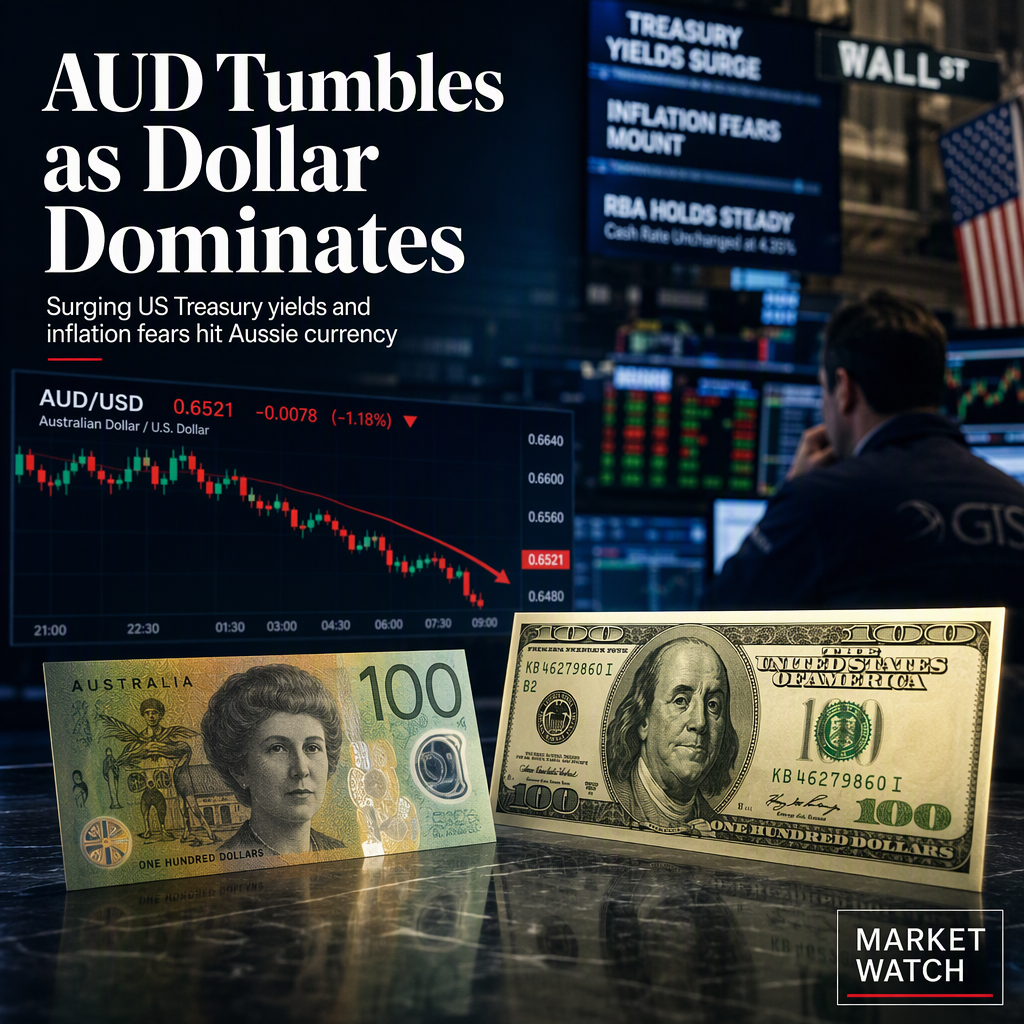
The Australian Dollar (AUD) has experienced a decline against the US Dollar (USD), with AUD/USD extending losses for the second consecutive day and trading around 0.6950 during European hours on Thursday [2]. This movement is attributed to the US Dollar gaining support as Treasury yields climb to levels not seen since 2002, with 10-year and 30-year US Treasury yields trading near 5.32% and 5.71%, respectively [2]. The Federal Reserve's September Meeting Minutes revealed unanimous support among all 19 policymakers for the recent interest rate hike, and a majority indicated that an additional rate increase may be required before the end of the year [2]. Market consensus, however, expects rates to remain steady at the October meeting, while the CME FedWatch tool shows an 84.2% probability of a rate hike in December [2].
Safe-haven demand for the US Dollar has been further bolstered by heightened geopolitical tensions, particularly concerns over a potential escalation between the US and Iran, which threatens vital maritime shipping routes through the Strait of Hormuz [2]. Elevated crude oil prices are also contributing to inflation fears and supporting the Greenback [2].
On the Australian side, Consumer Inflation Expectations rose to a four-month high of 5.3% in October, up from 4.9% previously, reflecting persistent price pressures driven by high global energy costs despite ongoing monetary tightening by the Reserve Bank of Australia (RBA) [2]. Money markets are now pricing in a 27% probability of another RBA rate hike to 4.85% at the upcoming Board meeting, according to the ASX Rate Tracker [2].
Strategists at UOB Group have shifted their medium-term stance on the AUD from negative to neutral as of October 7 (spot at 0.6980), expecting the AUD/USD to trade within a range of 0.6935 to 0.7020 over the next one to three weeks [1][2]. They note that, despite the recent decline to 0.6943, there has been no clear increase in bearish momentum, and a sustained decline in the AUD is considered unlikely [1]. Technical analysis shows AUD/USD trading below both the nine- and 50-period Exponential Moving Averages, with a 14-day Relative Strength Index around 34, indicating lingering bearish pressure and proximity to oversold territory [2].
No significant market-moving reactions or analyst opinions beyond the expectation of continued range-bound trading and subdued rallies were reported in the sources [1][2].
CONCLUSION
The Australian Dollar's recent decline is primarily driven by a stronger US Dollar amid surging Treasury yields and persistent inflation concerns. Despite these pressures, analysts expect the AUD/USD to remain range-bound in the near term, with no clear signs of a sustained bearish trend. Market participants are closely watching upcoming central bank meetings and inflation data for further direction.