
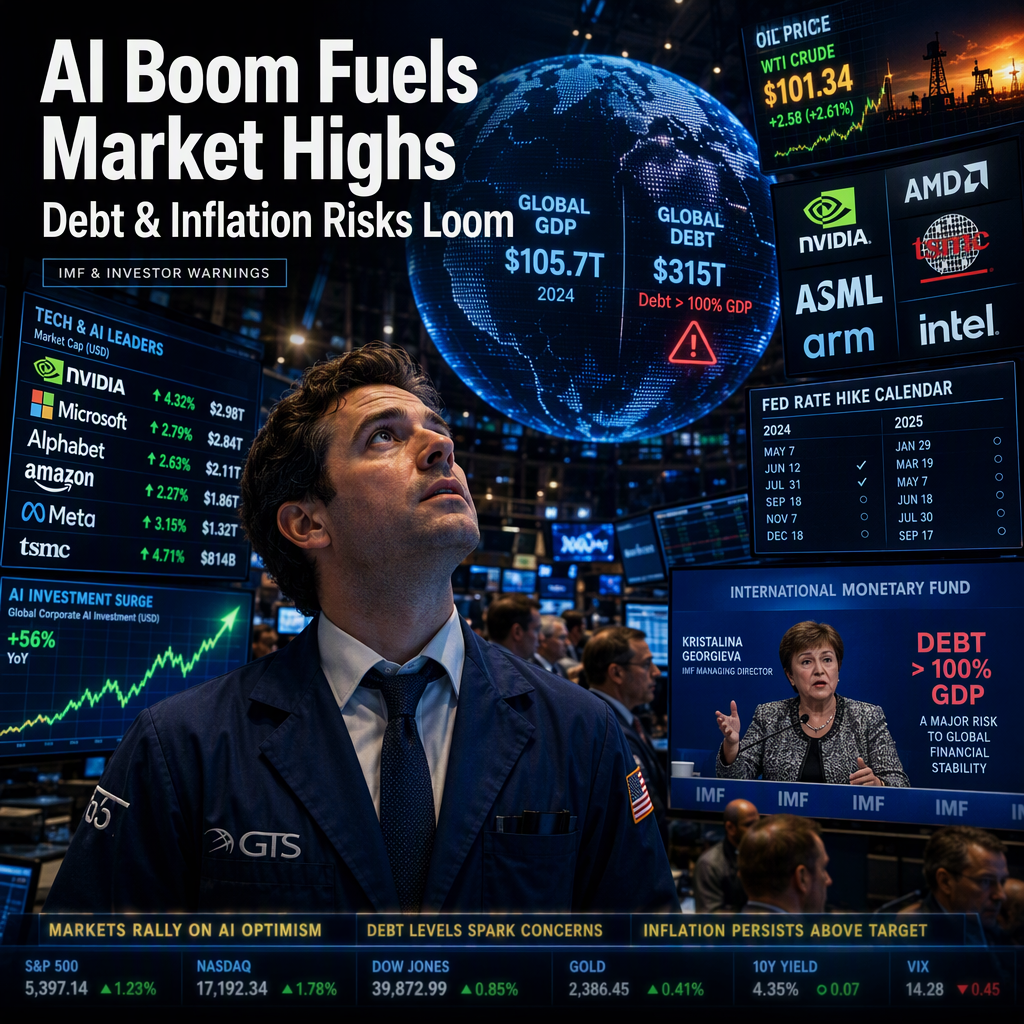
The global surge in artificial intelligence (AI) investment is reshaping economic and market dynamics, according to statements from International Monetary Fund (IMF) Managing Director Kristalina Georgieva and market participants. Georgieva warned that while AI is rapidly becoming a key driver of countries' fortunes, the combination of record public debt, soaring energy costs, and the AI boom is creating significant challenges for global growth. She noted that global public debt is heading past 100% of GDP, and that the growth needed to reduce debt without budget cuts or tax increases appears out of reach for now [1].
Georgieva highlighted that AI investment as a share of GDP is on track to match or exceed historical infrastructure booms, such as railroads and power grids, with AI hardware and related technology products already accounting for over a tenth of world goods trade. The IMF estimates that AI could add up to half a percentage point to annual world growth if implemented effectively, equating to an increase from 3% to 3.5% over a decade—comparable to adding an economy the size of ASEAN to the global economy. However, she cautioned that the benefits are likely to be highly concentrated, increasing the risk of widening economic inequality, and that the AI building boom is inflationary, compounding pressures from energy and food shocks, tariffs, and defense spending. Oil prices have remained above $100 per barrel due to ongoing Middle East conflict, further fueling inflation concerns [1].
On the market side, the S&P 500 reached a record high, closing above 7,800 for the first time, driven almost entirely by gains in the technology sector, with chipmakers such as Advanced Micro Devices and Marvell Technology leading the rally. This surge comes despite elevated Treasury yields, which have recently retreated from their highs [2]. However, some investors remain cautious. Temasek's Chief Investment Officer Rohit Sipahimalani warned that a reversal in the AI trade poses the biggest risk to markets, emphasizing the need for agility in such a fast-changing environment. Former BitMEX CEO Arthur Hayes echoed concerns, stating that trillions are being "wasted" on the AI boom and drawing parallels to previous technological overbuilds that ended in crashes and bailouts [2].
Looking ahead, investors are awaiting the release of the Federal Reserve's September meeting minutes, with the probability of a rate hike in October at 20.5%, down from 51% a week ago, but an 84.5% chance of a hike in December is being priced in. Meanwhile, the Reserve Bank of India has raised interest rates for the first time since 2023 amid persistent inflation, and oil prices continue to rise due to geopolitical tensions and supply disruptions [2].
CONCLUSION
The AI investment boom is fueling both optimism and caution in global markets, with record highs in tech stocks contrasting with warnings about debt, inflation, and the risk of a reversal. While the IMF sees potential for AI to boost global growth, the benefits may be uneven and inflationary pressures remain elevated. Market participants are closely monitoring central bank actions and geopolitical developments for further direction.