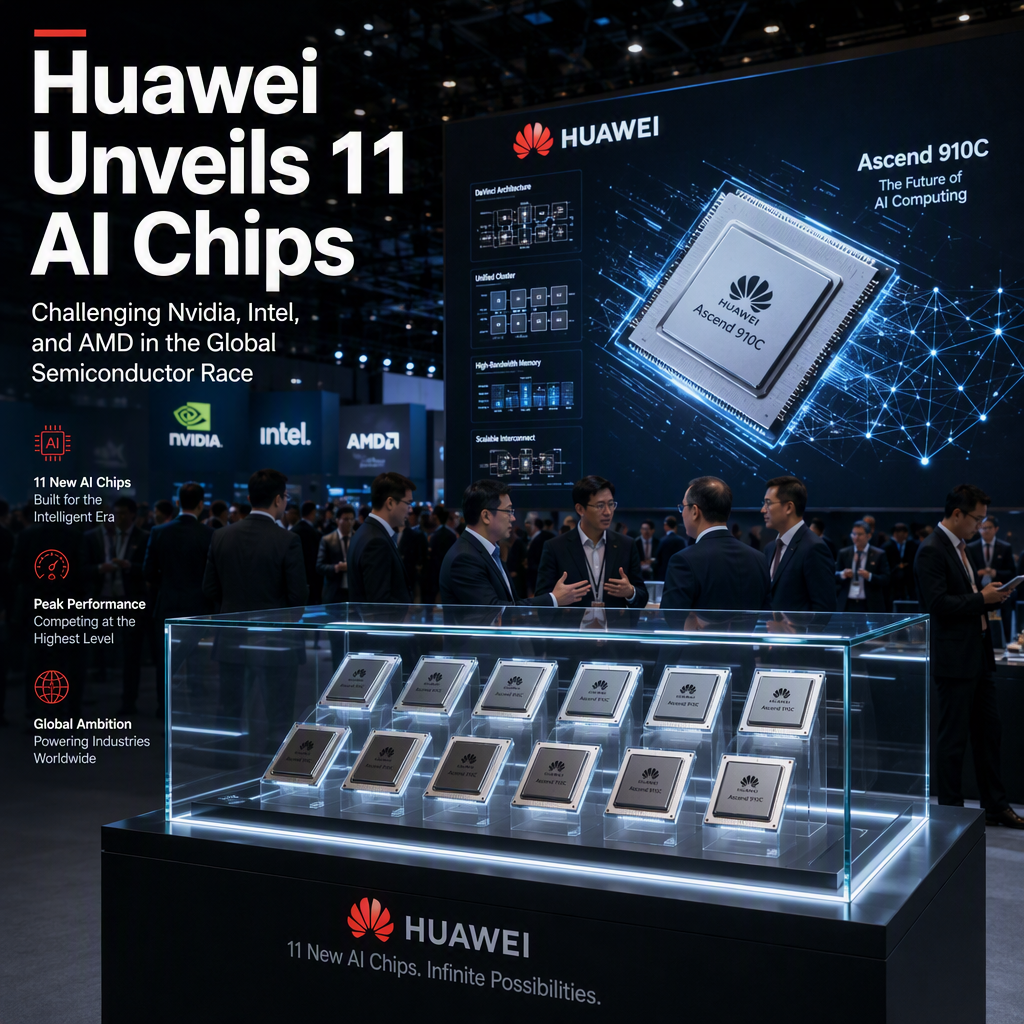
Huawei has announced the debut of more than 10 new chipsets for artificial intelligence computing infrastructure, including next-generation AI accelerators, CPUs, and high-speed connectivity chips, in a direct challenge to industry leaders Nvidia, Intel, and AMD [1]. The launch, which took place on Thursday, marks a significant step in Huawei's strategy to strengthen its position in the AI hardware sector and reduce reliance on foreign technology suppliers amid ongoing U.S.-China tech tensions [1].
The new lineup is designed to bolster AI computing power and provide an alternative for both Chinese and global markets seeking to diversify away from established U.S. suppliers [1]. Huawei emphasized the advanced capabilities of its chips in AI computation and high-speed data transmission, positioning the products as a competitive option for customers looking to expand or upgrade their AI infrastructure [1].
While no specific financial data or pricing details were disclosed in the initial announcement, the introduction of these AI-related chips is expected to have significant implications for the global semiconductor market's competitive landscape [1]. The move underscores the increasing drive among Chinese companies to achieve greater technological self-sufficiency and signals heightened competition for market share in AI hardware [1].
CONCLUSION
Huawei's launch of 11 AI-related chips represents a bold move to challenge the dominance of Nvidia, Intel, and AMD in the global semiconductor market. Although financial details remain undisclosed, the announcement is likely to intensify competition and accelerate the shift toward technological self-sufficiency in China.