
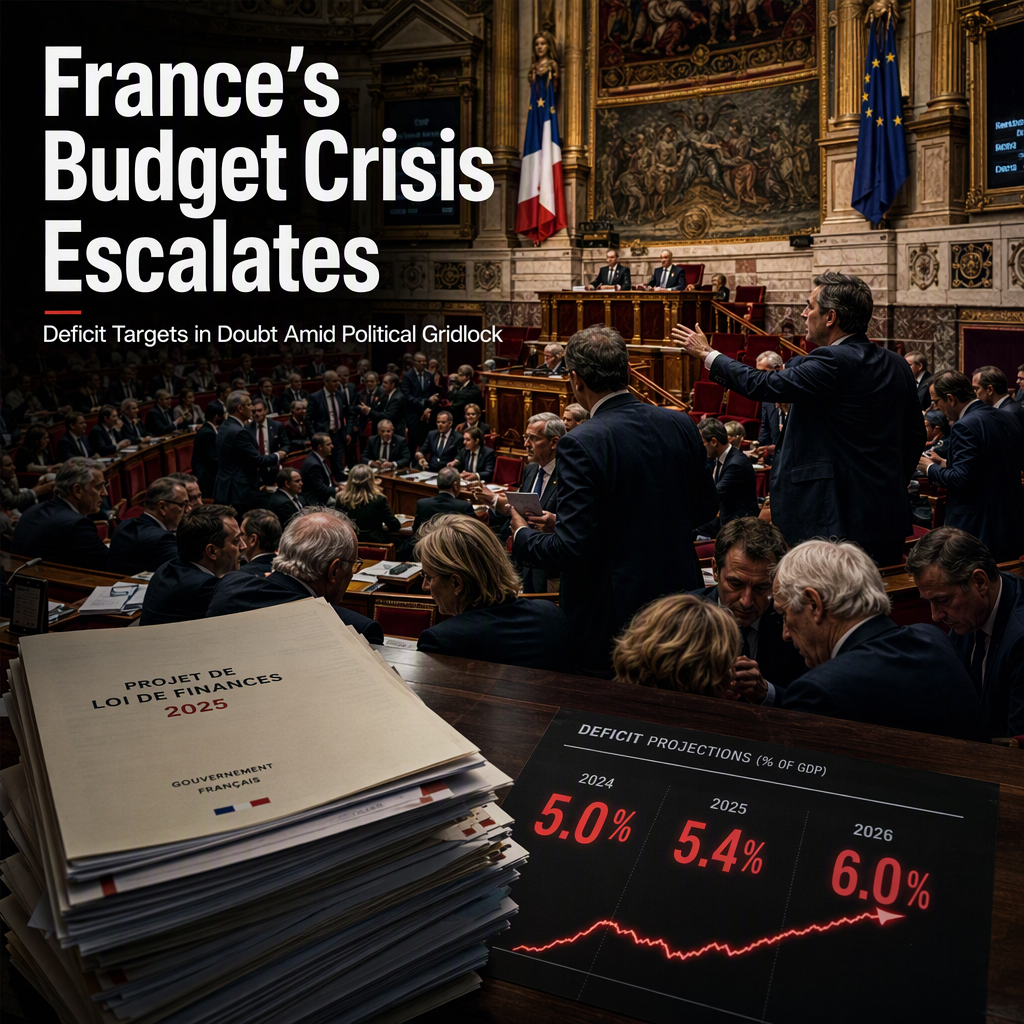
France's budget crisis is intensifying, with Brown Brothers Harriman’s (BBH) Elias Haddad highlighting that the country's fiscal challenges are complicating the broader Eurozone fiscal landscape [1]. The minority government recently presented a plan to reduce the budget deficit to 5.0% of GDP in the coming year, but there are significant doubts about its ability to pass parliament without major concessions [1]. The French fiscal watchdog has also criticized the economic assumptions underpinning the 2027 draft budget as 'optimistic,' casting further doubt on the feasibility of the government's targets [1].
A likely scenario, according to BBH, is a rollover of the 2026 budget due to limited political appetite for compromise ahead of the presidential election scheduled for April 18, 2027 [1]. This could result in the deficit rising from 5.4% of GDP in 2026 to approximately 6.0% in 2027, moving France further away from its European Commission commitment to reduce the deficit below 3% of GDP by 2029 [1].
The ongoing fiscal slippage and political gridlock are seen as negative signals for France's fiscal outlook and could have broader implications for Eurozone fiscal stability [1]. The lack of consensus and the potential for higher deficits may increase market concerns about France's fiscal discipline and its ability to meet EU requirements [1].
CONCLUSION
France's deepening budget crisis, marked by political obstacles and optimistic fiscal assumptions, is raising concerns about the country's ability to meet its EU deficit commitments. The likelihood of rising deficits and ongoing political gridlock signals a negative outlook for France's fiscal trajectory and could impact broader Eurozone fiscal stability.