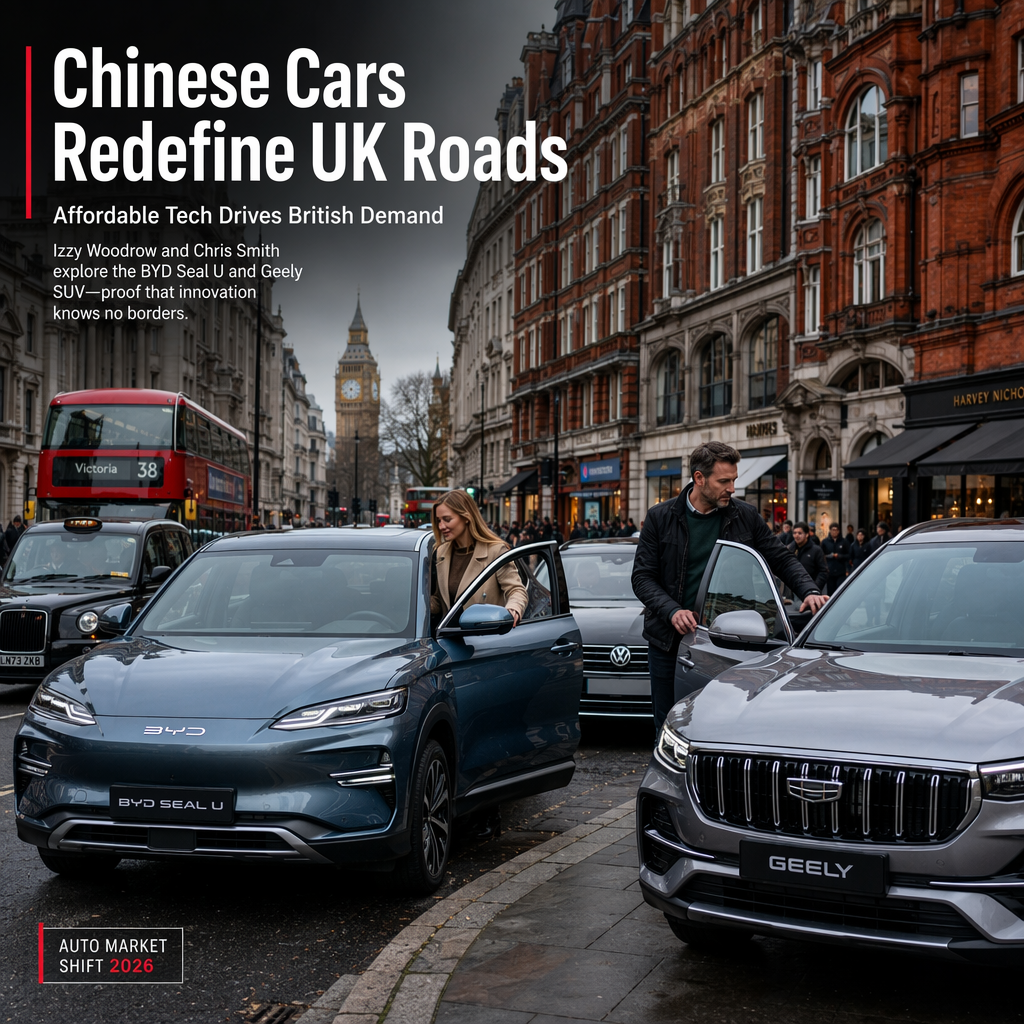
Sales of Chinese-made vehicles have experienced a significant surge in the United Kingdom, reflecting a broader boom in China's auto exports as domestic demand in China slows down [1]. According to Mobility Global, only 384 Chinese vehicles were imported into the UK in 2015, but this figure rose to 25,302 in 2020 and exceeded 285,000 last year [1]. This rapid growth is attributed to the value proposition, advanced technology, and attractive fit and finish offered by Chinese brands such as BYD and Geely [1].
Buyers like Izzy Woodrow and Chris Smith cited comfort, technology, and value for money as key reasons for choosing Chinese-made vehicles, noting that these cars often come with more equipment at a lower price compared to established brands [1]. For instance, the BYD Seal U, built in China, is priced nearly £10,000 less than the German-built Volkswagen Tiguan plug-in hybrid, which sells for just over £43,000 ($58,000) in the UK [1].
Analyst Will Roberts of Benchmark highlighted that Chinese vehicles are no longer a novelty in the UK, with brands like BYD becoming a common sight on the roads [1]. The UK market is particularly attractive for Chinese automakers because, unlike the EU, it does not impose additional tariffs on plug-in hybrid electric vehicles, creating a favorable environment for these imports [1].
Data from the China Association of Automobile Manufacturers shows that in the first half of 2026, retail auto sales in China fell by 26%, while auto exports increased by 72% compared to the previous year, underscoring the strategic shift towards international markets like the UK [1].
CONCLUSION
Chinese automakers are rapidly expanding their presence in the UK, driven by competitive pricing, advanced technology, and favorable market conditions. With auto exports from China surging and UK consumers embracing these vehicles, the trend signals a significant shift in the competitive landscape of the British automotive market.