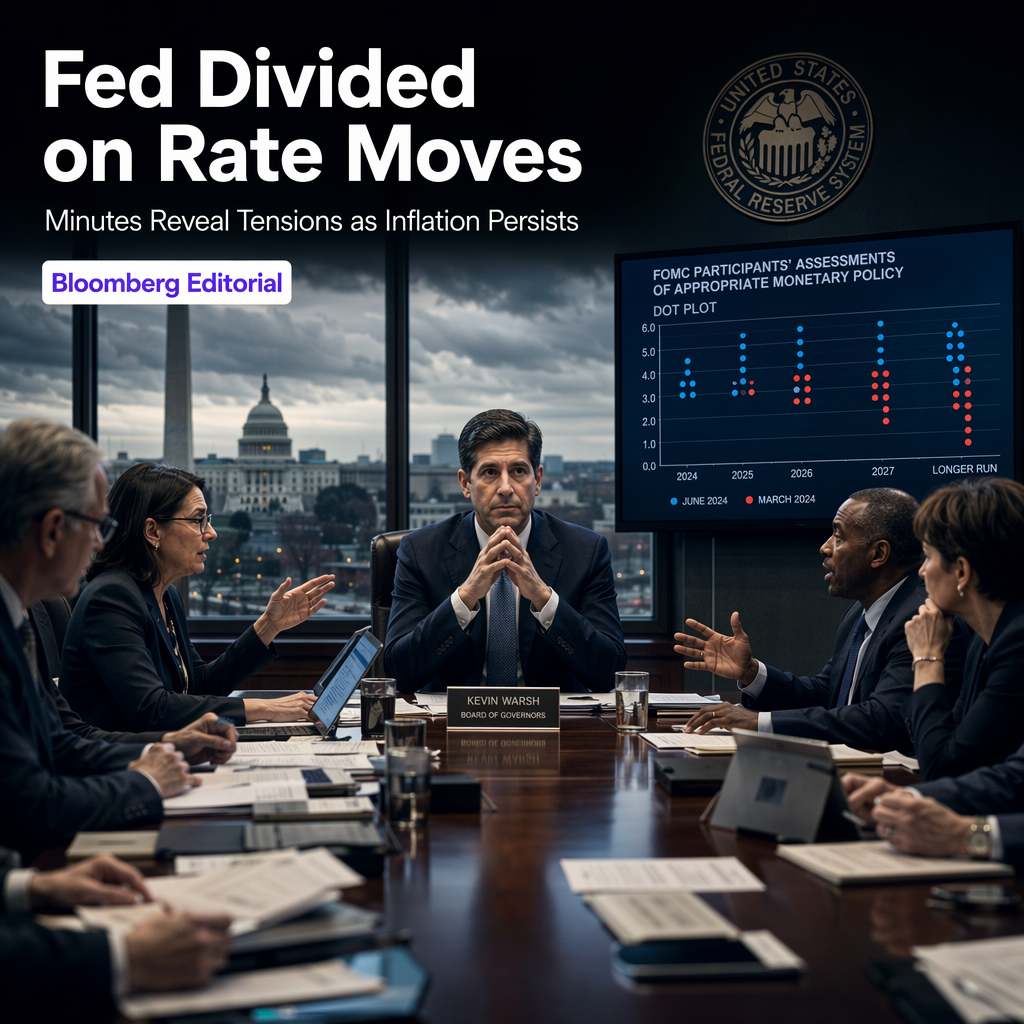
The Federal Reserve is facing significant internal disagreement over the direction of interest rates, as revealed in the minutes from the June 16-17 meeting, the first chaired by Kevin Warsh. The meeting was described by Warsh as 'a good family fight' regarding the path of monetary policy, with officials debating how to address inflation that has remained above the Fed's 2% target for the past five years [1].
According to the 'dot plot' of individual participants' expectations, the committee leans toward one rate hike before the end of 2026, followed by one cut each in the subsequent two years [1]. However, historical precedent suggests the Fed rarely makes single, isolated rate moves. In recent cycles, the Fed has typically acted in a series: three cuts in late 2025, three cuts in 2024, eleven hikes between 2022-2023, and five cuts between 2019-2020. The last time the committee made just one move was in 2015, under exceptional circumstances [1].
Former St. Louis Fed President Jim Bullard questioned the likelihood of a single rate hike, stating, 'A lot of people are talking about one rate increase. The committee does not generally do that. I mean, what's the point of that?' He added that markets are trying to anticipate whether this signals the start of a tightening cycle [1]. Bullard also warned that waiting until after the November midterm election to raise rates could force the Fed to act more aggressively later, increasing the risk of having to implement multiple hikes in a short period [1].
While some officials believe that easing geopolitical tensions, lower oil prices, and reduced tariff impacts could help bring inflation down, there is no consensus on whether inflationary pressures are truly abating [1]. The market is closely watching for further clues in the Fed's minutes, as the outcome of this internal debate will shape expectations for future monetary policy [1].
CONCLUSION
The Fed's latest meeting minutes highlight a sharp divide among policymakers over how to tackle persistent inflation, with history suggesting that more than one rate move may be likely. Markets are bracing for further signals, as the committee's ultimate decision will have significant implications for the economic outlook and financial conditions.