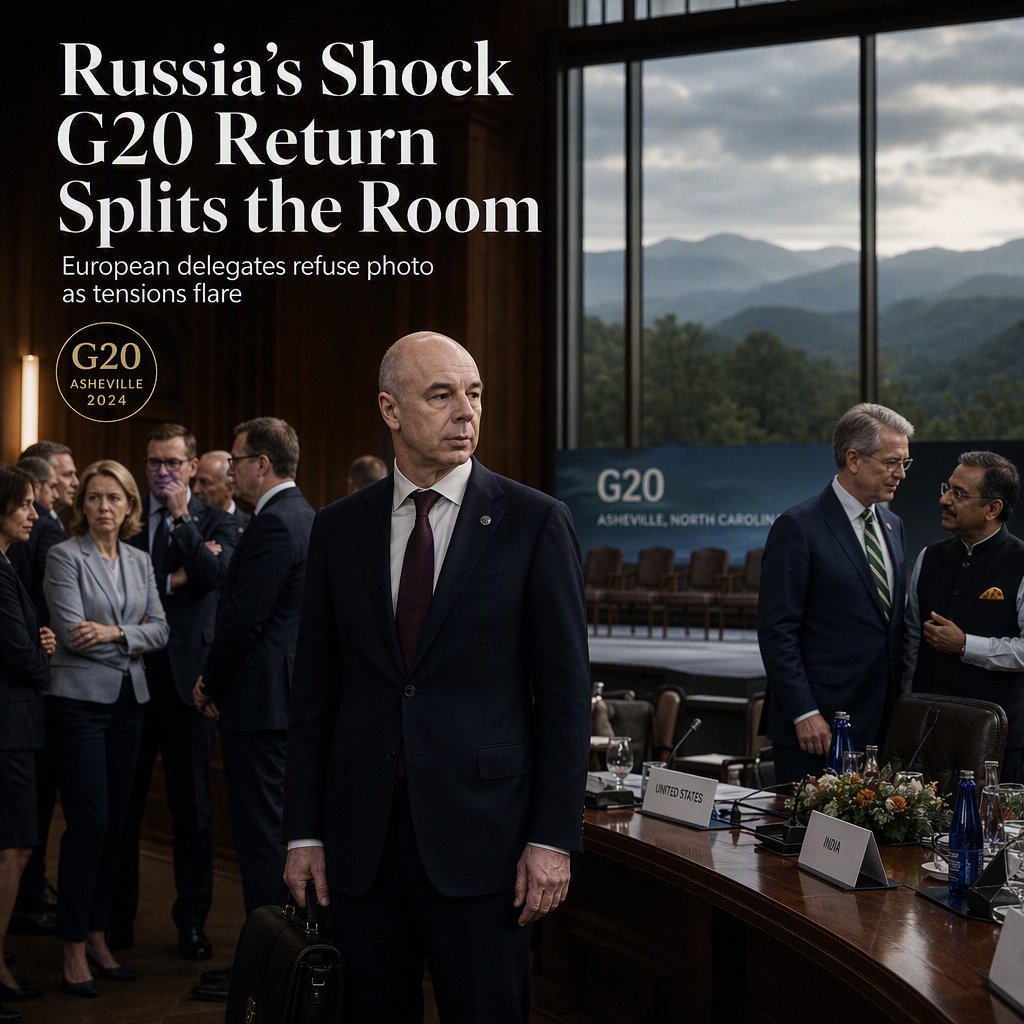
Russia's Finance Minister Anton Siluanov made an unexpected in-person appearance at the G20 meeting of finance ministers and central bank governors in Asheville, North Carolina, marking his first attendance since Russia's invasion of Ukraine in 2022 [1]. The move stunned European officials, who refused to participate in the traditional G20 family photo with Russia present; the photo was ultimately taken without Siluanov [1]. The G20 agenda was packed, including discussions on the war in Iran, bond market disruptions, and resurgent trade tensions, but Siluanov's attendance was not anticipated and left European delegates in dismay [1].
On the sidelines of the event, U.S. Treasury Secretary Scott Bessent met with Siluanov and reportedly stated that there would be no sanctions relief or new agreements with Moscow as long as the war in Ukraine continues [1]. Meanwhile, Indian Prime Minister Narendra Modi urged Russian President Vladimir Putin to end the "endless war" in Ukraine during a separate meeting at the Shanghai Cooperation Organization summit in Kyrgyzstan [1].
The article also notes heightened geopolitical tensions, including U.S. President Donald Trump's threat to "hit Iran hard" following attacks on U.S. military bases and a tanker strike in the Strait of Hormuz [1]. Additionally, the White House announced Venezuela's granting of 100-year concessions for 17 oil fields to North America Blue Energy Partners, giving the U.S. majority control over 20% of Venezuela's reserves, according to Trump [1].
In market news, shares of fast-fashion retailer Shein came under pressure on their debut trading day in Hong Kong, with the IPO valuing the company at approximately $26.5 billion, a significant drop from its $100 billion private market valuation in 2022. Shein plans to use the IPO proceeds for technology and global expansion [1].
CONCLUSION
The surprise attendance of Russia's finance minister at the G20 meeting underscored ongoing geopolitical tensions and divisions among major economies, particularly regarding the war in Ukraine. While no immediate market shocks were reported, the event highlighted persistent uncertainty and the potential for further diplomatic and economic repercussions.