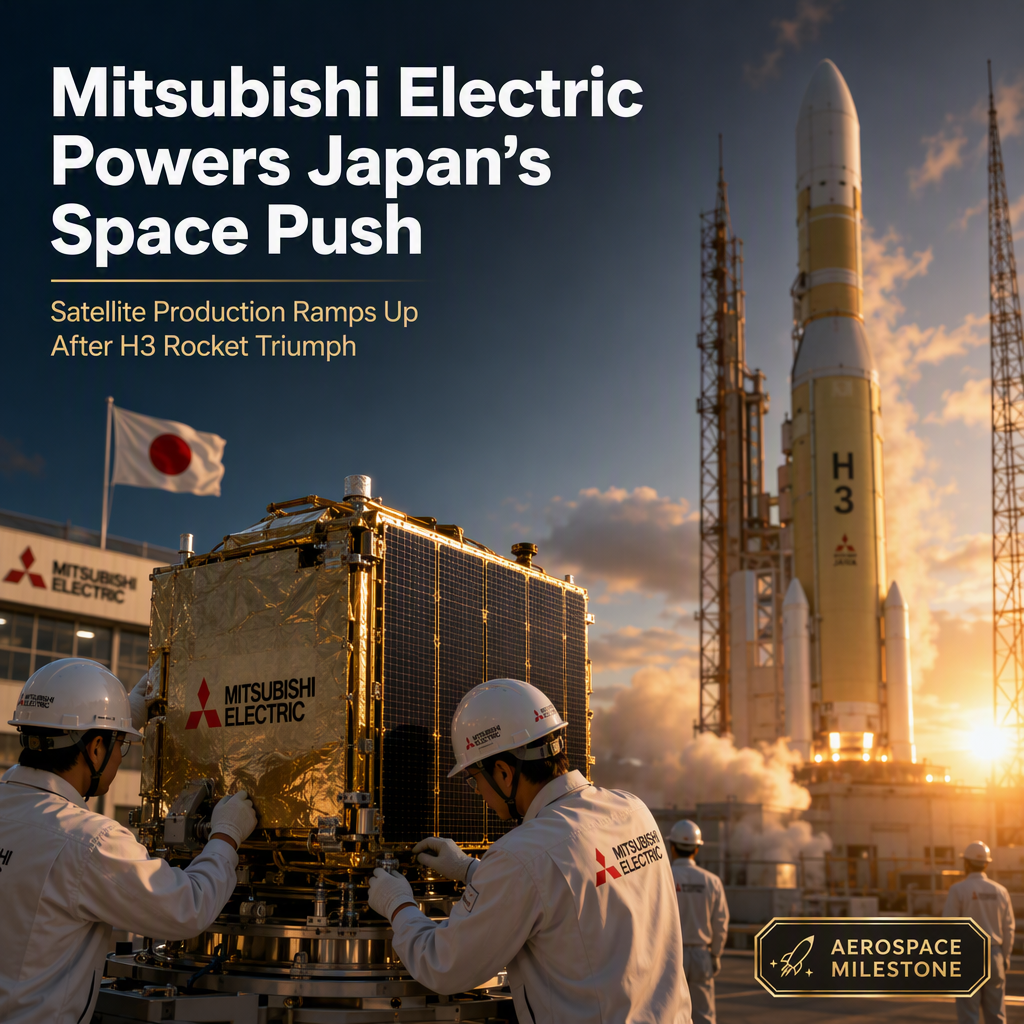
Japan achieved a significant milestone in its space program with the successful launch of the H3 rocket carrying a Michibiki positioning satellite from the Tanegashima Space Center on August 11, 2026 [1]. This event marks a pivotal step in Japan's aerospace ambitions and is expected to increase confidence in the country's ability to conduct frequent space missions, supporting a national goal of six to eight launches per year [1].
In response to this success, Mitsubishi Electric, recognized as the top domestic supplier of large satellites, is preparing to ramp up its satellite production to meet the anticipated surge in demand [1]. The company is expected to play a central role in Japan's efforts to strengthen its presence in the global satellite and launch services market by increasing the output of large satellites, supporting new satellite constellations, and enhancing the nation's satellite infrastructure [1].
The Japanese government has prioritized aerospace as a key national industry, aiming to build resilience in satellite-based communications, positioning, and surveillance [1]. Mitsubishi Electric's ramp-up aligns with Japan's broader strategy to foster greater competition in the space industry and reduce reliance on foreign providers, especially amid rising geopolitical tensions and the growing importance of space for national security and technological advancement [1].
Market implications are significant, as the increased production capacity and successful rocket launch are likely to position Japan as a more competitive player in the global space industry, potentially attracting both government and commercial satellite projects [1].
CONCLUSION
Japan's successful H3 rocket launch has set the stage for Mitsubishi Electric to expand its satellite production, reinforcing the country's commitment to advancing its space industry. This development is expected to enhance Japan's competitiveness in the global satellite market and support national security and technological goals.