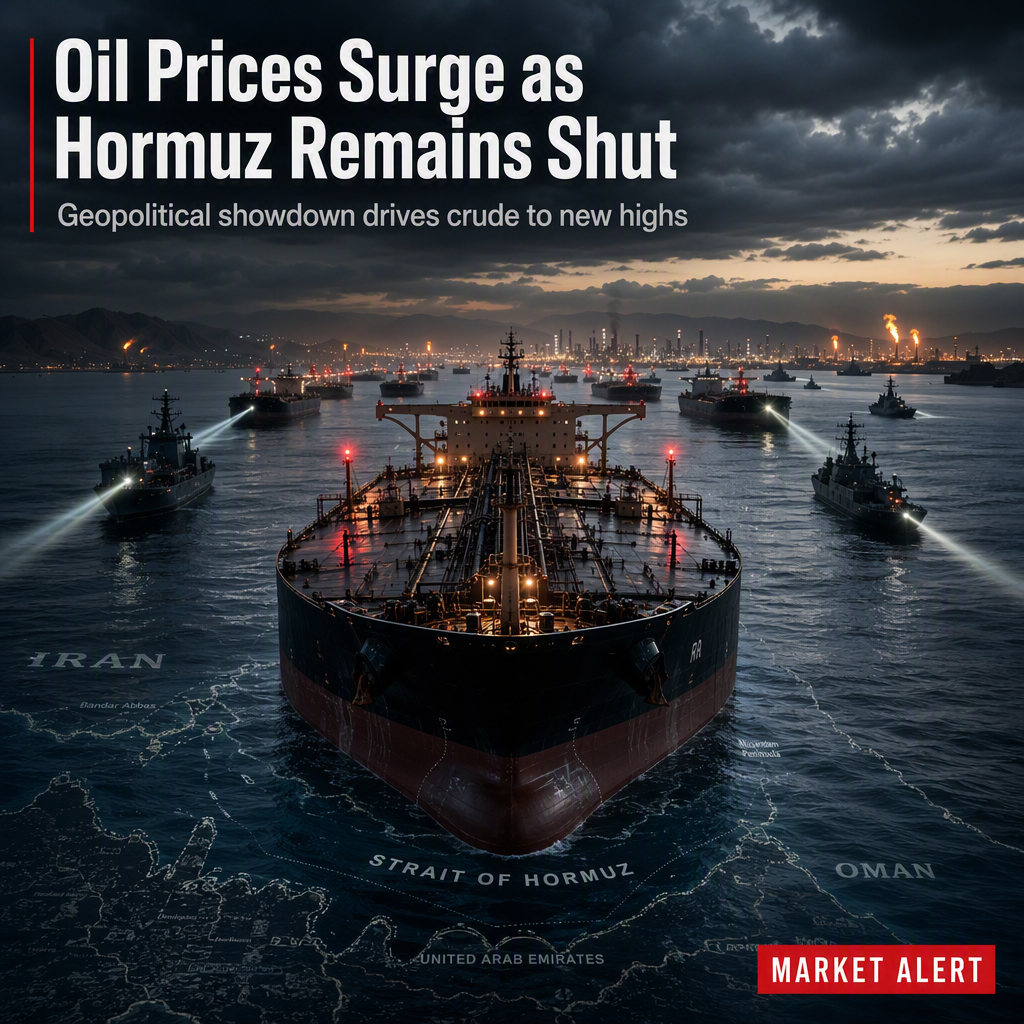
Oil markets experienced significant volatility as hopes for a US–Iran agreement to reopen the Strait of Hormuz faded, driving Brent crude prices up by 5% to nearly USD 90 per barrel for the first time since the end of July [1]. Gas oil prices surged even more sharply, climbing almost 10% to just under USD 1,350 per ton, marking their highest level since the end of April [1]. The gasoil crack spread also rose above USD 70 per barrel, with reports of refinery outages in Saudi Arabia, Russia, and Libya, as well as tight diesel supply, further exacerbating the risk premium in energy markets [1]. Although the European diesel market is not directly impacted, the global supply of diesel has tightened as a result [1].
WTI Oil also traded higher, with prices around $82.13, up more than 7% so far this week [2]. Earlier in the day, oil prices briefly dipped after Qatar indicated that Iran-Oman talks on reopening the Strait of Hormuz were at an advanced stage, and Pakistan’s Defence Minister suggested the US and Iran were close to an arrangement [2]. However, prices rebounded as it became clear that a resumption of shipping through the Strait is unlikely in the near term. Iran has stated that the waterway will remain closed unless the US meets several conditions, including lifting sanctions, releasing frozen assets, ending military threats, removing its naval blockade, and paying war reparations [2]. Adviser to Iran’s Supreme Leader, Mohammad Mokhber, reiterated on X that the Strait would stay closed until these demands are met [2].
The ongoing geopolitical tensions have embedded a risk premium in oil prices, with technical analysis indicating a bullish bias for WTI Oil. WTI remains above its 21-day Simple Moving Average (SMA) at $81 and the 50-day SMA at $78, with the Relative Strength Index (RSI) at 53.49 showing a modest bullish tilt [2]. The Moving Average Convergence Divergence (MACD) indicator is slightly negative but close to the zero line, suggesting waning downside momentum [2]. Immediate support is seen at the 21-day SMA ($81.33) and 50-day SMA ($78.79), while resistance is at the 100-day SMA ($86.82). A sustained break above this resistance could lead to further gains [2].
CONCLUSION
The persistent closure of the Strait of Hormuz and fading prospects for a US–Iran agreement have driven oil prices sharply higher, with both Brent and WTI experiencing notable gains. Geopolitical risks and supply disruptions continue to support a bullish outlook for the oil market in the near term.