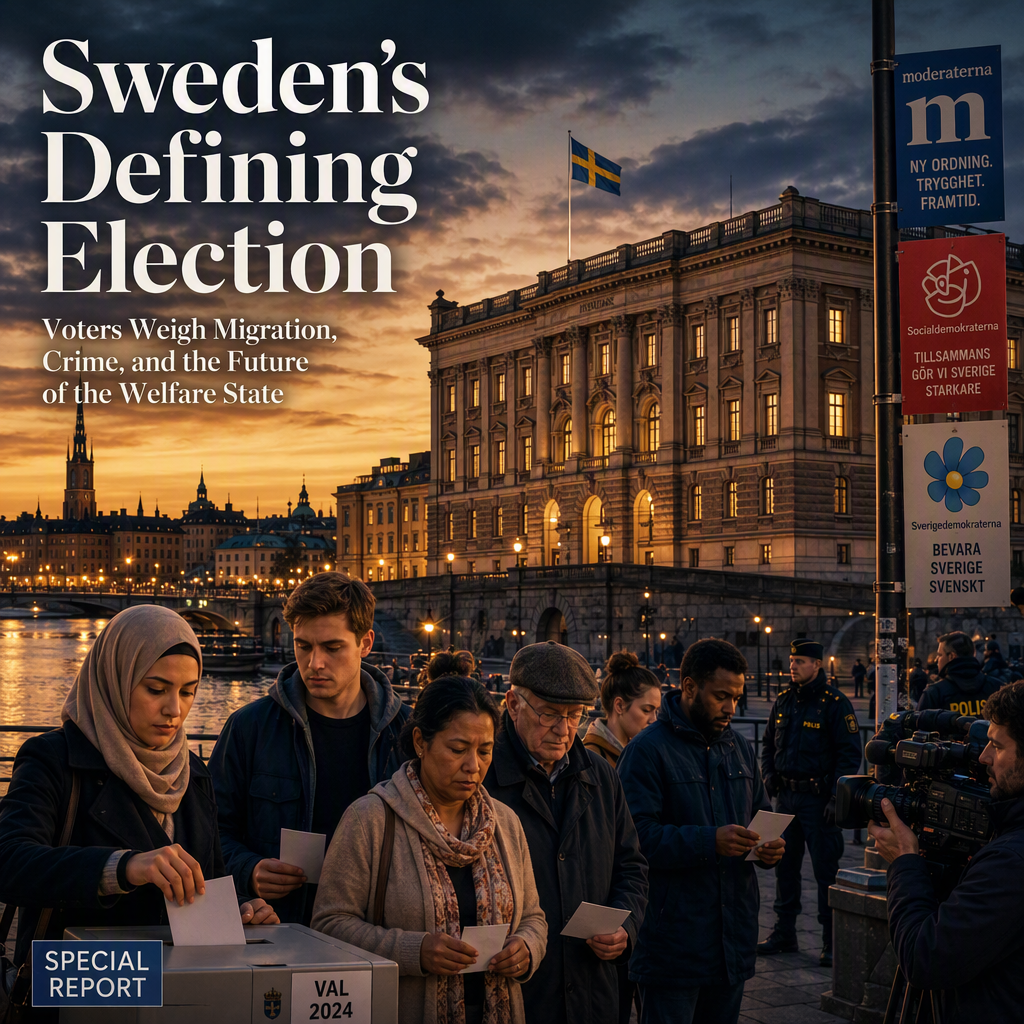
Sweden is holding a high-stakes election as voters head to the polls with migration, crime, and the economy dominating the national debate [1]. Prime Minister Ulf Kristersson’s center-right party is currently trailing slightly behind the center-left Social Democratic Party, led by former Prime Minister Magdalena Andersson [1]. The election is taking place against a backdrop of years of gang violence, Islamist extremism, persistent unemployment, and pressure on public services, which have intensified discussions about the effectiveness of integration policies in the face of significant immigration [1].
The Sweden Democrats, a hard-right, anti-immigration party, are positioned to potentially enter government if Kristersson's party wins, having previously supported the government from the outside [1]. The Associated Press notes that the Sweden Democrats, originally founded by far-right extremists including neo-Nazis, have shifted toward the political mainstream under leader Jimmie Åkesson, who has led the party since 2005 and is credited with its rise [1]. The party is now likely to secure cabinet posts if the center-right coalition prevails [1].
Sweden’s welfare state, once a model for the West, has come under economic strain, prompting both left- and right-leaning governments to restructure the system amid rising crime rates and persistent expectations for public benefits [1]. According to the Swedish National Council for Crime Prevention, Sweden experienced 391 shootings resulting in 62 deaths in 2022, and the country’s homicide rate has been rising since 2013, now standing at approximately four deaths per million inhabitants per year—significantly higher than the European average of 1.6 [1].
The intersection of immigration and crime remains a central concern for voters, with discontent over migration policies extending to both foreign-born and native-born residents [1]. While shootings have declined sharply, experts caution that this does not mean integration challenges have been resolved [1].
CONCLUSION
Sweden’s election is shaped by voter anxiety over migration, crime, and economic pressures, with the outcome likely to influence the country’s approach to integration and welfare policy. The potential entry of the Sweden Democrats into government marks a significant shift in Swedish politics, reflecting broader European trends. Market and policy observers are closely watching for the election’s impact on Sweden’s social and economic landscape.