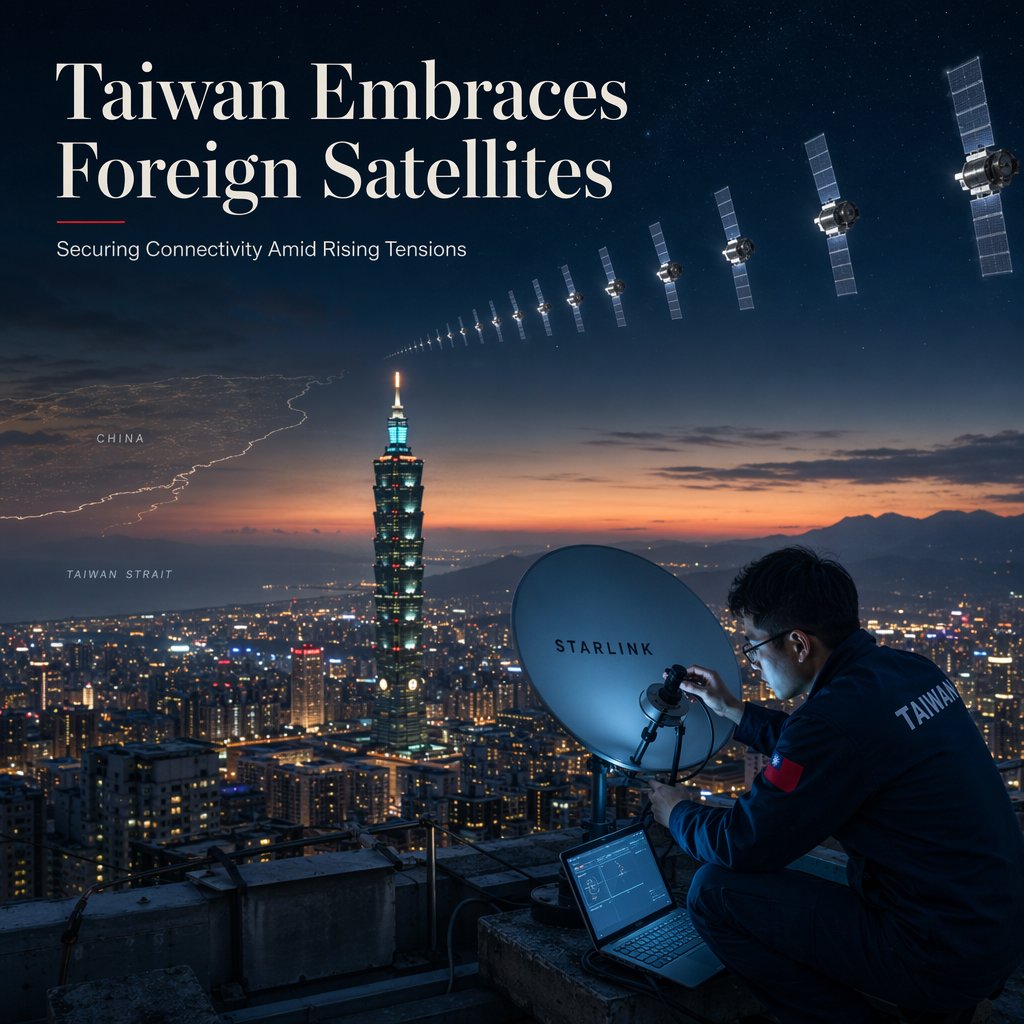
Taiwan has implemented regulatory changes to ease restrictions on foreign ownership of satellite operators, a move that could allow companies such as Elon Musk's Starlink, operated by SpaceX, to provide internet services in the country [1]. This policy shift comes as Taiwan seeks to strengthen the resilience of its communications infrastructure, particularly in light of concerns that connectivity could be severed during a crisis with China [1].
Currently, Taiwan does not possess any low-Earth orbit satellites of its own, which the government views as a strategic vulnerability [1]. The new rules are intended to attract international satellite internet providers, thereby ensuring continued connectivity even if undersea cables are disrupted—a scenario that has gained attention amid rising military and political tensions across the Taiwan Strait [1].
China has issued rhetorical warnings against Taiwan's move to expand foreign satellite networks, signaling its opposition to the policy change [1]. Despite this, the Taiwanese government is proceeding, emphasizing the importance of secure and diversified communications and the potential benefits of international partnerships in achieving these objectives [1].
CONCLUSION
Taiwan's decision to relax foreign ownership rules for satellite operators marks a significant step toward enhancing its communications security. The move could attract major players like Starlink, despite opposition from China, and reflects Taipei's commitment to safeguarding connectivity amid regional tensions.