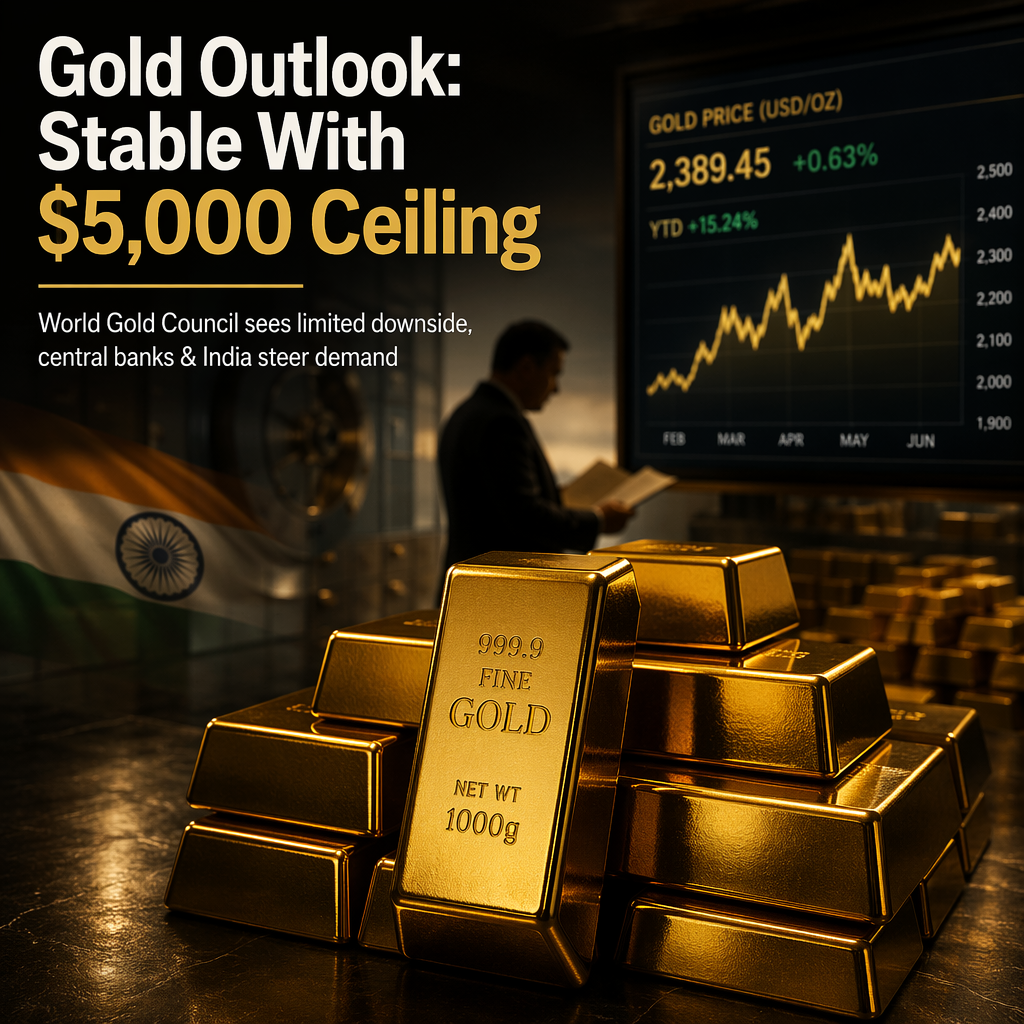
According to the World Gold Council's (WGC) mid-year outlook, gold prices are expected to remain broadly stable in the second half of the year, fluctuating within a 5% range from current levels of around $4,100 per troy ounce [1]. The WGC notes that gold is currently trading in line with macroeconomic consensus expectations, reflecting moderate global growth, cooling but still elevated inflation, and expectations of further—though limited—central bank tightening [1].
The WGC's baseline scenario does not anticipate significant price swings, but it outlines a bullish scenario where gold could break out if there is a clear catalyst such as worsening economic or geopolitical conditions, a reversal in interest-rate expectations, or increased long-term investor participation. Under such circumstances, gold could reach $4,500, and only a 'strong, clear signal' could push it sustainably toward $5,000. However, the WGC does not expect gold to return to the $5,600 all-time high seen at the end of January [1].
Gold's performance has been subdued in recent months, with the metal losing 11% in June and posting its steepest quarterly retreat since the second quarter of 2013 between April and June [1]. The WGC identifies several downside risks, including US Dollar strength, rising interest rates beyond current expectations, improved market risk sentiment, and technical factors. Nevertheless, the WGC expects any further downside to be limited, with a maximum decline of 15% from current levels, as historically, lower prices have triggered buying from various sectors [1].
Central bank activity remains a key support for gold prices. The WGC's data indicates that an additional 20 to 30 tonnes of central bank gold purchases above the long-term average of around 600 tonnes per year could translate into approximately a 1% increase in prices. While many central banks sold gold in the first quarter to address the economic fallout from the Iran war, a recent survey suggests that sovereign appetite for gold buying remains firm [1]. India's role is also highlighted, as Prime Minister Narendra Modi has urged citizens to avoid buying gold for a year to conserve foreign exchange, given the macroeconomic consequences of the Iran war. India has also implemented measures to reduce gold demand [1].
CONCLUSION
The World Gold Council anticipates stable gold prices in the near term, with limited downside and a potential upside ceiling of $5,000 if significant catalysts emerge. Central bank activity and Indian demand remain important market drivers, but no return to recent all-time highs is expected. Overall, the outlook is cautious with moderate upside potential.