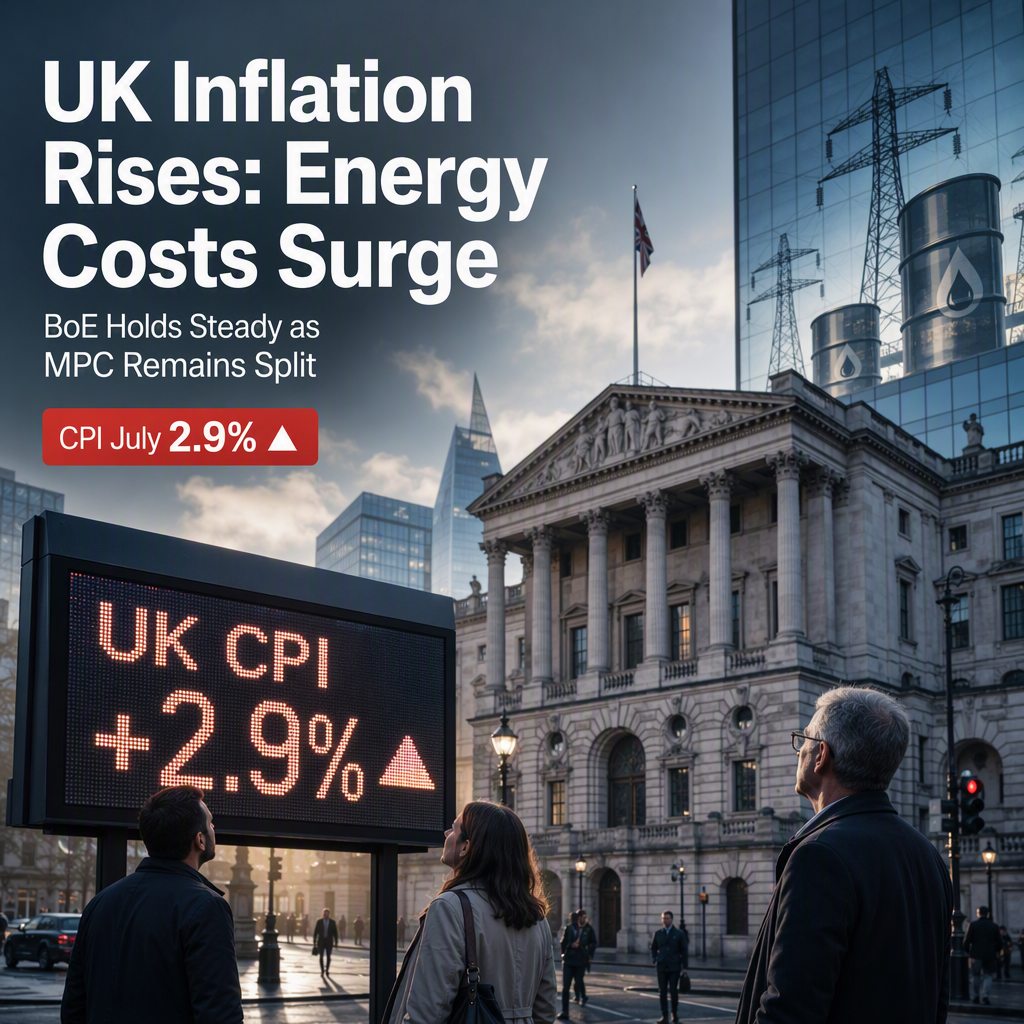
The latest UK July Consumer Price Index (CPI) data showed an annual rate increase from 2.6% to 2.9%, primarily driven by a 13% rise in the OFGEM price cap, which reflected higher energy prices. This headline inflation figure was slightly above the Bank of England's (BoE) expectation of 2.8%, but close enough to be considered broadly neutral from a market perspective. The BoE projects a peak inflation rate of 3.2% in the fourth quarter [1].
A positive development was observed in services inflation, which eased from 3.6% to 3.4%, indicating a favorable trend in domestically generated inflation. The recent employment data revealed modest wage growth, with private sector ex-bonus earnings slowing from 2.9% to 2.8%. Additionally, PAYE employment fell by 13,000, suggesting continued weak demand for labor and easing inflationary pressures from the labor market [1].
According to Derek Halpenny at MUFG, the combination of the latest inflation and labor data is unlikely to significantly influence the BoE's policy stance. The Monetary Policy Committee (MPC) is expected to remain divided, with future decisions hinging more on external factors, particularly energy prices driven by developments in the Middle East. If the situation in the Strait of Hormuz remains unresolved and energy prices continue to rise and stay elevated, the BoE may consider a rate hike by year-end. Conversely, if energy prices decline, the BoE could maintain its current policy stance [1].
CONCLUSION
The UK’s July inflation and labor data were largely in line with expectations, resulting in a neutral market reaction. The BoE is likely to maintain its current outlook, with future policy moves dependent on external energy price developments. The MPC remains divided, and significant changes are expected only if energy prices shift materially.