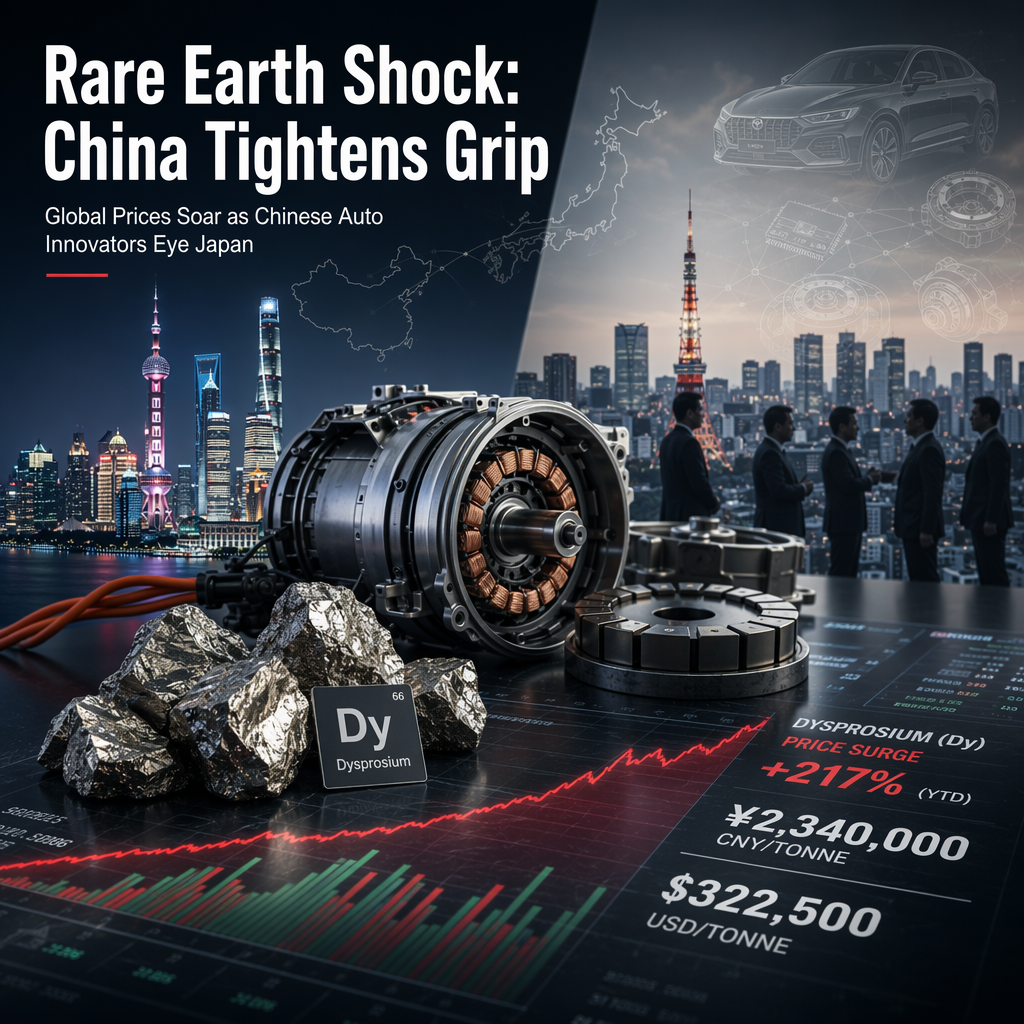
China's recent export restrictions on rare earth elements have triggered a dramatic price surge for these critical materials outside the country, particularly impacting industries reliant on elements like dysprosium, which is essential for electric vehicle (EV) motors. In Europe, the price of dysprosium has soared by 700% compared to pre-restriction levels, while prices within China have remained largely stable due to the country's dominant position in rare earth production and processing. This has resulted in a significant price gap between the Chinese and international markets, placing considerable cost pressure on manufacturers outside China, especially in advanced manufacturing sectors such as EV production, renewable energy, and high-tech industries [1].
The export curbs have prompted concern among global manufacturers and governments, who are now seeking alternative sources and strategies to reduce their reliance on Chinese rare earths. Industry analysts suggest that these developments may accelerate efforts to develop alternative supply chains, invest in rare earth recycling, and promote mining in other countries. However, they caution that overcoming China's overwhelming share of rare earth production and processing presents substantial technical and economic challenges in the short to medium term [1].
Simultaneously, Chinese auto parts makers are intensifying their efforts to enter the Japanese market, aiming to disrupt the country's traditionally close-knit and tiered automotive supply chains. Companies such as Desay SV have showcased advanced technologies like smart cockpits at Japanese trade shows, emphasizing both price competitiveness and technological innovation. These Chinese firms are leveraging lower costs and shorter development cycles to challenge the established Japanese supply chain model, which has historically prioritized stability and long-term relationships over rapid innovation and cost efficiency [2].
Industry observers note that the influx of Chinese suppliers could heighten competition among Japanese automakers and their traditional partners, potentially driving down prices and accelerating the adoption of new technologies. Market analysts highlight that Japanese automakers may need to reconsider their procurement strategies and supply chain structures in response to these shifts, as the presence of Chinese parts makers could significantly alter the competitive landscape [2].
CONCLUSION
China's rare earth export restrictions have created a sharp price disparity between domestic and international markets, intensifying cost pressures on global manufacturers and prompting a search for alternative supply solutions. At the same time, Chinese auto parts makers are leveraging cost and technology advantages to challenge Japan's traditional automotive supply chains, signaling potential shifts in industry dynamics and increased competition.