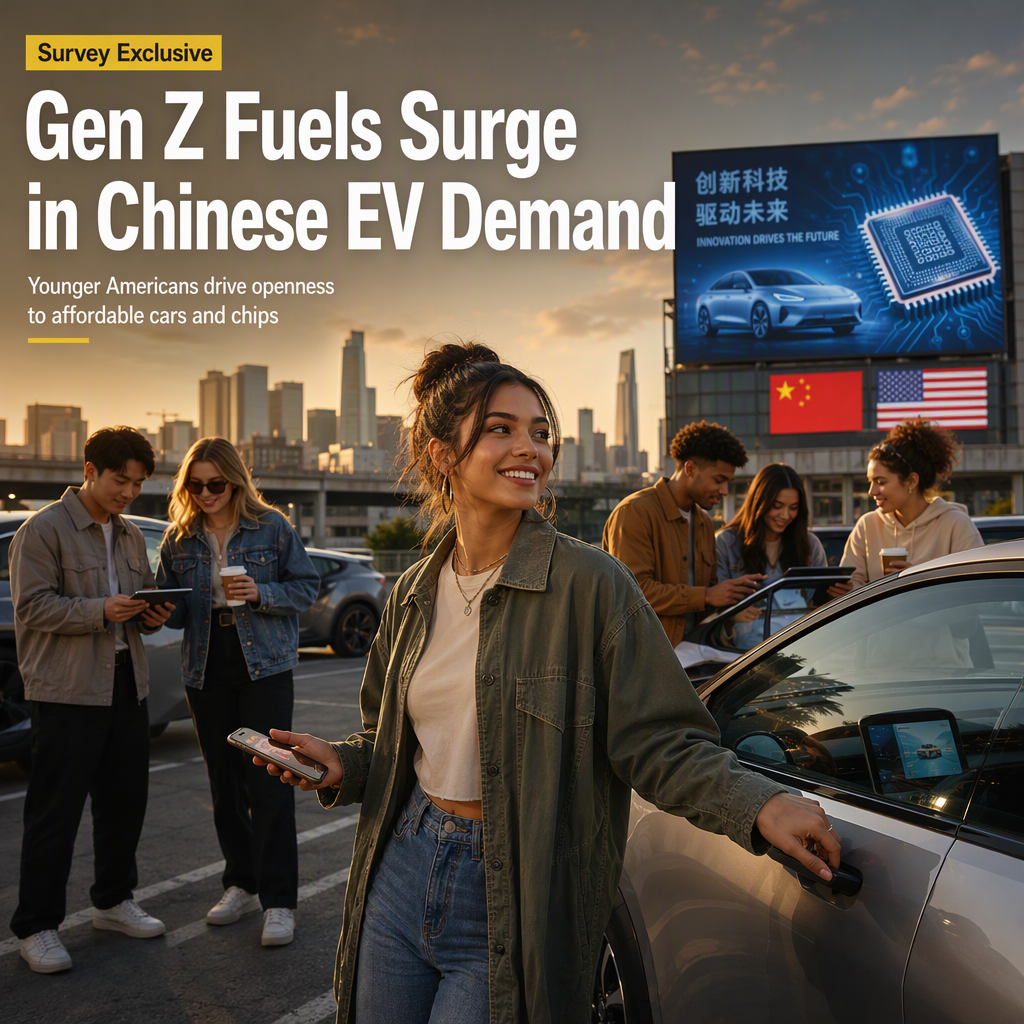
A recent survey by Cox Automotive revealed that 69% of U.S. Gen Z drivers would consider purchasing vehicles from Chinese automakers such as BYD or Geely, highlighting a significant openness among younger American consumers to Chinese electric vehicles (EVs) and chips [1]. Gen Z, defined in the survey as individuals from high school age to around 30, represents about one-fifth of American consumers and is expected to shape consumption trends for the next decade or more [1].
The survey attributes this openness primarily to affordability, with Gen Z consumers prioritizing cost-efficiency and value when considering EVs and semiconductor products [1]. As global EV prices fall below those of hybrids, the influx of low-cost Chinese cars into the U.S. market is becoming more pronounced, potentially influencing U.S. trade policy, especially as the midterm elections approach [1]. The article notes that political leaders, including Donald Trump, have not ruled out the possibility of allowing Chinese carmakers greater access to the U.S. market, which could impact upcoming summits and policy decisions [1].
Market analysis in the article suggests that U.S. clean-energy projects could face challenges if restrictions are placed on China-linked equipment, which may affect the supply of affordable EVs and related components [1]. The growing reliance on Chinese semiconductor technology is also evident, as U.S. tech companies such as HP, Asus, and Acer have started using CXMT chips amid a global memory shortage [1].
Overall, the combination of Gen Z's price sensitivity and the increasing competitiveness of Chinese EVs and chips is reshaping U.S. market dynamics and could play a pivotal role in future policy decisions regarding trade barriers and industry support [1].
CONCLUSION
The survey underscores Gen Z's strong preference for affordable Chinese EVs and chips, which is influencing both market trends and potential U.S. trade policy. As price sensitivity and reliance on Chinese technology grow, the U.S. market and policymakers may need to adapt to these shifting consumer dynamics.