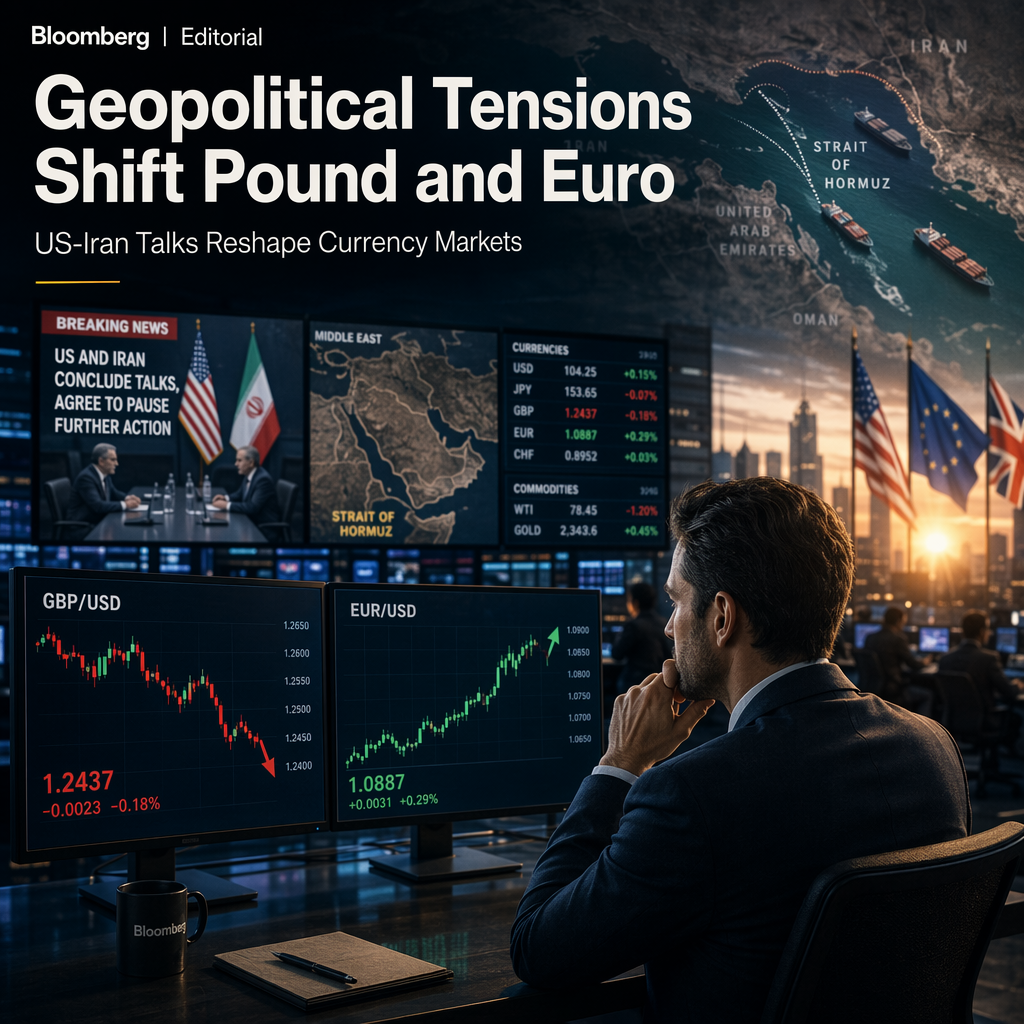
Both the British Pound (GBP) and the Euro (EUR) experienced notable movements during Monday's Asian trading hours, driven by heightened geopolitical uncertainty surrounding US-Iran relations. The GBP/USD pair edged lower, trading around 1.3200, as safe-haven demand for the US Dollar increased amid concerns over stability in the Middle East. This followed reports that the United States and Iran agreed to temporarily pause recent hostilities in the Gulf and renew discussions over the Strait of Hormuz, with official delegations scheduled to meet in Qatar on Tuesday to negotiate an end to the conflict [1][2]. The diplomatic opening came after several days of retaliatory strikes, including an incident on Thursday when an Iranian projectile hit a cargo vessel, leading both nations to accuse each other of violating a June 17 interim ceasefire [1][2].
While the Pound weakened, the Euro maintained its upward momentum for a third consecutive session, with the EUR/USD pair trading near 1.1390. However, analysts cautioned that the Euro's gains could face headwinds if geopolitical uncertainty continues to drive safe-haven flows into the US Dollar [2]. In addition to geopolitical factors, currency traders are also weighing shifting monetary policy expectations for the European Central Bank (ECB). Commerzbank analysts expect the ECB to deliver one final interest rate hike in September, projecting that underlying inflation will remain close to 3% through the end of the year, despite easing energy prices [2].
In the UK, political developments added another layer of uncertainty, as Keir Starmer resigned as Labour leader due to intense political pressure. Newly sworn-in MP Andy Burnham is set to outline his national vision and is considered the frontrunner to become Prime Minister as early as July 17, given the lack of alternative challengers [1].
Market participants remain highly sensitive to evolving headlines from the Middle East, as the outcome of US-Iran talks could significantly impact global risk sentiment and currency flows. The interplay between geopolitical risks and central bank policy expectations continues to shape the outlook for both the Pound and the Euro [1][2].
CONCLUSION
Geopolitical uncertainty stemming from US-Iran tensions has led to a decline in the British Pound and sustained strength in the Euro, though both currencies remain vulnerable to further safe-haven flows into the US Dollar. Upcoming diplomatic talks and central bank policy decisions are likely to be key drivers for currency markets in the near term.