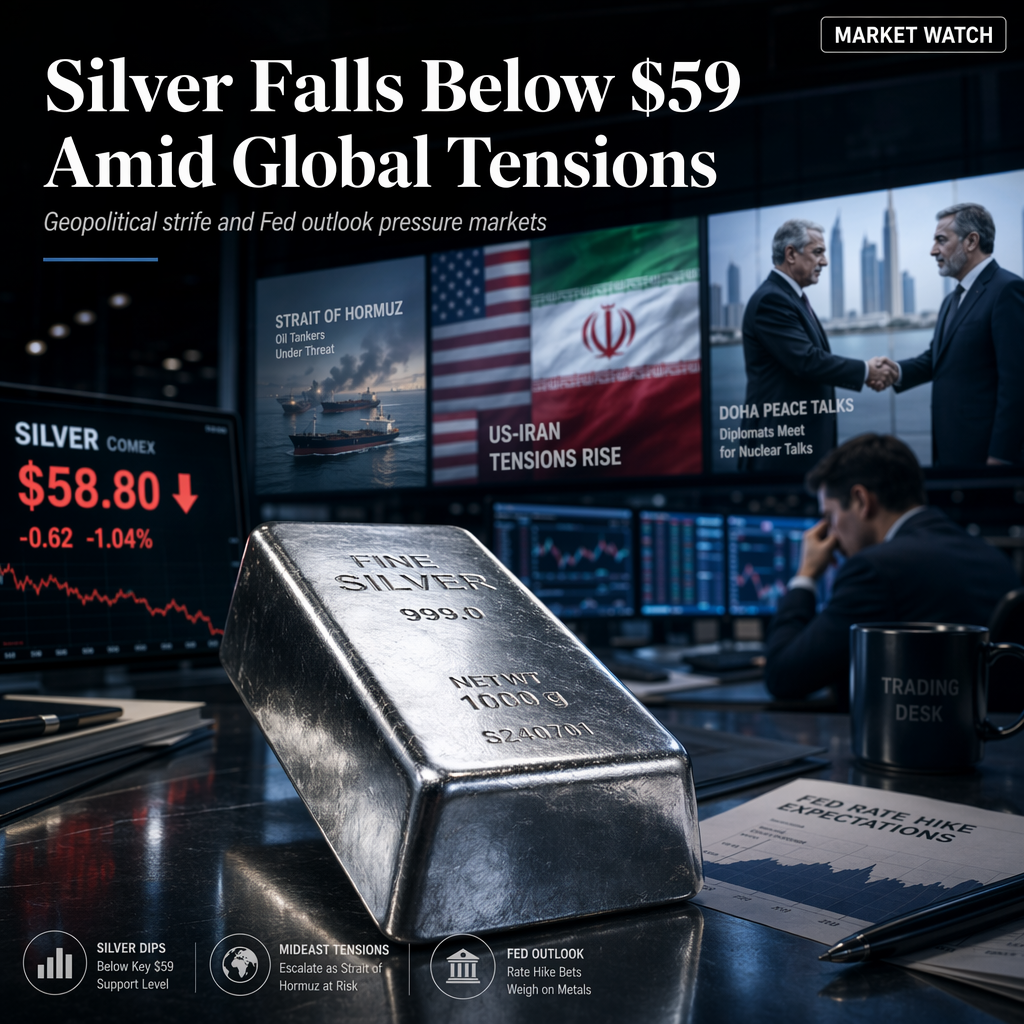
Silver (XAG/USD) declined after two consecutive days of gains, trading around $58.80 per troy ounce during Asian hours on Monday. The drop in price followed renewed military clashes between the United States and Iran in the Strait of Hormuz, which pushed oil prices higher and reignited inflation concerns among investors. Market participants remain highly sensitive to developments in the Middle East, closely monitoring the situation for its potential impact on global risk sentiment and commodity prices [1].
Despite the recent escalation, both Washington and Tehran have agreed to halt attacks ahead of peace talks scheduled to resume in Doha this week. This diplomatic progress comes after several days of retaliatory strikes, which began when an Iranian projectile hit a cargo vessel on Thursday. Both nations accused each other of violating a previously established June 17 interim ceasefire. Official delegations from the US and Iran are set to meet in Qatar on Tuesday to negotiate a possible end to the conflict [1].
Silver's performance is also being weighed down by persistent hawkish expectations from the Federal Reserve. According to the CME FedWatch Tool, traders are currently pricing in a 59.7% probability of a rate hike as soon as September 2026. The market is awaiting key US labor market data this week, with Thursday’s Nonfarm Payrolls (NFP) report expected to provide further guidance on the Fed's interest rate trajectory. Forecasters anticipate June job growth to reach 114,000, while the Unemployment Rate is expected to remain steady at 4.3% [1].
CONCLUSION
Silver prices have retreated below $59 per ounce amid renewed geopolitical tensions and expectations of higher US interest rates. While diplomatic efforts between the US and Iran may ease some market anxiety, traders remain focused on upcoming US labor data for further direction. The combination of geopolitical uncertainty and monetary policy outlook continues to shape silver's near-term trajectory.