
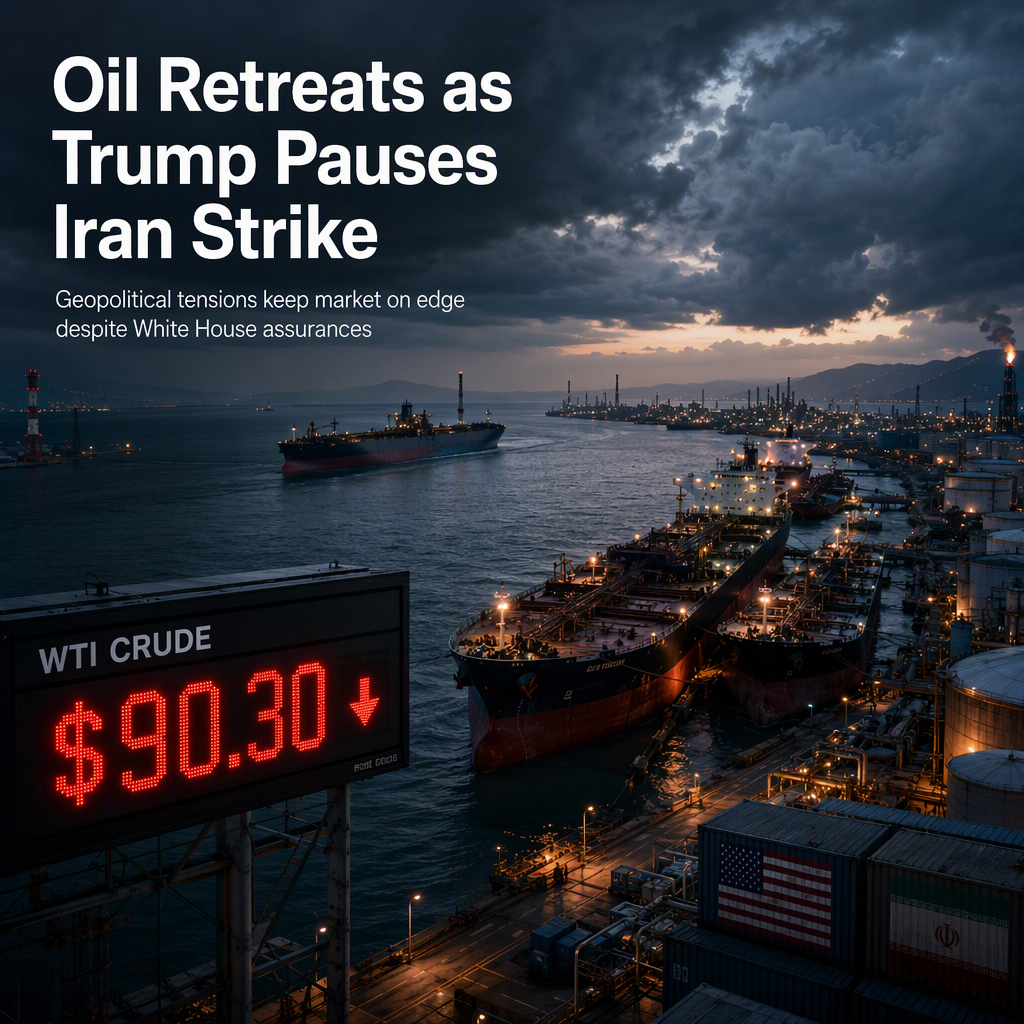
West Texas Intermediate (WTI) crude oil prices declined to around $90.30 per barrel during Asian trading hours on Friday, following a statement from U.S. President Donald Trump that the United States would not attack Iran before the midterm elections and that 'productive discussions' were ongoing between the two countries [1][2]. This announcement came after WTI had surged by up to 5.6% the previous day due to escalating maritime tensions, including Tehran's intensified attacks on commercial shipping in the Strait of Hormuz—targeting nine vessels over the prior week—and severe weather disruptions from Hurricane Isaias, which forced Gulf of Mexico producers to shut in approximately 1.3 million barrels per day of crude output [1].
Despite Trump's pledge, reports indicated that the U.S. had prepared plans for three days of targeted strikes against Iranian energy infrastructure and military assets [1][2]. The U.S. Treasury Department also sanctioned more than a dozen vessels linked to Iran's 'shadow fleet' used for transporting oil and gas, as part of efforts to pressure Tehran economically [2].
Market reactions were mixed. While oil prices eased from their highs after Trump's statement, they retained much of their gains. Brent crude futures rose 4% to exceed $104 per barrel, and WTI futures advanced 3.6% to settle at $91.49 per barrel [2]. Strategists at Scotiabank noted that the energy market flare-up was pushing U.S. 10-year Treasury yields toward multi-decade highs, with yields threatening to surpass 5.35%, levels last seen in 2002 [1].
Despite the White House's attempt to calm energy markets, prediction market platform Kalshi showed that speculators remained unconvinced, assigning an 87% probability that average U.S. gasoline prices would stay above $4 per gallon on Election Day in November [2]. Stock futures were largely flat, with S&P 500 futures up 0.09%, Nasdaq 100 futures up 0.05%, and Dow Jones Industrial Average futures advancing 23 points, or 0.04% [2].
CONCLUSION
President Trump's assurance of no pre-election military action against Iran led to a partial retreat in oil prices, but markets remained tense amid ongoing geopolitical risks and supply disruptions. Despite official efforts to ease concerns, both oil prices and bond yields stayed elevated, and market participants continued to expect high gasoline prices heading into the U.S. midterm elections.