
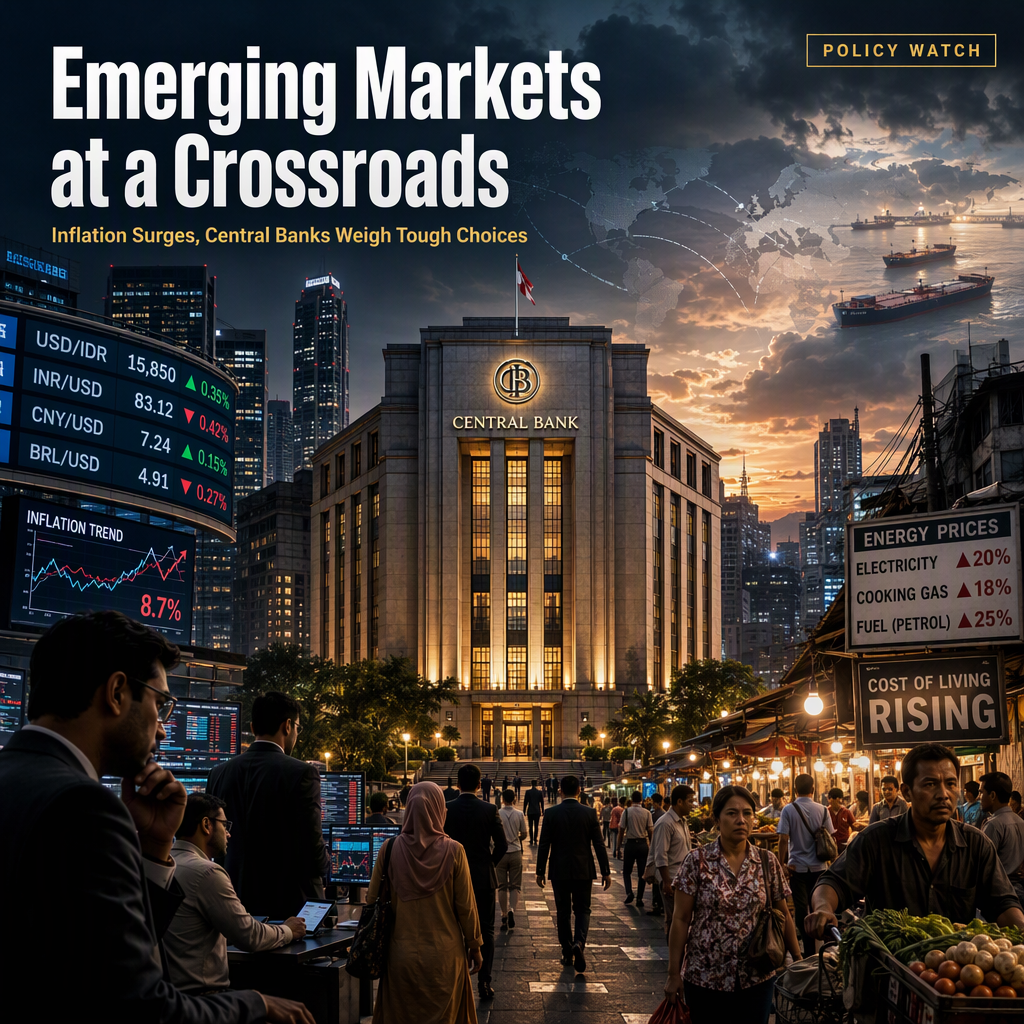
Emerging market central banks are currently struggling to determine the appropriate response to persistent inflation, with several opting to keep interest rates unchanged despite mounting price pressures [1]. Rising energy costs and abnormal weather patterns, such as those driven by El Nino, along with geopolitical risks in the Middle East, have contributed to increased volatility and uncertainty in commodity prices, affecting countries like Indonesia [1].
India and other emerging economies have recently decided to maintain their benchmark interest rates, reflecting a cautious approach that seeks to balance the need for economic growth with the risks posed by ongoing inflation [1]. Indonesia's central bank, for example, held rates steady in line with market expectations, emphasizing the importance of supporting growth while remaining vigilant about inflation risks [1].
In contrast, the Philippines has adopted a more proactive stance by raising interest rates to address inflation linked to the energy shock stemming from Iran [1]. Policymakers in the Philippines have indicated that further rate hikes may be necessary if inflationary pressures persist, underscoring the varied approaches among emerging markets [1].
Market sentiment across the region remains cautious as investors monitor central bank decisions and their impact on local currencies and bonds [1]. Technical analysts are closely watching support levels for these assets, as the risk of capital outflows and further currency depreciation could prompt some central banks to reconsider their current policies and potentially implement rate hikes despite concerns about economic growth [1].
The overall environment for emerging economies is marked by inflationary pressures, external shocks, and the ongoing challenge of sustaining growth, with continued debate expected among policymakers and market participants in the coming months regarding the best monetary policy path forward [1].
CONCLUSION
Emerging economies are navigating a challenging landscape of inflation and external shocks, leading to divergent monetary policy responses. While some central banks are holding rates steady to support growth, others like the Philippines are tightening policy to combat inflation. Market participants remain cautious, anticipating further debate and potential policy shifts in the near future.