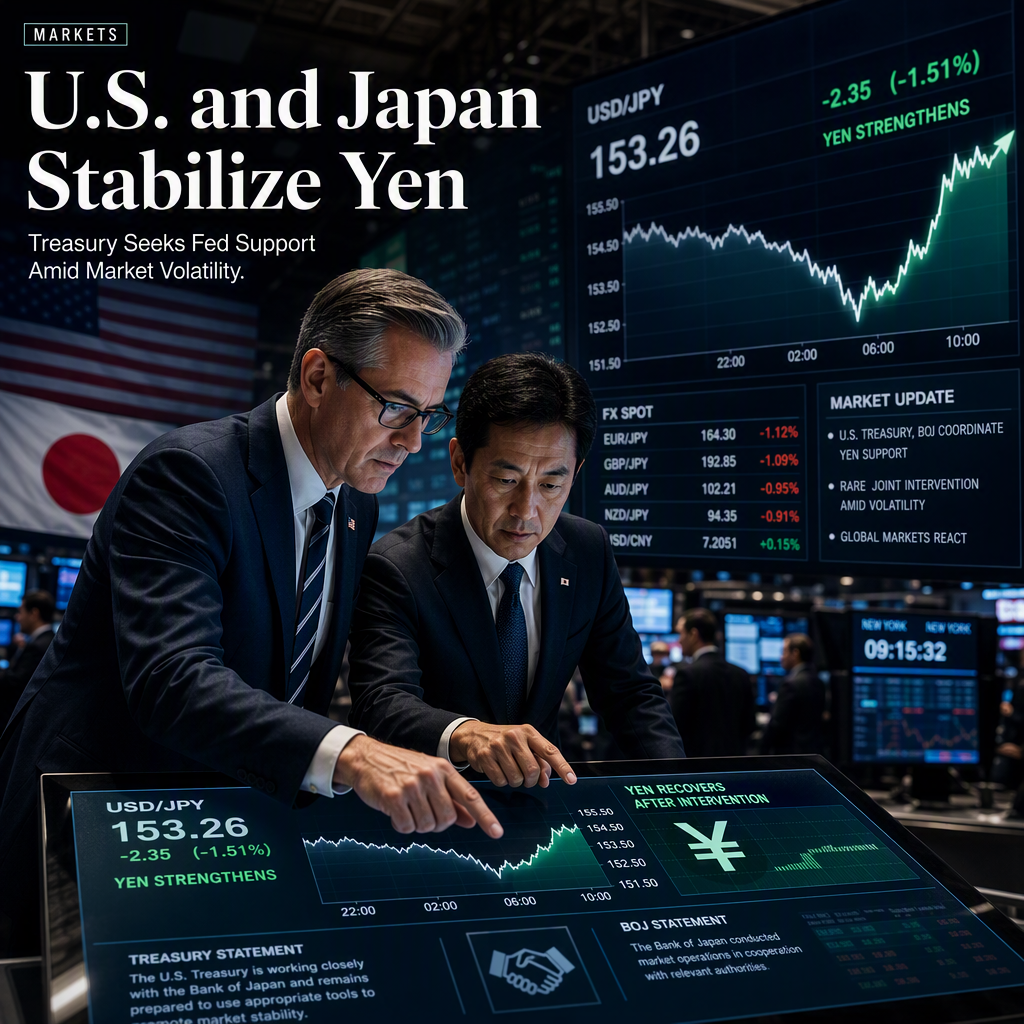
The United States joined Japan in a rare coordinated foreign-exchange intervention to support the Japanese yen after the currency fell to its lowest level in 40 years, with one U.S. dollar buying nearly 164 yen at one point last week, according to Factset data [1]. Treasury Secretary Scott Bessent publicly confirmed the U.S. intervention in a post on X, noting that Friday's coordinated actions were intended to counter disorderly yen movements [1]. The U.S. Treasury sold euros from its Exchange Stabilization Fund to fund yen purchases, as reported by the Financial Times [1]. Following the intervention, the yen strengthened by 3.5% from its low, trading just under 157 per dollar by Monday afternoon U.S. time [1].
Bessent is now urging the Federal Reserve to expand the FIMA Repo Facility, which would allow Japan to raise dollars without selling U.S. Treasuries outright—a move that could otherwise push Treasury yields higher and increase U.S. borrowing costs [1]. This request comes as new Federal Reserve Chairman Kevin Warsh is seeking to redefine the relationship between the Treasury and the Fed, potentially positioning the Fed to play a more active role in U.S. financial diplomacy [1]. However, it is unclear how much support Warsh has within the Fed for such policy changes, as the central bank declined to comment on the matter, and the Treasury did not respond to requests for comment about its plans [1].
The yen's decline since 2022 has been attributed to factors such as the divergence in interest rates between the U.S. and Japan, Japan's high government debt, demographic challenges, and expensive energy imports, all of which have contributed to inflationary pressures in Japan [1]. The intervention by the U.S. is notable for its rarity; the last time the U.S. joined a broader effort to support the yen was in 2011 following a major earthquake and tsunami in Japan [1].
The outcome of the Treasury's request to the Fed remains uncertain, but any expansion of the FIMA Repo Facility could have significant implications for the $29 trillion Treasury market and the future of Treasury-Fed cooperation [1].
CONCLUSION
The coordinated intervention by the U.S. and Japan successfully stabilized the yen in the short term, but the Treasury's push for expanded Fed support signals ongoing concerns about market stability and U.S. borrowing costs. The Fed's response to this request could reshape its role in international financial diplomacy and have lasting effects on the Treasury market.