
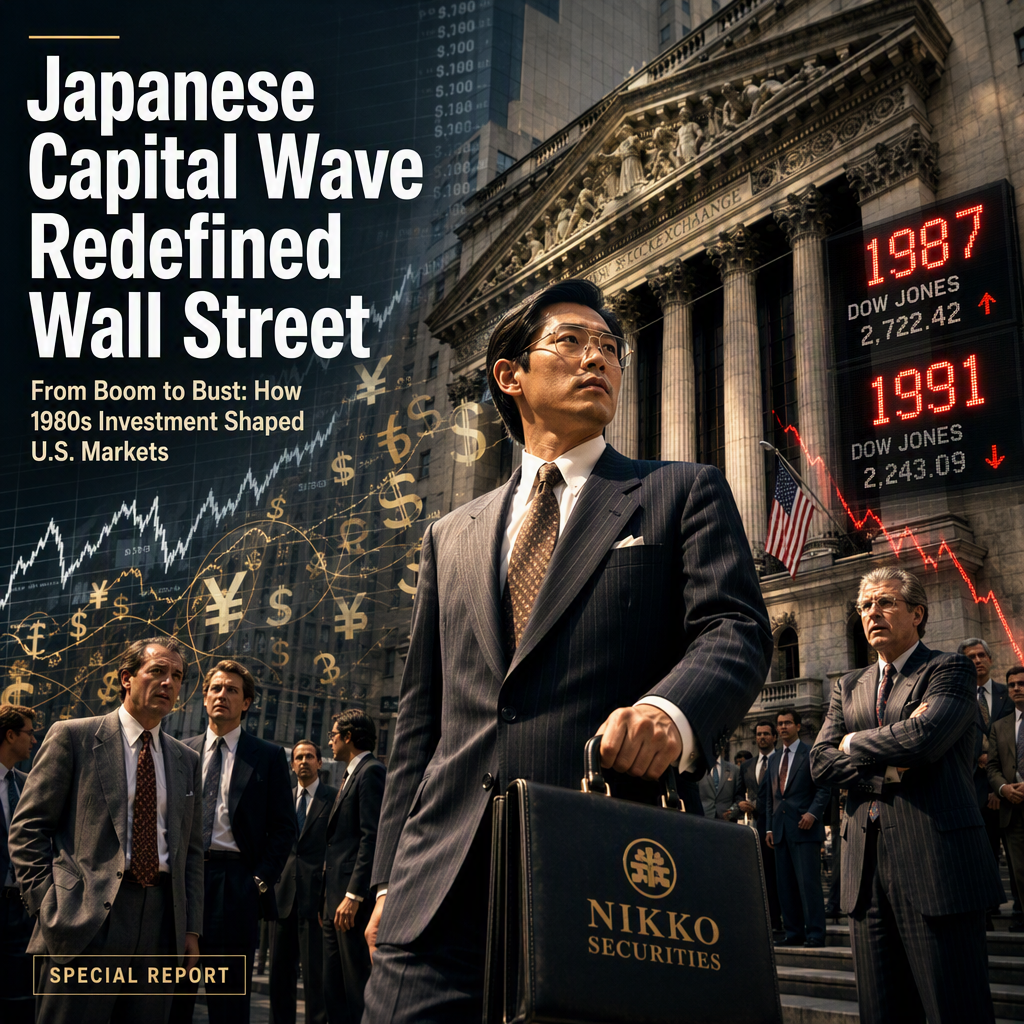
In 1987, a significant influx of Japanese capital, led by Nikko Securities, was entrusted to Blackstone's buyout fund, marking a pivotal moment in U.S. financial history [1]. Japanese investors, including major institutions, became prominent players in American markets, providing hundreds of millions of dollars for leveraged buyouts and mergers & acquisitions [1]. This wave of investment drove up asset valuations and intensified competition among American and European buyout firms [1].
Blackstone's success in attracting Japanese funds reflected the firm's strong reputation and the confidence placed in its management by overseas investors [1]. The capital inflow set new price levels for U.S. assets and forced innovation in deal structuring and financing, as noted by Stephen Schwarzman: "The tide of Japanese capital in the U.S. changed the way deals were structured and financed. It forced us to innovate, to adapt our strategies, and to develop new relationships with overseas partners" [1].
However, this period of aggressive Japanese investment was short-lived. By the early 1990s, the Japanese economic bubble burst, leading to a reversal of capital flows and significant losses for many Japanese investors in the U.S. [1]. Asset prices corrected sharply, and the era of Japanese dominance in American deal-making came to an end, though its impact on the financial landscape persisted [1].
Technical indicators during this era showed heightened volatility and rapid appreciation in asset prices, followed by sharp corrections as the market adjusted [1]. The experience underscored the importance of monitoring global capital flows and being cautious when valuations outpace fundamentals. Lessons from this period continue to inform trading advice and market analysis, emphasizing the need for vigilance regarding international trends and market exuberance [1].
CONCLUSION
The surge and subsequent reversal of Japanese capital in the U.S. during the late 1980s and early 1990s had a lasting impact on financial markets, driving innovation and highlighting the risks of concentrated capital flows. The episode serves as a cautionary tale for investors to closely monitor international trends and asset valuations.