
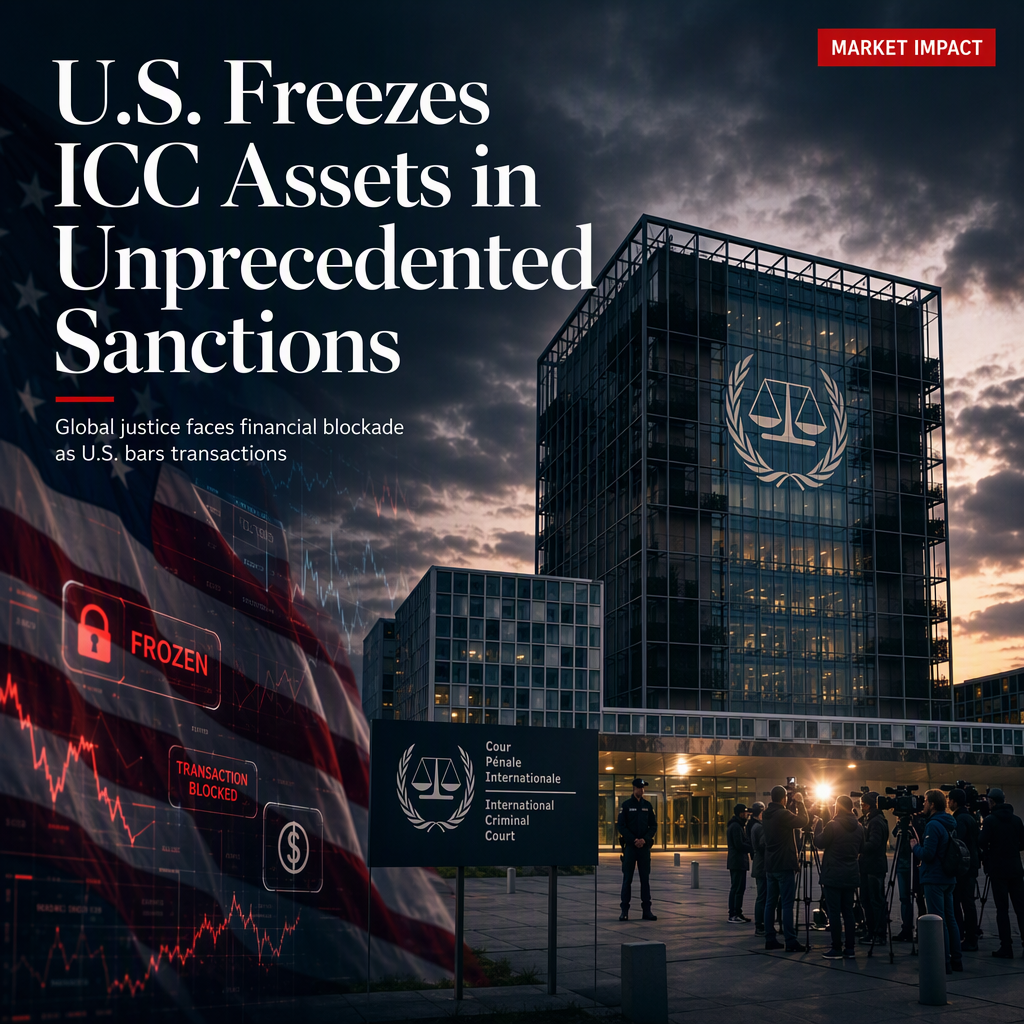
Secretary of State Marco Rubio announced that the Trump administration is imposing sweeping financial sanctions on the International Criminal Court (ICC), marking the first time the U.S. has targeted the institution itself rather than just individuals associated with it [1]. To date, the administration has sanctioned 17 individuals with ties to the ICC, including judges and prosecutors [1]. The new sanctions will freeze any ICC assets subject to U.S. jurisdiction and generally bar Americans, U.S. businesses, and banks from conducting transactions with the court [1]. However, the sanctions will not take effect immediately; the Treasury Department has issued a 180-day general license allowing the ICC to maintain its operations while it addresses U.S. concerns [1].
Rubio stated, "Our message is clear: The United States and the American people are not subject to the jurisdiction of this fake ICC," emphasizing bipartisan agreement on the issue but crediting President Trump with taking decisive action [1]. The administration's concerns stem from the ICC's perceived authority to prosecute American service members operating overseas, referencing a 2017 ICC prosecutor's request to investigate alleged war crimes by U.S. personnel in Afghanistan [1]. Although ICC judges initially rejected the request, it was later approved on appeal in 2020, but the court's prosecutor subsequently de-prioritized alleged crimes involving U.S. personnel to focus on the Taliban and ISIS-K [1].
The ICC strongly condemned the U.S. sanctions, calling them "an assault on the rule of law and on the very foundations of the international legal order" and asserting that the measure targets an independent judicial institution created by treaty and entrusted by 125 States Parties with investigating and prosecuting genocide, crimes against humanity, war crimes, and the crime of aggression [1]. ICC President Tomoko Akane, who was personally sanctioned by the Trump administration in August, stated that the court will continue to operate despite the new penalties [1].
This announcement came just hours after the Nobel Peace Prize was awarded to Navanethem "Navi" Pillay, a former ICC judge [1]. The ICC characterized the sanctions as an attempt to obstruct justice and prevent the court from fulfilling its mandate [1].
CONCLUSION
The Trump administration's sweeping financial sanctions against the ICC represent a significant escalation in U.S. opposition to the court, with immediate asset freezes and transaction bans pending a 180-day grace period. The ICC has condemned the move as an attack on international justice, but has pledged to continue its work. The market impact is high, given the unprecedented nature of the sanctions and their potential implications for international legal and financial systems.