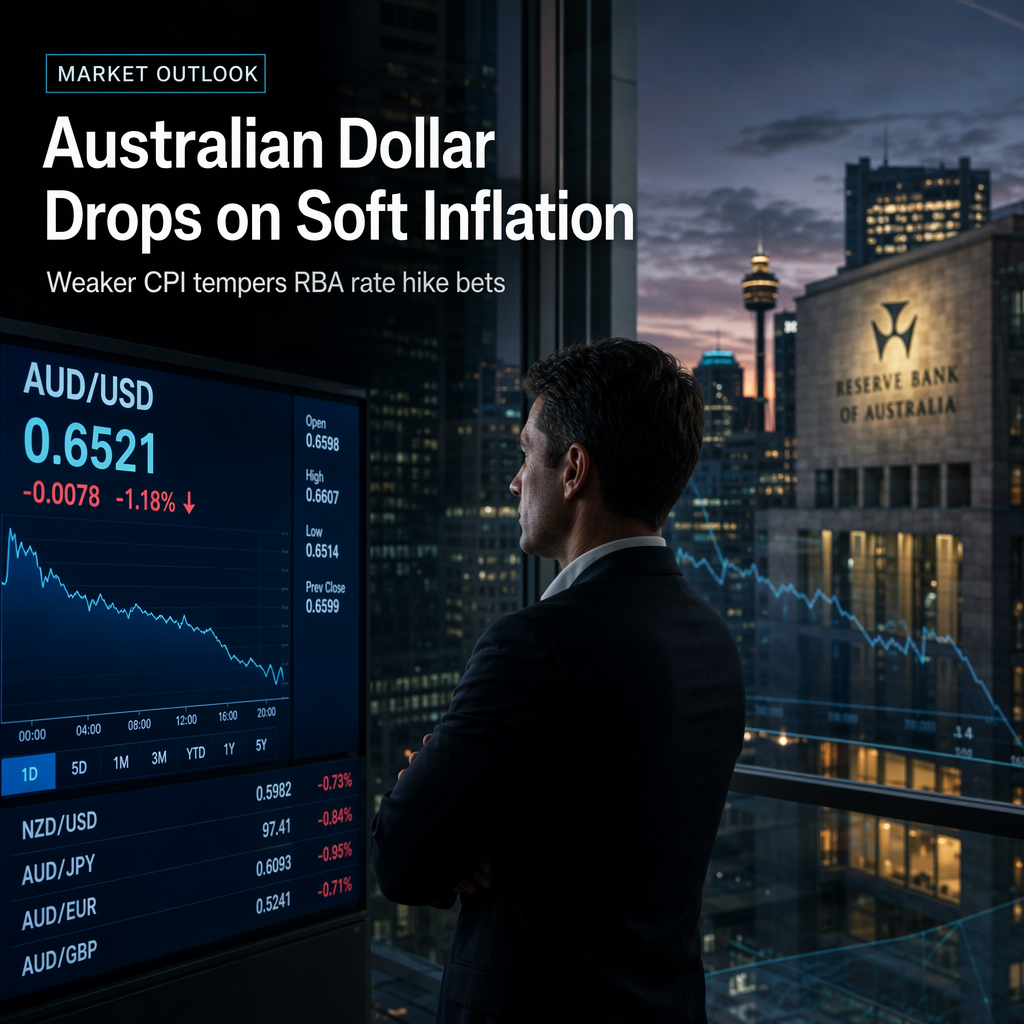
The Australian Dollar experienced a decline following the release of another softer-than-expected Consumer Price Index (CPI) report, according to MUFG’s Lee Hardman [1]. The core inflation figure, specifically the trimmed mean measure, rose by 0.8% quarter-on-quarter and 3.6% year-on-year, which was below the Reserve Bank of Australia's (RBA) May forecasts [1]. This marks the second consecutive quarter in which core inflation has surprised to the downside [1].
The weaker inflation data has tempered expectations for further interest rate hikes by the RBA. Market-implied odds for one final rate hike, potentially later in 2026, are now close to 50:50, reflecting increased uncertainty about the RBA's next moves [1]. The softer inflation print provides RBA policymakers with a more favorable starting point for their updated economic forecasts and reduces the urgency for additional tightening, even though inflation remains above the central bank's target [1].
Despite the Australian Dollar previously benefiting from increased demand related to the AI buildout, the currency's overnight weakness was primarily attributed to the inflation data, which has dampened expectations for further RBA rate hikes [1].
CONCLUSION
Softer-than-expected Australian inflation data has weakened the Australian Dollar and reduced market expectations for further RBA rate hikes. The central bank now faces less pressure to tighten policy, with market odds for another hike now evenly balanced.