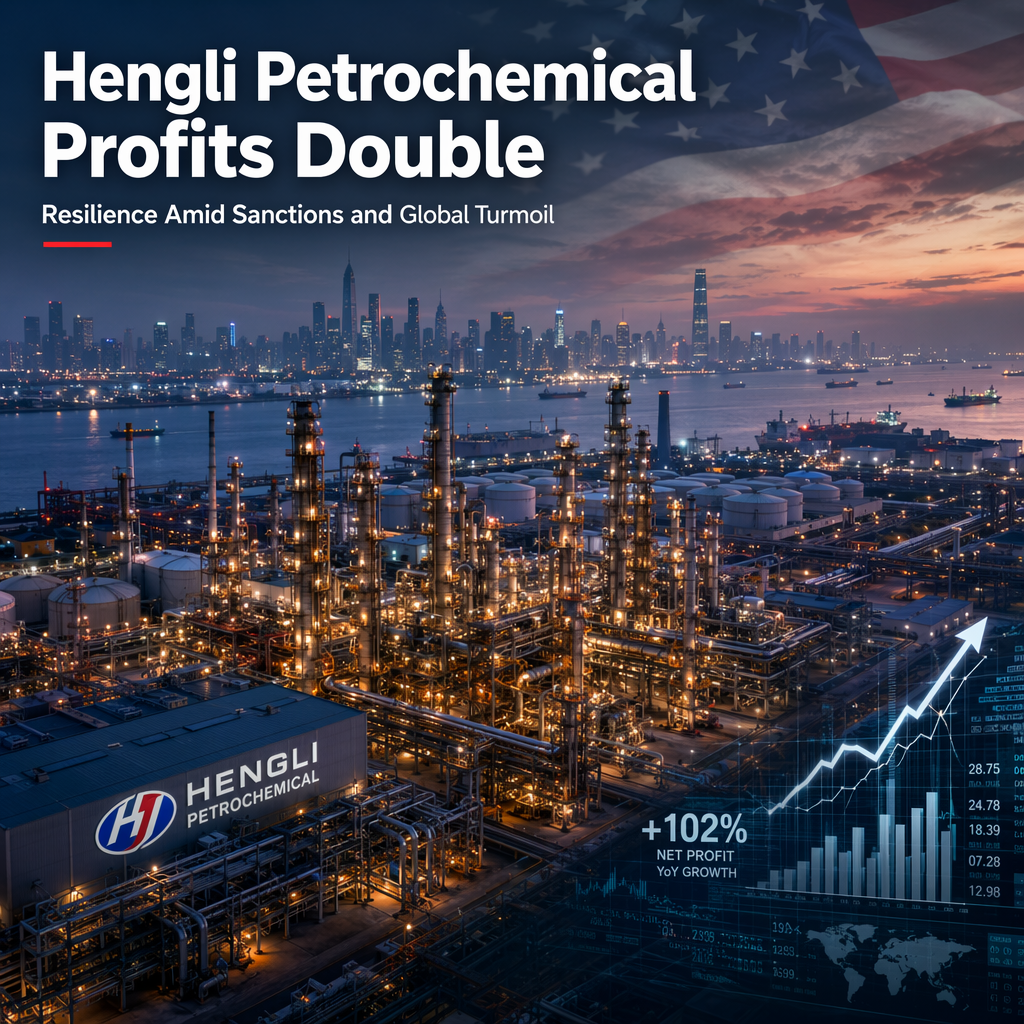
Hengli Petrochemical, a Shanghai-listed parent of a Chinese 'teapot' oil refinery, reported that its profit more than doubled year-on-year in the first half of 2026, according to preliminary financial data released by the company. This surge in profitability comes despite the company being sanctioned by the U.S. for alleged dealings with Iran, highlighting Hengli's resilience and ability to expand its market share under challenging geopolitical conditions [1].
The profit spike at Hengli leads a broader trend among Chinese petrochemical and oil refining peers, many of whom have also reported strong preliminary earnings. The sector's performance has been buoyed by higher global commodity prices, which have been driven by supply disruptions and increased demand resulting from regional conflicts and sanctions. Analysts attribute Hengli's outperformance to sharply higher margins for polyester and other petrochemical derivatives, supported by elevated crude prices and a restricted supply of naphtha, a key feedstock [1].
Market analysis indicates that Hengli's refining margins have benefited from the global shortage of naphtha, as well as China's ability to extend its petrochemical processing lead during the ongoing Iran war. The company's strategy of sourcing alternative feedstocks and maintaining production continuity has been critical to its success. Trading sentiment remains positive for Hengli and other leading Chinese petrochemical players, with the sector viewed as having strong support levels due to sustained demand for polyester and downstream products. However, resistance may be encountered if global commodity prices stabilize or retreat [1].
Industry analysts emphasize China's unique oil strategy, which leverages domestic refining capacity and flexible feedstock sourcing to weather global disruptions. The Hormuz crisis and related sanctions have created bottlenecks for competitors, but Chinese refiners like Hengli have adapted quickly. Observers recommend monitoring crude oil and naphtha price trends, as well as geopolitical developments, for further insights into the sector's outlook [1].
CONCLUSION
Hengli Petrochemical's ability to more than double its profits in the first half of 2026, despite U.S. sanctions and global market volatility, underscores the resilience and adaptability of China's petrochemical sector. Continued strong demand and strategic feedstock sourcing position Hengli and its peers for further gains, though future performance will depend on commodity price trends and geopolitical developments.