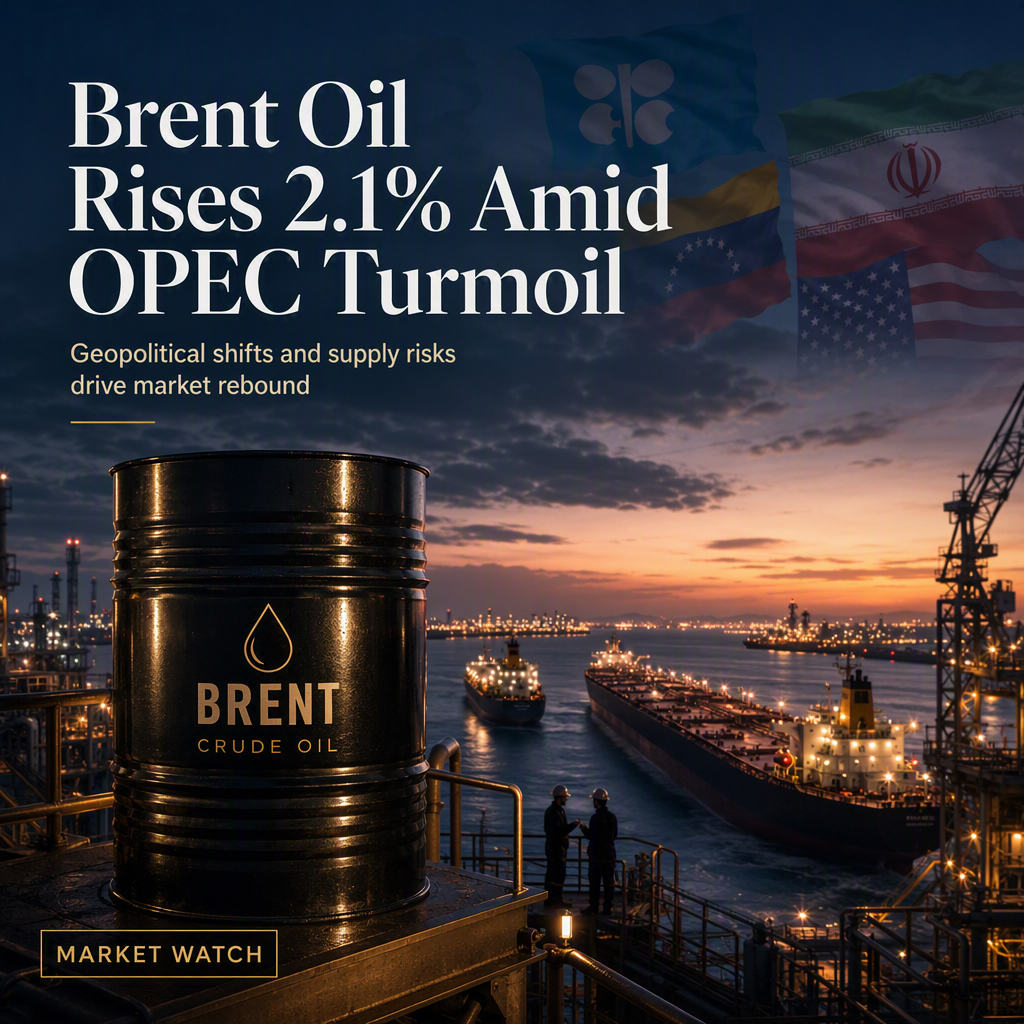
Brent oil prices have firmed, with ICE Brent settling up 2.1%, marking the first positive close for the week. This rebound is attributed to fading prospects for renewed US-Iran talks and a gradual increase in oil flows through the Strait of Hormuz, which ING analysts estimate have averaged 5 million barrels per day [1]. The renewed strength in prices follows reports that President Trump communicated to mediators that the US has no intention of returning to the terms of the June Memorandum of Understanding, instead opting to maintain economic pressure on Iran in hopes of achieving better results [1].
Geopolitical developments continue to influence the oil market. There are indications that Venezuela may consider exiting OPEC as its relations with the US improve following the ousting of Nicolas Maduro earlier in the year. This follows the UAE’s departure from OPEC earlier in the year, raising concerns about the organization's formal influence over the oil market [1]. However, ING analysts Warren Patterson and Ewa Manthey note that the broader OPEC+ group still retains substantial market power despite these potential exits [1].
Market optimism had grown earlier in the week amid efforts to restart US-Iran talks, but diplomatic progress has stalled. The combination of geopolitical risks and shifting OPEC membership dynamics is providing support for Brent prices, even as the market adjusts to changing supply flows and diplomatic uncertainties [1].
CONCLUSION
Brent oil prices have strengthened due to geopolitical tensions and uncertainty surrounding OPEC membership. While Venezuela's potential exit could reduce OPEC's formal influence, the broader OPEC+ group remains a significant force in the market. The outlook remains sensitive to further geopolitical developments and changes in oil supply flows.