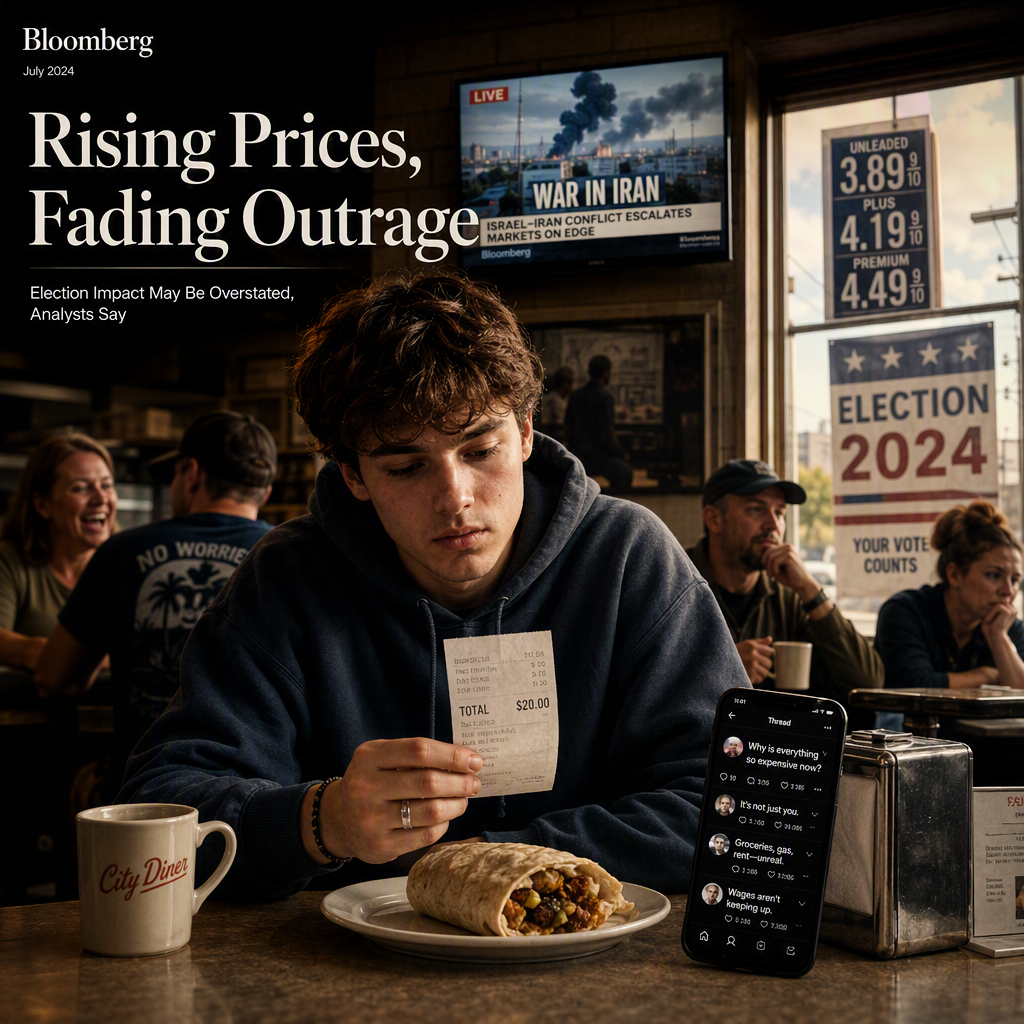
A heated debate over rising consumer prices, particularly the cost of everyday items like burritos, has emerged on social media, fueled by comments from Turning Point USA's Andrew Kolvet about Gen Z voters' frustrations with $20 Mexican wraps [1]. The discussion quickly became polarized, with some arguing that high prices and affordability concerns could pose a significant challenge for Republicans in the upcoming midterm elections, while others downplayed the issue, suggesting that previous generations endured similar hardships [1].
The article highlights that the underlying context for these price increases is the ongoing war in Iran, with some voices insisting that ending the conflict is necessary to reduce prices and secure electoral victory in November, while others argue that long-term economic stability depends on prevailing in the war [1]. The author notes that affordability and prices have historically been 'gut issues' for voters, directly impacting their daily lives and influencing their political choices [1].
Anecdotal evidence from voters in Bedford, Pennsylvania, and Detroit suggests that while cost of living was a dominant concern two years ago, its intensity has waned in some regions. In Detroit, for example, voters were less preoccupied with prices, attributing their optimism to the city's economic revival. This sentiment may have contributed to Democratic Senate nominee Abdul El-Sayed's poor performance in the city compared to the more mainstream Rep. Haley Stevens [1].
The article also notes a brief period in the spring when gas prices surged, making affordability a widespread complaint. However, as gas prices stabilized, the issue became less acute, with many voters adopting an attitude of reluctant acceptance rather than outrage [1]. Young adult Gen Z voters continue to feel economic pressure, though the article suggests that their complaints extend beyond just overpriced convenience foods [1].
CONCLUSION
While rising prices remain a concern for many Americans, the article suggests that their impact on the 2024 election may be less decisive than some predict. Regional differences and the easing of gas prices have tempered voter anger, and affordability, though important, may not be the sole driver of political outcomes this cycle.