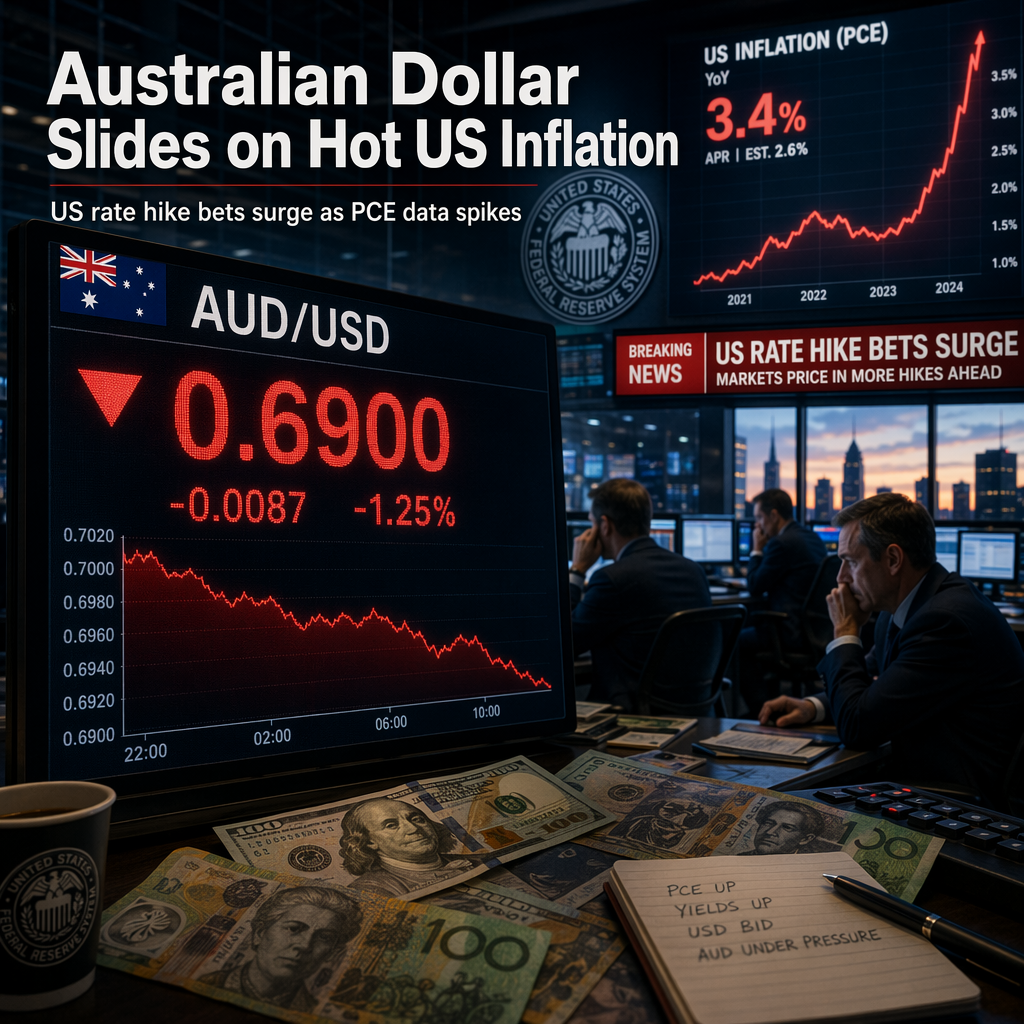
The Australian Dollar (AUD) edged lower against the US Dollar (USD), trading near 0.6900 during Asian hours on Friday, as expectations for further US Federal Reserve rate hikes intensified following the latest US inflation data [1]. The US Dollar strengthened after the US Bureau of Economic Analysis reported that the headline Personal Consumption Expenditures (PCE) Price Index rose 4.1% year-over-year in May, up from 3.3% in April [1]. The core PCE, the Federal Reserve's preferred inflation gauge, increased 3.4% year-over-year in May, marking its highest level since October 2023 [1].
Scott Anderson, chief U.S. economist at BMO Capital Markets, commented that 'PCE price inflation remains too high and will keep the Fed on hold and mulling a potential rate hike at upcoming meetings,' highlighting persistent services inflation as a key concern [1]. The release of the Michigan Consumer Sentiment Index later on Friday was noted as a potential market mover [1].
On the Australian side, the latest employment data provided some support for the AUD. The country's unemployment rate fell to 4.4% in May from 4.5% in April, in line with market expectations, according to the Australian Bureau of Statistics [1]. This improvement in the labor market may help limit further losses for the Australian Dollar [1].
Overall, the market is currently weighing the prospect of additional US rate hikes against positive Australian employment data, with the balance tilting toward USD strength due to persistent US inflation pressures [1].
CONCLUSION
The Australian Dollar weakened toward 0.6900 as robust US inflation data fueled expectations of further Federal Reserve rate hikes. While improved Australian employment figures offered some support, market sentiment remains cautious, with the USD favored amid ongoing inflation concerns.