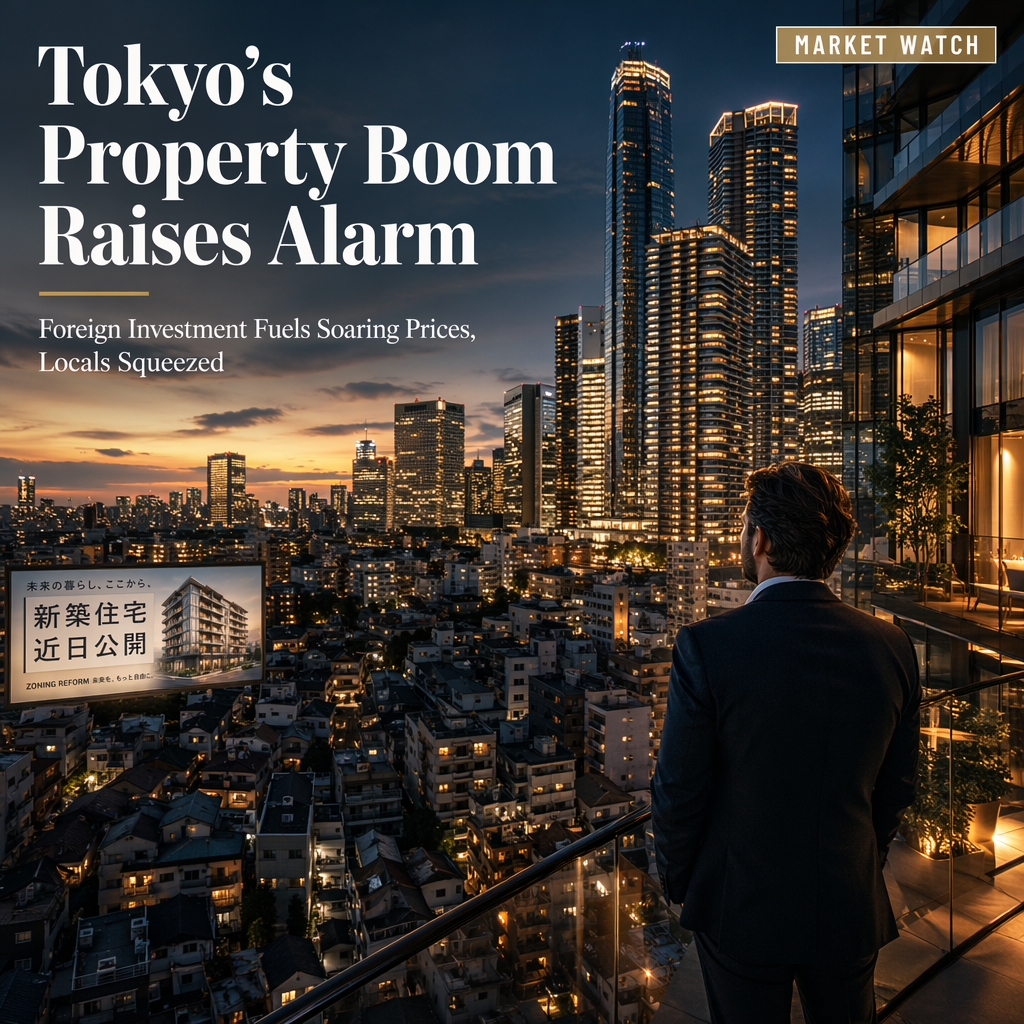
Tokyo's property market is experiencing a significant boom, with luxury penthouses and prime land reaching record-breaking valuations. This surge has been fueled by strong foreign capital inflows, particularly from Taiwan, while mainland Chinese investors have retreated from the market. Cash purchases now dominate high-end property transactions in both Tokyo and Osaka, reflecting robust demand in the luxury segment [1].
Recent data indicates that Japan's land prices have increased for five consecutive years, driven by a tourism boom and heightened investor interest. This upward momentum has raised concerns about housing affordability, especially for local residents and first-time buyers. In response, Tokyo authorities are considering zoning rule changes in areas such as Shibuya to encourage the development of more affordable housing options [1].
Despite the rapid price appreciation, analysts emphasize that the situation does not yet constitute a crisis. Japan's property market is supported by strong regulatory oversight, prudent lending standards, and demographic trends such as a declining population and an abundance of 'akiya' (abandoned homes) in non-central areas, which help curb excessive price growth. The market also benefits from diverse demand, including a steady flow of expats, with companies like MetroResidences Japan planning a tenfold expansion to accommodate this segment [1].
However, the article warns that if unchecked, the current trajectory could lead to social dislocation, particularly among younger generations struggling to enter the housing market. Analysts suggest that policy tools such as targeted zoning reforms, increased transaction transparency, and measures to boost supply are necessary to preserve affordability and market stability. While market sentiment remains bullish, there are warnings of potential resistance at current price levels if supply does not increase [1].
CONCLUSION
Tokyo's property boom is characterized by strong foreign investment and rising prices, especially in the luxury segment. While the market remains stable due to regulatory oversight and demographic factors, policymakers are urged to act to prevent affordability issues from escalating. The outlook is cautiously optimistic, but continued vigilance is required to maintain market stability and accessibility.