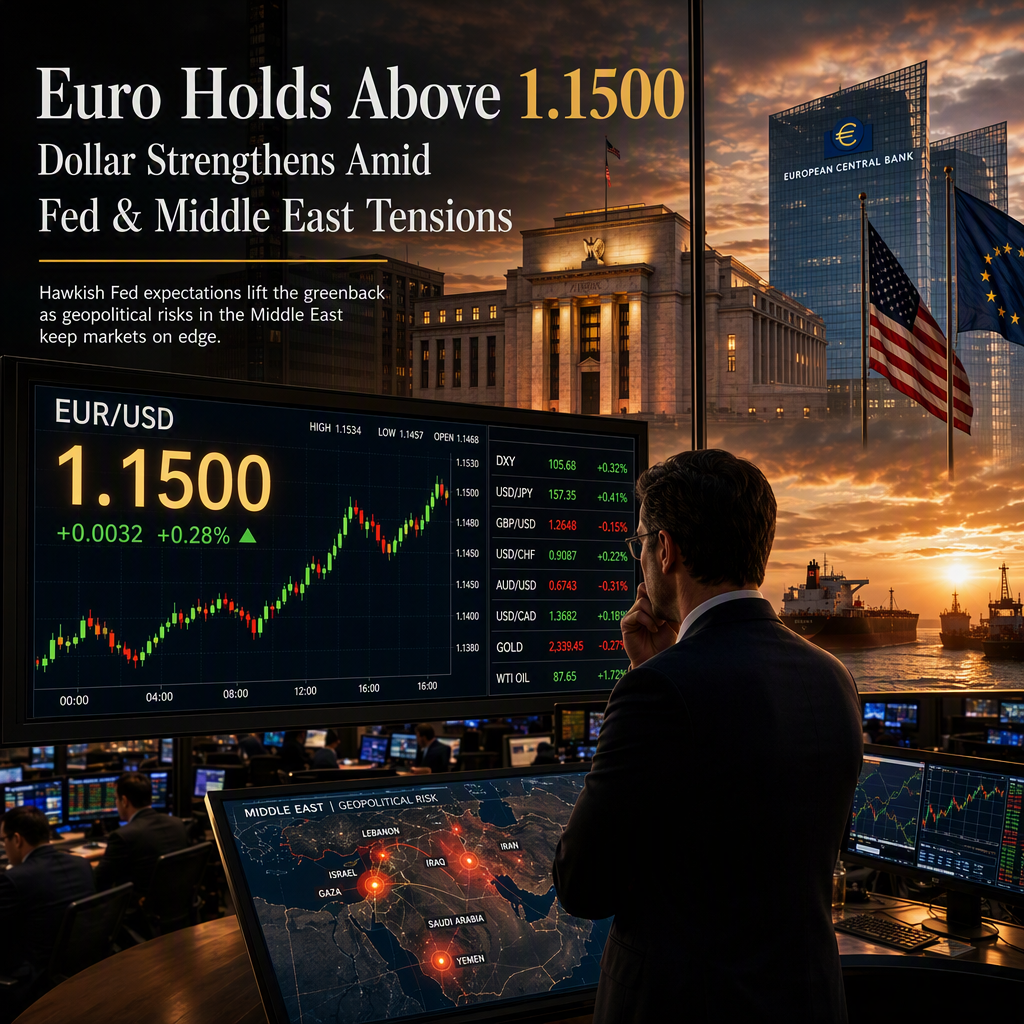
The EUR/USD pair dropped to a one-and-a-half-week low during the first half of the European session but managed to recover slightly, holding above the 1.1500 psychological mark. The fundamental backdrop remains tilted in favor of bearish traders, with the US Dollar (USD) reaching a two-week high, exerting pressure on the EUR/USD pair [1]. This movement followed the release of the US Consumer Price Index (CPI), which came in line with expectations and eased pressure on the Federal Reserve (Fed) regarding potential interest rate hikes. However, investors are still pricing in a high chance that the Fed will raise borrowing costs by the end of the year, with 9 basis points (bp) priced for September and a full 25bp hike for December, according to ING strategists [1][2].
The market reaction to the CPI print was initially negative for the dollar, but the currency ended the day stronger as markets rebuilt net long positions after the US data. Core inflation is running at a 1.6% three-month annualized pace, which ING strategists argue weakens the case for further Fed tightening. Nevertheless, hawkish Fed communication and reluctance to price out additional tightening are keeping dollar bulls active [2]. The jobs and CPI reports have together knocked 5bp off September FOMC expectations, but hawkish sentiment persists [2].
Geopolitical tensions in the Middle East are also influencing market sentiment. President Donald Trump claimed that the US has total control over the Strait of Hormuz, while Iran has pledged to keep the waterway closed until its demands are met. Iran-backed Houthis in Yemen have escalated attacks on vessels in the Red Sea and Bab el-Mandeb Strait, targeting Saudi ships. These developments have increased war-risk premiums, supporting crude oil prices and the safe-haven Greenback [1]. ING notes that the Gulf situation may regain relevance for FX markets, particularly through risk-sentiment implications of the Strait of Hormuz negotiations [2].
On the European side, money markets are pricing in roughly a 90% probability that the European Central Bank (ECB) will raise interest rates by 25bp at its September policy meeting. This hawkish outlook limits aggressive bearish bets on the euro and restricts downside for the EUR/USD pair [1]. HSBC analysts highlight a growing divergence in policy challenges across major central banks, with the ECB likely to deliver another rate rise in September, while other central banks face tougher trade-offs [1].
Technical analysis shows the EUR/USD pair holding above the 200-period Simple Moving Average (SMA) at 1.1451, which acts as a key structural floor. Momentum indicators suggest tentative upside traction, with the Relative Strength Index around 44 and the MACD marginally below zero [1]. ING expects Fed communication to gradually soften its hawkish tone, keeping risks on the downside for USD, and notes that upcoming FOMC minutes and PPI data could influence market direction [2].
CONCLUSION
The EUR/USD pair remains under pressure from a stronger US Dollar, driven by persistent hawkish Fed expectations and heightened geopolitical risks in the Middle East. While the ECB's hawkish outlook limits euro downside, market sentiment favors the dollar in the near term. Upcoming US macro data and FOMC minutes are expected to provide further direction for FX markets.