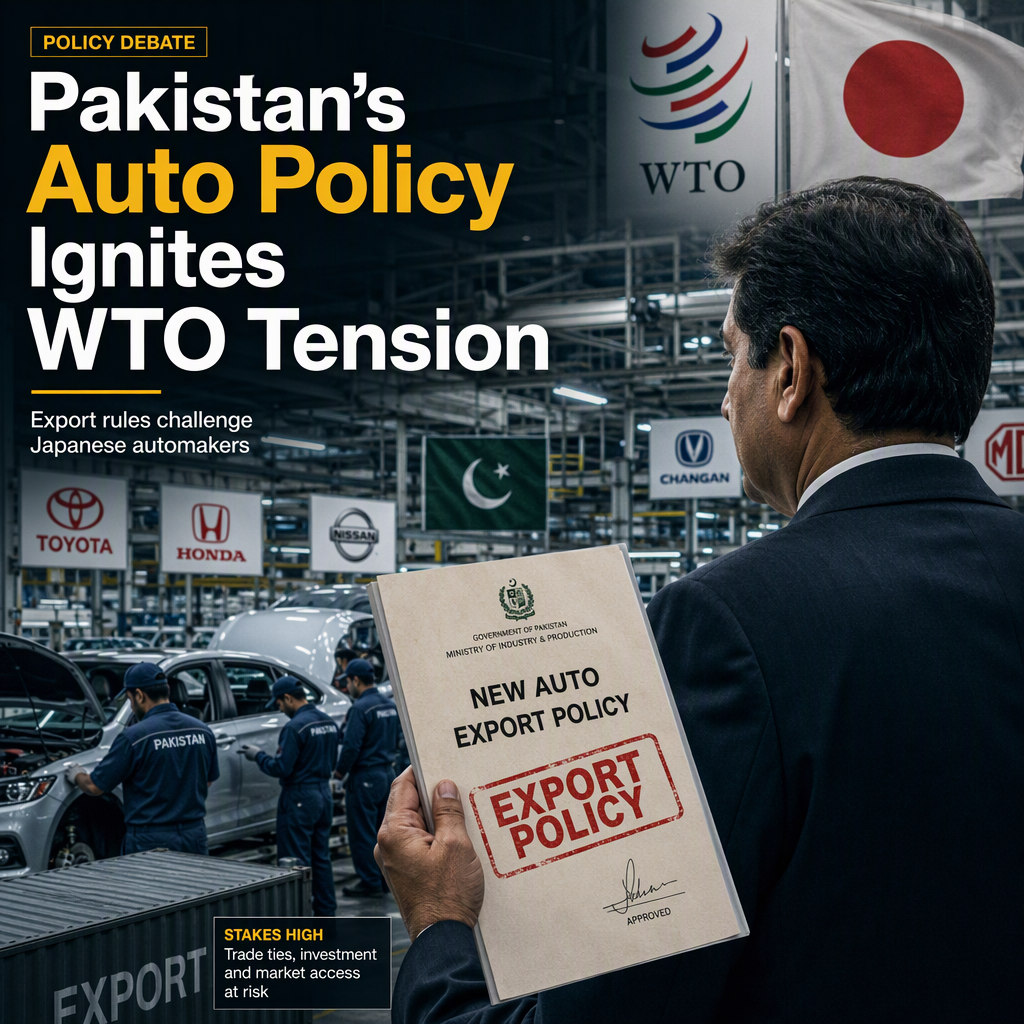
Pakistan's updated auto policy is poised to reignite tensions with Japan at the World Trade Organization, as it maintains regulations that Tokyo has previously challenged. The policy links vehicle manufacturers' export performance to their eligibility for licensing and concessions on imported vehicle parts, a point of contention for Japanese automakers [1]. Specifically, the new rules mandate that carmakers manufacturing in Pakistan must export 12% of all vehicles by value, a target described by experts as strict and likely to impact market dynamics [1].
The article notes that these export requirements remain in place despite prior objections from Japan, suggesting that the policy could provoke further disputes at the WTO. Additionally, experts cited in the article believe that Chinese automakers are positioned to benefit from the policy, although no specific companies or figures are mentioned [1].
No immediate market reactions, analyst opinions, or forward-looking statements are provided in the article. The focus remains on the regulatory changes and the potential for renewed international trade friction [1].
CONCLUSION
Pakistan's updated auto policy, with its stringent export requirements, is likely to escalate trade tensions with Japan at the WTO. The policy may advantage Chinese automakers, but its full market impact remains to be seen.