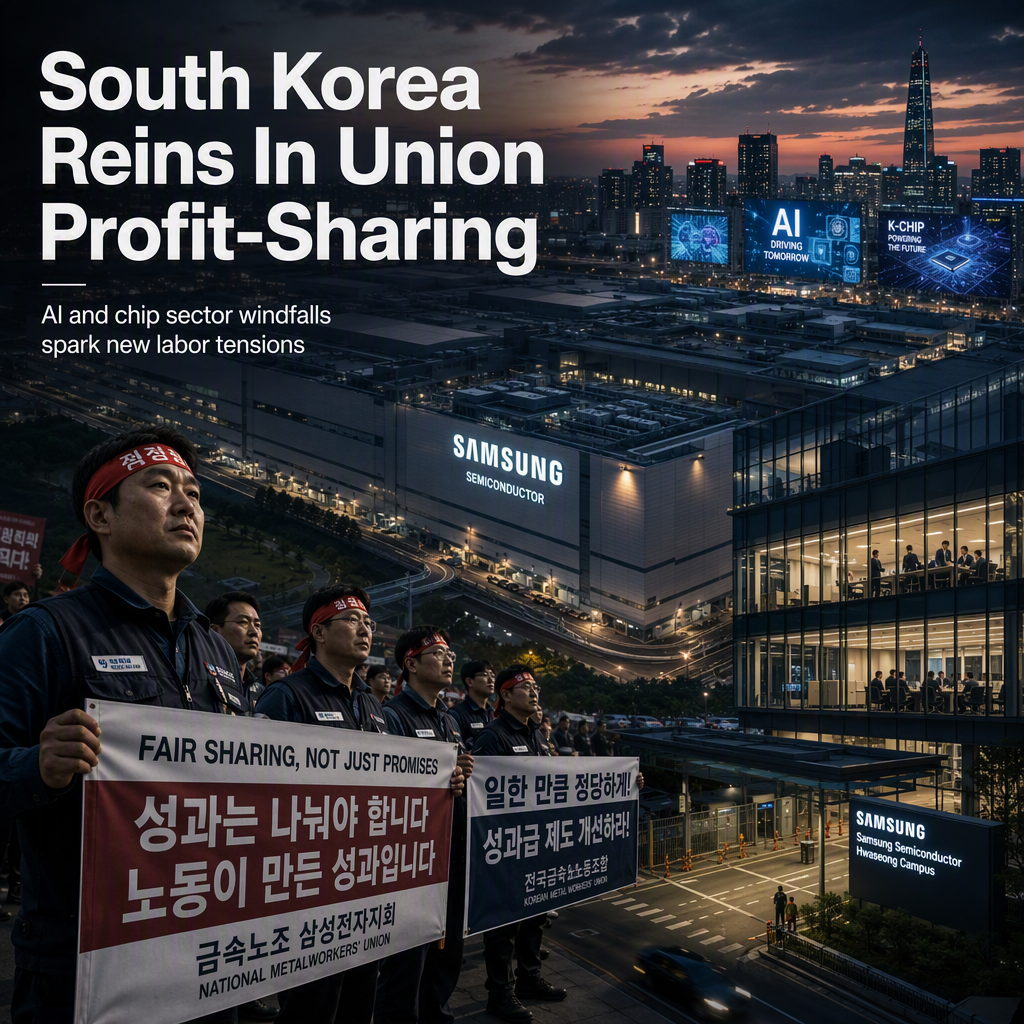
South Korea has introduced new government guidelines clarifying that companies are not required to negotiate profit-sharing with workers, a move that could significantly reduce the leverage of labor unions in demanding a share of windfall profits generated by the country's booming artificial intelligence and semiconductor sectors [1]. This policy change comes as leading technology firms such as Samsung Electronics and SK Hynix report record profits, driven by strong global demand for semiconductors and AI-related products [1]. Samsung Electronics' shareholder returns have reached a record $79 billion, reflecting the impact of the AI boom, while SK Hynix has announced a $28.6 billion buyback plan aimed at boosting its stock price [1].
Labor unions have responded to these unprecedented gains with increased demands for a greater share of profits, exemplified by protests from Samsung Electronics' labor union over compensation levels [1]. The Ministry of Employment and Labor's new guidelines specify that while companies may choose to discuss profit-sharing, there is no legal obligation to do so, even in years of extraordinary profits [1]. This clarification is seen as a response to rising labor actions and demands for bonuses or profit-sharing linked to the performance of the AI and chip industries [1].
Market analysts suggest that the new rules could enhance predictability for investors and management by reducing the risk of disruptive labor disputes over windfall profits [1]. However, labor representatives caution that the policy could further widen the gap between management and workers at a time when the industry is generating record returns [1].
The policy shift coincides with other major developments in South Korea's technology sector, including SK Hynix beginning construction of its first HBM chip packaging plant in the US and the South Korean won rallying on news of SK Hynix's US listing and repatriation of corporate funds [1]. Additionally, South Korea and Taiwan have surpassed Japan in exports for the first time, a trend attributed to the ongoing AI boom [1]. Industry observers are closely monitoring how the new guidelines will impact labor negotiations, compensation structures, and the broader distribution of gains within South Korea's flourishing technology sector [1].
CONCLUSION
South Korea's new guidelines limiting union leverage over profit-sharing mark a significant shift in the distribution of record gains from the AI and semiconductor industries. While the move is expected to reduce labor disputes and increase predictability for investors, it has also heightened concerns about growing disparities between management and workers. The long-term effects on labor relations and compensation structures remain to be seen.