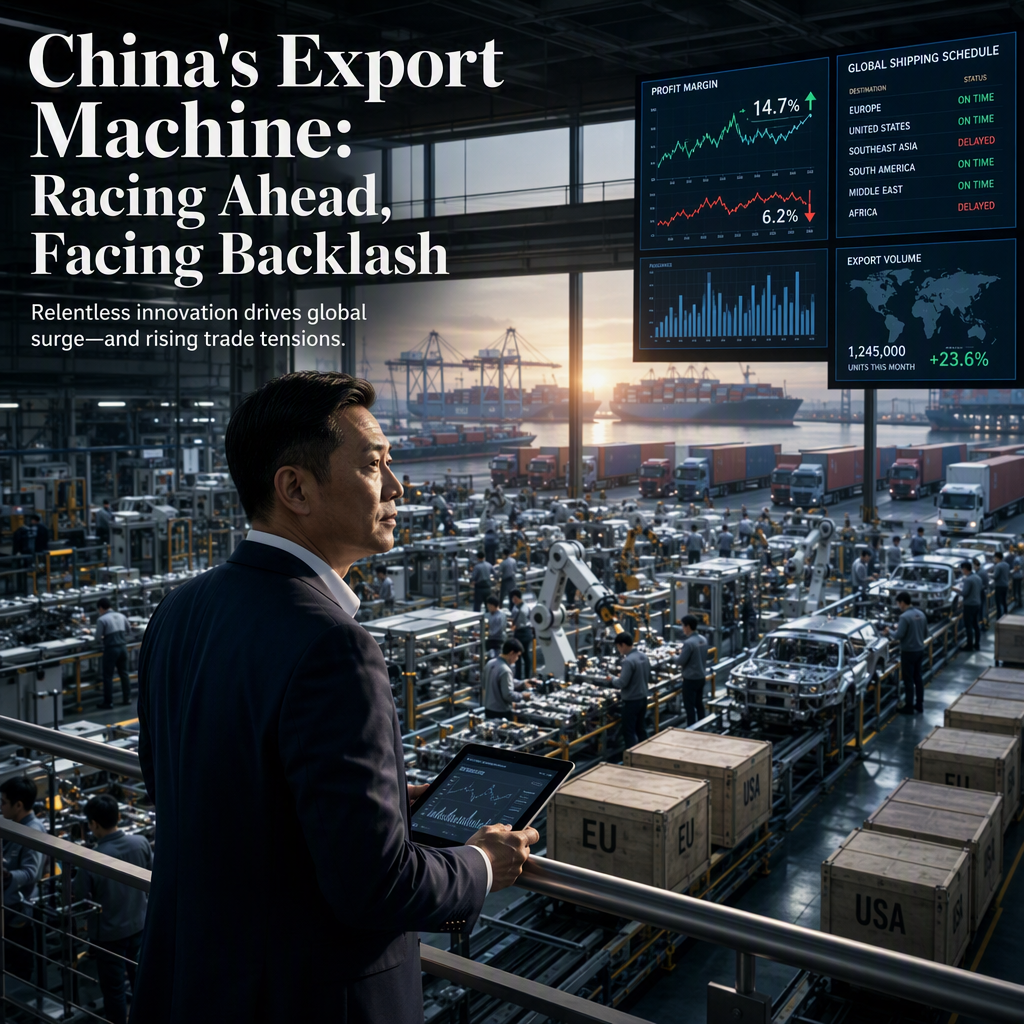
Chinese companies are engaged in intense competition, particularly in advanced manufacturing sectors such as electric vehicles (EVs) and artificial intelligence (AI) hardware, leading to rapid technological progress but also diminishing profit margins and product gluts [1]. At Autolink's headquarters in Wuxi, the company is striving to become the leading producer of AI components for EVs, exemplifying the relentless race among Chinese manufacturers [1]. An EV component CEO described being 'swept along' by this aggressive manufacturing model, which has driven innovation but also created significant challenges, including shrinking profits as companies undercut each other to gain market share [1].
The oversupply resulting from this hypercompetitive environment has saturated the domestic market, prompting Chinese companies to increasingly export their surplus products [1]. This surge in exports, especially in sectors like EVs and AI hardware, is raising international concerns about overcapacity and the potential for trade friction, particularly with the US and EU [1]. Industry executives note that the drive for market dominance often forces companies to scale up production and cut costs to unsustainable levels, leading to price wars and further eroding profitability [1].
As Chinese manufacturers seek new markets abroad, they also face the risk of backlash from trading partners who are wary of the impact on their own industries [1]. The current dynamics are shaping the strategies of Chinese companies, who must balance the pursuit of innovation and global expansion with the challenges of maintaining profitability and navigating rising international scrutiny [1].
CONCLUSION
China's hypercompetitive manufacturing landscape is fueling rapid technological advancement and a surge in exports, but at the cost of shrinking profits and growing international trade tensions. As Chinese companies expand globally, they face both opportunities and heightened risks of backlash from major trading partners concerned about overcapacity and market disruption.